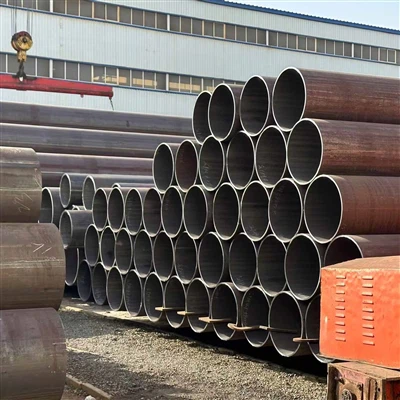
The quality of the inner surface of anti-corrosion steel pipes directly affects their service life and safety. It is crucial to understand and control the possible defects.
| Defect Type | Main characteristics | Key control point |
| Internal scarring | Small pits similar to those of soybeans or soybean kernels appear on the inner surface of the steel pipe. The pits often contain foreign substances of grayish-brown or grayish-black color. | Control the composition of the oxide remover and ensure the lubrication effect of the core rod. |
Key Points of Process Control
To avoid these drawbacks, the following three production stages need to be given special attention:
1. Oxidizer management
The oxidizer is used to remove oxides during the pre-insertion of the core rod.
Its quality control is extremely crucial: the particle size of the powder should typically be controlled at around 16 mesh; the content of sodium stearate needs to reach over 12% to ensure its complete combustion within the steel pipe; the injection volume should be precisely calculated based on the surface area inside the pipe, generally ranging from 1.5 to 2.0 g/dm², and adjusted according to the pipe diameter and length.
2. Optimization of Blowing Process
The blowing process directly affects the distribution and effectiveness of the oxide remover:
The blowing pressure needs to be matched with the diameter and length of the pipe, ensuring both powerful blowing and complete combustion, without blowing away the unreacted chemicals; the blowing time should be based on the condition that no suspended metal oxides are blown out from the pipe; the height of the nozzle should be adjusted according to the pipe diameter, and it should be cleaned and maintained regularly to prevent blockage, ensuring that the chemicals can evenly cover the inner wall.

3. Core Rod Lubrication and Temperature Control
Poor lubrication of the core rod or improper temperature control is the main cause of internal scarring.
During the production process, the temperature of the core rod must be strictly controlled.
Before applying the lubricant, the surface temperature of the core rod should be maintained between 80-120℃, and it should not exceed 120℃ for a long time to ensure that the lubricant is dry and dense. Operators should regularly check the lubrication condition of the core rod.
Daily Management Suggestions
In addition to precisely controlling the process parameters, it is equally important to implement the following daily management measures:
• Strictly follow the operating procedures:
Ensure that every operator has received training and can strictly and consistently carry out the standard operating procedures.
• Regular equipment inspection and maintenance:
Establish a system for inspecting and cleaning nozzles, the blowing system, and the temperature control system, and keep records of these activities. This is to prevent quality issues due to poor equipment condition.

• Strengthen monitoring of key parameters:
Continuously monitor and record key process parameters such as the core rod temperature, so that deviations can be promptly traced and adjusted when they occur.
By focusing on the three core aspects - the oxide remover, the injection process and the core rod lubrication - and complementing this with strict daily management, it is possible to effectively control the internal surface defects of the anti-corrosion steel pipes and enhance the overall quality of the products.