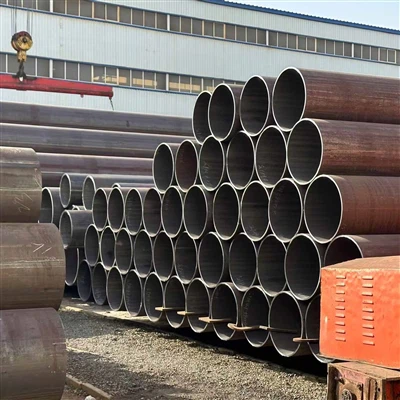
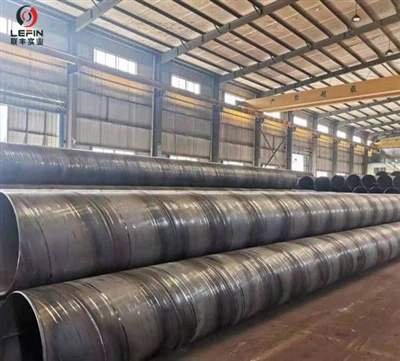
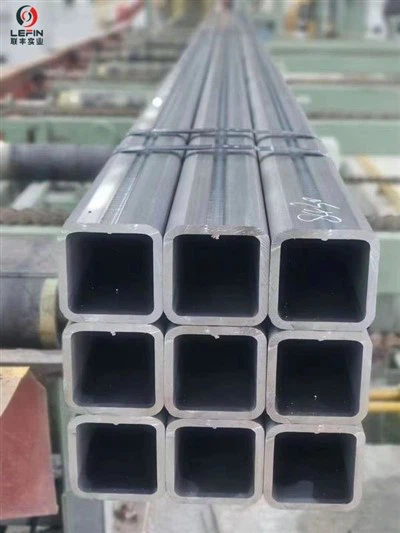
In the 16–24 inch range, both ERW and LSAW can be quoted-but the diameter alone does not decide. The practical split comes down to wall thickness, design pressure and service conditions. This note gives a short, direct way to make the call
The overlap is real, but it is narrower than the inquiry sheet sometimes suggests.
ERW pipe runs up to roughly 24 inches outside diameter. LSAW pipe starts from around 16 inches and goes much larger. So if a buyer specifies 20-inch OD, both processes can quote it. That is where the confusion starts: two offers arrive, one lower, one higher, and the instinct is either to take the lower one and hope, or take the higher one and stop thinking.
Neither instinct is a selection method.
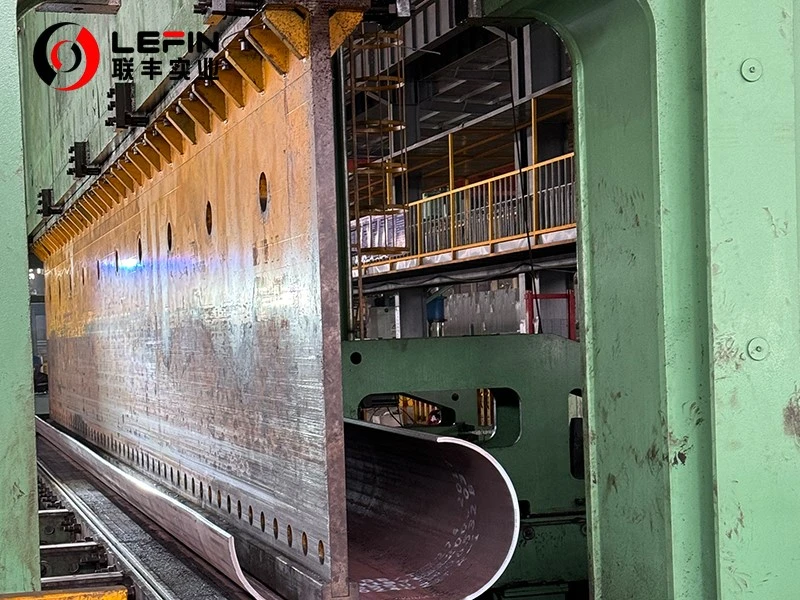
Wall Thickness
The first question is not "16-inch or 24-inch." It is "how thick does this pipe actually need to be."
ERW is made from hot-rolled coil, formed and welded at speed. That process is efficient and cost-effective, but its practical wall thickness range in this diameter band is narrower than LSAW's. LSAW starts from individual steel plates, presses them into shape, and welds both sides-a slower, plate-based route that extends comfortably into thick-wall territory, often up to 50 mm and beyond depending on the mill and specification.
So the wall thickness requirement does most of the sorting for you:
- If the design calls for a moderate wall in the 16–24 inch range-say, roughly 8 mm to 12.7 mm-ERW is a legitimate candidate, not a compromise.
- If the design pushes into thicker wall, particularly above roughly 16 mm to 20 mm, LSAW becomes the more natural fit, and in many high-pressure specifications the only compliant one.
A 20-inch line carrying low-pressure water at 10 mm wall is not the same procurement problem as a 20-inch gas line at 25 mm wall. Treating them as the same problem is where over-specification begins.
Pressure And Service Demand
Wall thickness is a proxy for the real variable: design pressure and service severity.
ERW's weld is a solid-state, high-frequency seam. It is fully adequate for medium-to-low pressure service, water transmission, structural applications, and distribution lines. It is not the default choice for high-pressure gas transmission, offshore service, or thick-wall critical lines, where LSAW's double-sided submerged arc weld and more extensive nondestructive examination routine provide a different level of assurance.
This is also where the weld joint factor enters the conversation-briefly. In some design codes and product specifications, the longitudinal joint factor assigned to ERW can be lower than that assigned to LSAW, which means the same nominal wall thickness does not automatically translate into the same calculated pressure rating. That does not make ERW "weak." It means the design calculation has to account for the joint, and in high-pressure service the required wall can climb quickly once that factor is applied. If the pressure is moderate and the code permits it, the factor is not a reason to avoid ERW. If the pressure is high, it is one more reason LSAW tends to be the specified route.
The Application, Not The Diameter, As The Tiebreaker
When the wall thickness and pressure checks leave both processes technically plausible, the application usually settles it.
Cases where ERW in the overlap range makes sense:
- 18-inch or 20-inch water transmission, wall in the 8–12 mm range, moderate pressure.
- Structural or piling service where the pipe is not carrying high-pressure fluid.
- Projects where the specification permits ERW and the inspection regime is matched to the service.
Cases where LSAW in the overlap range makes sense:
- 20-inch or 24-inch high-pressure gas or oil transmission, particularly where the line class or project specification calls for full-body UT/RT and a higher joint factor.
- Thick-wall service, roughly above 16 mm, where ERW's practical wall ceiling or inspection economics become a constraint.
- Offshore, subsea, or critical lines where the consequence of a weld-related failure justifies the higher initial cost of plate-based pipe.
Notice that "24-inch" appears on both sides. The diameter alone does not decide. A 24-inch low-pressure water line and a 24-inch high-pressure gas line can sit in the same inquiry folder and belong to different processes.
Technical Call First
Before You Compare Prices, Settle the Technical Call
ERW has the lower initial cost per ton in this diameter range. LSAW carries a premium, typically 10% to 25% depending on wall thickness, grade, and testing scope. That premium buys plate-based forming, double-sided welding, and a heavier nondestructive examination routine-capabilities that matter when the service demands them, and are simply overhead when it does not.
The mistake to avoid is not "buying ERW when you needed LSAW." The more common and more expensive mistake in the overlap range is specifying LSAW by default for a moderate-pressure, moderate-wall application because the diameter looked large enough to worry about. That is over-specification, and it shows up on the purchase order as a higher price for a capability the line will never use.
After the technical call is made, the cost comparison becomes straightforward:
- If the wall, pressure and service point to ERW, the lower price is the correct price-not a shortcut.
- If they point to LSAW, the premium is buying a capability the line actually needs, not insurance against a diameter.
Not Sure Which Side of the Overlap You're On? Talk to LEFIN STEEL.
If you are working in the 16–24 inch range and the wall thickness and pressure class are not yet fixed, send your design pressure, service medium, and any project specification that governs weld acceptance to LEFIN STEEL. We will tell you which side of the overlap your line actually falls on-and quote accordingly, rather than quoting the safer-sounding option by reflex.