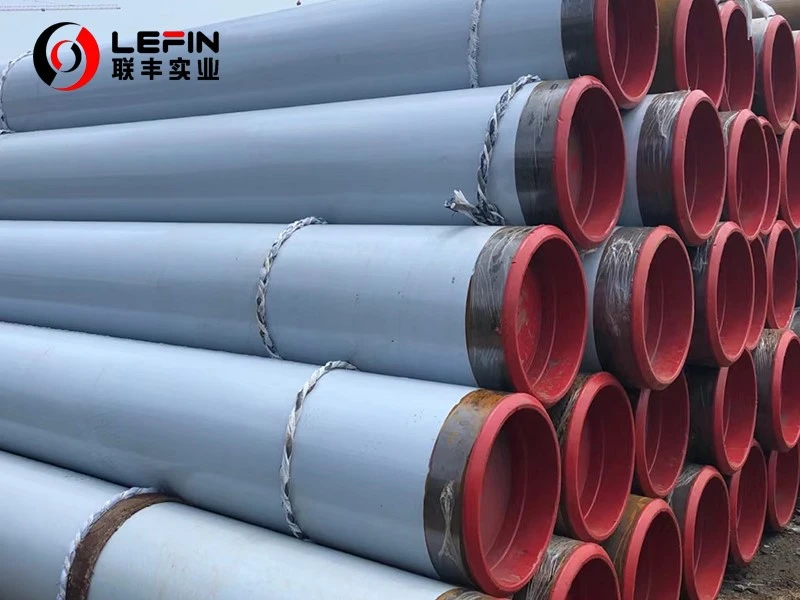
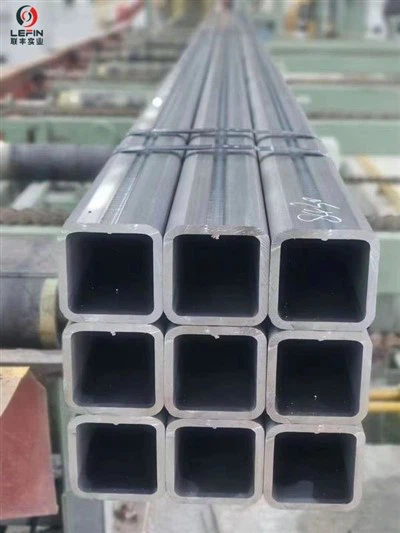
Plastic-coiled seamless steel pipes :
(internal and external EP/PE coating)
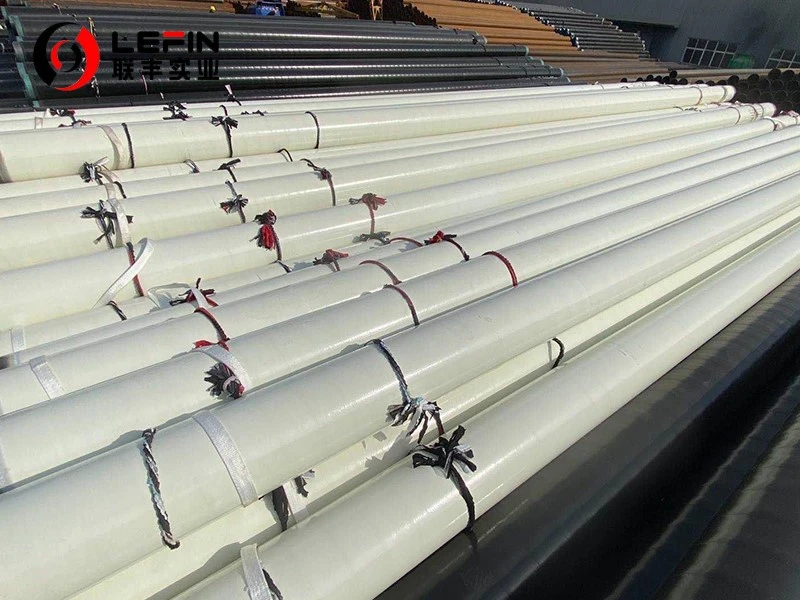
Cutting → Pipe end preparation → Coating repair → Connection
Core Principles: Plastic-coated pipes should preferably be cold-cut; high temperatures that damage the plastic layer must be strictly controlled. Repair materials must match the original coating. The connection method determines the form of pipe end processing. Ordinary black seamless steel pipes only require beveling and rust removal, with no need for coating repair. The following key points specifically target internal and external plastic-coated anti-corrosion seamless steel pipes used in water supply/drainage, fire protection, and chemical industries.
I. Cutting Process: Considerations & Prohibitions
✅ Recommended Tools: Metal grinding wheel cutting machine (water-cooled), band saw, rolling cutter, pipe beveling machine (cold cutting)
✅ Requirements:
- The cut surface must be perpendicular to the pipe axis. Angular deviation shall be within code-allowed limits: DN ≤ 50 ≤ 1mm; 50 < DN ≤ 100 ≤ 1.2mm; 100 < DN ≤ 300 ≤ 1.5mm; > 300 ≤ 2mm.
- Water cooling is required during cutting to prevent charring, blistering, or delamination of the plastic layer. Rotational speed must not be excessively high.
- Secure fixation is essential to avoid vibration-induced edge chipping or coating tearing.
❌ Strictly Prohibited: Oxygen flame cutting and plasma cutting. High temperatures will severely damage the internal and external plastic layers over a large area, making subsequent repair difficult and leaving corrosion hazards. If gas cutting is absolutely unavoidable, fireproof and heat-insulating shields must protect both ends. After cutting, all carbonized plastic layers must be thoroughly ground off. Large-area damage suggests discarding the pipe.
Ordinary Black Seamless Steel Pipes (Uncoated): Flame/plasma cutting may be used. Post-cutting focus on removing scale, cracks, and slag.
II. Pipe End Preparation (Critical: Source of Many Leaks and Coating Failures)
Two operational scenarios: Preparing for welding; Preparing for grooved/coupling or threaded connections.
1. Deburring and Chamfering
Internal and external burrs and sharp edges must be ground clean. Pipe ends should have a chamfer of R ≈ 12mm with a small angle of 10°–15°. Burrs can directly damage sealing rings and scratch the inner plastic lining.
2. Pipe Ends for Welding (Beveling)
- For wall thickness > 3mm, a V-groove is generally prepared: single-side angle 30°–37.5°, land (root face) 1.0–1.6mm, root gap 1.5–3mm (per ASME B16.25).
- Within 20mm on both sides of the groove: The plastic layer must be ground away to expose bare metal. This prevents the plastic from melting, burning, or causing porosity and inclusions due to welding heat. Grinding boundaries must be neat; do not remove intact coating over large areas.
- Groove Surface: Must be free of oil, water stains, dust, and scale. For alloy steel/high-pressure pipes, perform Penetrant Testing (PT) after beveling to check for cracks.
3. Pipe Ends for Grooved/Coupling Connections
After grooving, any damaged plastic layer at the groove location must be cleaned and subsequently repaired. Groove depth and spacing must strictly follow the coupling manufacturer's parameters. Groove edges must be chamfered without burrs.
4. Pipe Ends for Threaded Connections
After threading, remove iron chips from the threads. Since the plastic layer on the threaded portion is already destroyed, the threads require anti-corrosion sealing (using matching thread sealant paste).
General Inspection: Sections with severe ovality or impact dents should be cut off if possible; otherwise, misalignment will be significant, leading to poor sealing.
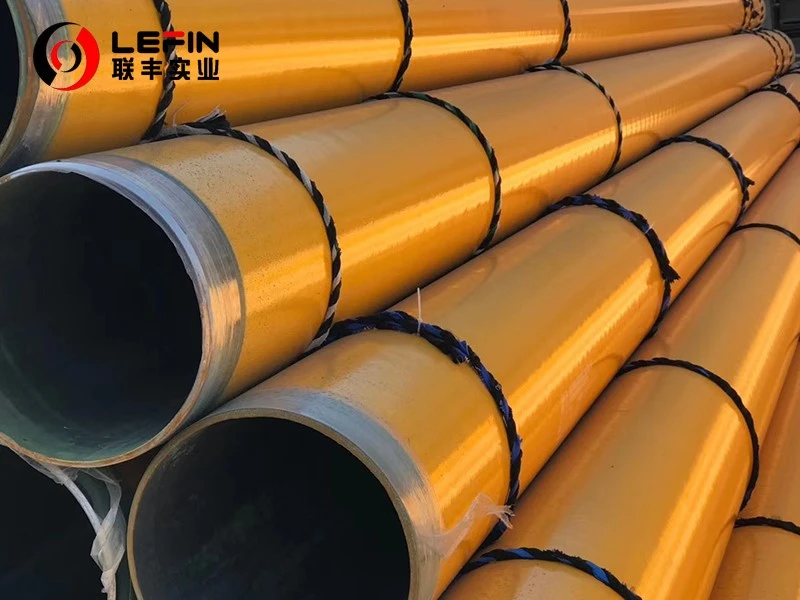
III. Coating Repair (Exclusive to Plastic-Coated Pipes; Skip for Black Steel Pipes)
Standard Reference: CJ/T 120 for Water Supply Plastic-Coated Steel Pipes. Weld joint repairs must be performed only after passing the hydrostatic pressure test.
1. Pre-repair Preparation (Determines Adhesion)
- Remove all loose, carbonized, or peeling plastic layers. Grind the repair area and surrounding overlap zones (overlap ≥ 25mm) to create a rough surface exposing a clean metal substrate.
- Degrease, dry, and remove dust. Construction is prohibited in humid or rainy environments.
- Distinguish between coatings: Epoxy (EP) for water supply/fire protection, Polyethylene (PE). Materials must not be mixed! Use two-component epoxy repair agents for EP; use PE repair strips or thermoplastic powder with hot air fusion for PE. Applying epoxy over PE will cause peeling.
2. Repair Operation Considerations
- Thickness: The repair layer thickness must not be less than the original pipe coating thickness. It must transition smoothly with the existing plastic layer, without steps or curled edges.
- Heat-applied Powder Repair: Temperature control is challenging. Low temperature leads to poor fusion and peeling; excessive temperature causes bubbles and brittleness. Ensure uniform heating; avoid localized overheating.
- Internal Wall Repair for Small Diameter Pipes: Difficult due to limited manual access after welding. In such cases, engineering practice prefers flange or grooved connections to minimize on-site welding.
- Large-Area Damage (> 25cm²): On-site repair is generally not recommended. Prioritize returning the pipe to the factory for recoating.
3. Post-Repair Inspection
• Appearance: No pinholes, bubbles, sagging, or lifted edges.
• Spark Test: Perform low-voltage spark testing (matching coating voltage); no breakdown leakage points allowed.
• Thickness Measurement: Use magnetic thickness gauge.
• Adhesion: Spot checks required.
4. Pipeline Connection Methods and Associated Precautions
① Butt Welding (High pressure, high temperature, chemical applications, permanent connection)
- Pipe ends: Bevel the edges; thoroughly grind off the plastic coating in the bevel area. During assembly, control misalignment to ≤10% of wall thickness and ≤2 mm.
- Limitations of coated pipes: The internal plastic lining is often damaged by welding heat. Internal recoating for small-diameter pipes is extremely difficult, posing a corrosion risk to the medium. Large-scale field butt welding is not recommended for corrosive media or water supply pipelines.
- Key points: Use TIG (Tungsten Inert Gas) welding for root passes. For carbon steel or low-alloy steels, preheat and perform post-weld stress-relief heat treatment according to specifications. Conduct weld inspection (RT/UT). After external welding, remove slag and apply external plastic coating. If personnel can access the interior, perform internal recoating; otherwise, switch to an alternative connection method in advance.
② Flange Connection (Most common, detachable, preferred for coated pipes)
- Types: Include slip-on flanges and weld-neck long-radius flanges (for high pressure).
- Pipe ends: Remove the plastic coating within a specified range at the pipe end where the flange will be welded. After welding and cooling, apply internal plastic coating on the inner side of the flange and over the weld area, extending above the water-stop line.
- Sealing: Use compatible rubber gaskets (EPDM or NBR, selected based on the medium). Tighten bolts diagonally in multiple passes evenly. Avoid tightening one side completely at once to prevent gasket misalignment and leakage. Ensure flange faces are free of weld spatter and burrs.
- Note: Coated flanges are strongly preferred. Bare steel flanges are prone to electrochemical corrosion.
③ Grooved Coupling Connection (Low to medium pressure in fire protection and water supply, fastest construction speed)
- Pipe ends: Roll grooves ensuring smooth surfaces without cracks. Repair any damage to the plastic coating in the groove area. Chamfer pipe ends; burrs are strictly prohibited.
- Mark insertion depth. Align the sealing ring centrally; avoid twisting or contamination with sand/mud. Tighten coupling bolts evenly. Most suitable for DN65–DN300. Pressure ratings are limited; not suitable for high-pressure applications.
- Drawbacks: Rubber seals may age over time, requiring future maintenance for potential leaks.
④ Threaded Connection (Small diameter, DN ≤ 50)
- Clean threads after tapping. Apply compatible anti-corrosion sealing paste (do not rely solely on PTFE tape, as it lacks durability and can compromise the integrity of the plastic coating seal). Control tightening torque to prevent cracking or bulging of the pipe end coating. Perform anti-corrosion repair on exposed threaded portions.
⑤ Socket Welding (Instrument tubing, small-diameter high-pressure applications)
High risk of crevice corrosion; use with caution when handling corrosive media. The plastic lining inside the socket is typically damaged during welding. Therefore, this method is generally not used for coated water supply pipes.