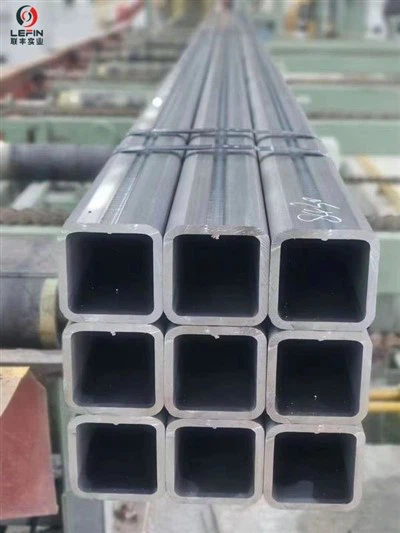
When a buyer sends an EN 39 inquiry, the technical core is settled: 48.3 mm OD, Type 3 or Type 4 wall, S235JR grade, dimensional and tensile properties verified against the standard. What differs across markets is everything around that core-how the tube is finished, how it is packed, what paperwork accompanies it, and how the order is phased.
These differences are practical, not hierarchical. A buyer in Jebel Ali and a buyer in Laem Chabang may both need EN 39 tube, but the project type, climate and logistics chain shape what they ask for. Understanding those patterns helps us prepare a quote that matches the actual job, rather than sending a generic offer sheet.
Middle East
Inquiries from the Gulf region tend to arrive with a more detailed specification attached. This reflects the project environment: large-scale infrastructure and commercial construction, often with EPC contractors and third-party inspectors involved at the approval stage.
Surface finish is a common point of specificity. Hot-dip galvanized tube appears frequently in inquiries from the UAE and Saudi Arabia, with coating requirements sometimes referenced to ISO 1461 or a project-specific standard. This is driven by outdoor service life expectations and the acceptance criteria written into the construction contract, not by a difference in the EN 39 standard itself.
Documentation is another area where Middle East inquiries tend to be explicit. Mill test certificates to EN 10204 3.1 are commonly requested, and some projects require third-party inspection releases before shipment. The GCC market has well-established expectations around material traceability, and buyers often confirm certificate scope at the inquiry stage rather than after order placement.
Southeast Asia
Inquiries from Southeast Asia show a different pattern. The project mix is more varied-smaller commercial jobs, rental fleet replenishment, and distributed site deliveries-and the purchasing behavior reflects that fragmentation.
Black tube has broader acceptance across several Southeast Asian markets for scaffolding applications where the service environment does not demand galvanized finish. This is a finish preference, not a quality shortfall: the EN 39 dimensional and mechanical requirements apply identically to black and galvanized tube.
Loading efficiency and mixed specification handling come up more often in this region. Buyers may combine multiple lengths in a single container, or schedule deliveries in batches matched to project phases rather than taking one full container of a single size. This places more demand on packing planning and pre-shipment coordination than on the tube specification itself.
What Our LEFIN STEEL Do
The regional differences described above affect three things in our production and shipping process: surface treatment selection, packing configuration, and documentation need. They do not affect the inspection criteria applied to the tube itself.
Every EN 39 order, regardless of destination, goes through the same dimensional checks-outside diameter, wall thickness around the circumference, straightness, mass per metre-and the same tensile testing for yield strength, tensile strength and elongation. The tube type (3.2 mm or 4.0 mm) is marked and certified according to the standard, not according to the buyer's region.
If you are preparing an EN 39 inquiry and are unsure whether your target market typically expects galvanized or black finish, or what packing format is standard for your destination port, send us the project country and end use. We can share the specification profile from comparable shipments and help you build the inquiry around the right parameters from the start.