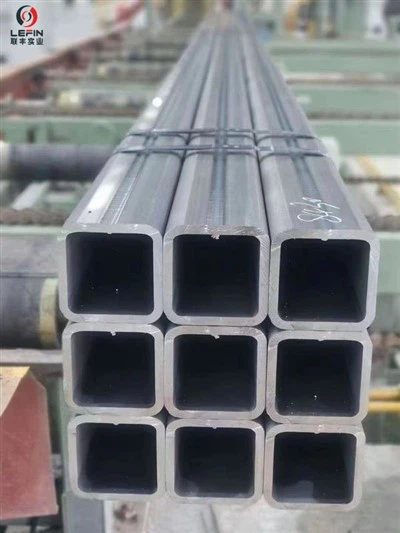
Line pipe is a pipe used to transport liquids such as gas, water and oil. It can connect resources and markets in different regions, providing important infrastructure support for economic and social development. Line pipe's pipes can not only be easily expanded as needed, but can also run multiple types of liquids, which makes it an important role in the energy sector. The use of Line pipe enables people to efficiently and safely transport resources from one location to another, which can lead to economic gains.

CLASSIFICATION
1. Seamless and welded pipes
- Seamless Line Pipe: No seams, suitable for high pressure applications. It is produced by forming a solid steel coil and extruding it to the desired thickness and diameter.
- Welded Line pipes: They are manufactured by forming flat steel into a cylinder and welding the edges. Welded tubes can produce large diameter tubes, making them more cost-effective in low-pressure to moderate-pressure applications.
2. Manufacturing process classification
Continuous welding (COWL) : suitable for the production of small diameter pipes.
- Single gas metal arc pass: suitable for specific welding applications.
- At least one submerged arc welding (SAW) : suitable for the production of large diameter and thick wall pipes.
3. API 5L standard level
The API 5L standard specifies several grades of Line pipe, such as X52, X56, X60, X65, etc., each grade has a different yield strength and tensile strength grade. For example:
- X52: The yield strength is 52 ksi (about 359 MPa).
- X60: The yield strength is 60 ksi (about 414 MPa).
- X65: The yield strength is 65 ksi (about 448 MPa).
4. Product Specification Level (PSL)
The API 5L standard includes two product specification levels (PSL) :
- PSL 1: Basic requirements, suitable for general applications.
- PSL 2: Enhancement requirements, including mandatory notch toughness, limited strength range, carbon equivalent to improve weldability.
FEATURES
1. Material strength and durability:
Line pipes are typically made of carbon steel or alloy steel and provide excellent tensile strength, enabling them to withstand high pressures and mechanical stresses during installation and operation.
2. Corrosion resistance:
Because liquids such as oil, gas, or water transported by pipes can be corrosive, line pipes are often subjected to various coating and treatment processes, such as galvanizing, epoxy coating, or cathodic protection systems, to resist corrosion and extend service life.
3. High pressure and high temperature resistance:
Line pipe is designed to operate under high pressure conditions. Depending on the fluid and environmental conditions, the pipe must be able to withstand significant fluctuations in temperature.
4. Weldability:
Since pipes are usually constructed in sections and connected by welding, line pipes must have good welding characteristics. Weldability ensures a safe, leak-free connection between sections of the pipeline.

APPLICATION
Specific applications of Line pipe in conveying gas, oil or water include:
1. Conveying gas
Line pipes are used to build natural gas transmission pipeline systems that can transport natural gas over long distances. For example, in hydrogen-doped natural gas pipeline transportation and terminal applications, the natural gas pipeline needs a line pipe that can withstand high pressure and remain sealed under changing environmental conditions. In natural gas applications, line pipe has also undergone additional testing for toughness and resistance to brittle breakage, especially in cold climates.
2. Oil delivery
Line pipes play a key role in oil transportation, especially in applications that transport crude oil or refined oil products over long distances. For example, in the easy-to-condense high-viscosity crude oil pipeline transportation technology, Line pipe needs to have good corrosion resistance and mechanical strength to adapt to different transportation conditions.
3. Water delivery
Line pipes are widely used in water delivery systems to distribute drinking water, wastewater, and industrial water. Covers urban water supply and irrigation systems. In these applications, pipes need to be able to withstand internal water pressure and external environmental conditions, while ensuring that the water quality is not contaminated. Corrosion resistance is a major concern, so pipes are often coated or lined, such as cement mortar or polyethylene, to protect the steel and extend its service life.
4. Oil and gas extraction
During the extraction of oil and gas fields, Line pipes are used to connect wellheads and treatment facilities, as well as to transport crude oil and natural gas from wellheads to treatment and storage facilities.
5. Petrochemicals and refineries
In petrochemicals and refineries, Line pipes are used to transport a variety of chemicals and petroleum products in piping systems that need to be able to withstand high temperature, high pressure and corrosive environments.
6. Submarine pipeline
Subsea pipelines are a key component in connecting offshore oil fields to onshore or offshore processing platforms, and Line pipes in such applications require extremely high strength and corrosion resistance to meet the challenges of the deep-sea environment.