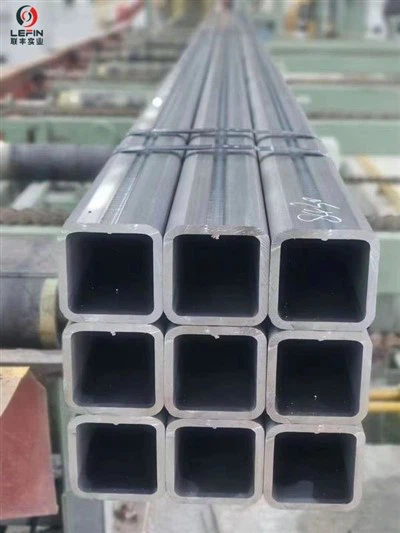
Steel pipe cathodic protection is an electrochemical anti-corrosion technology. Its core lies in using external intervention to make the steel pipe act as the cathode in an electrolyte environment (such as soil, water), thereby fundamentally inhibiting its electrochemical corrosion. It is a standard anti-corrosion method for buried/underwater steel pipes (for oil and gas, gas, water supply and drainage).
The following provides a detailed explanation from five aspects: principle, method, key parameters, significance, and operation and maintenance.
I. Core Principles of Cathodic Protection
1. The Essence of Steel Corrosion (Electrochemical Corrosion)
When steel pipes (carbon steel) are buried or submerged in water, due to the material, stress, and the unevenness of the soil/water, countless micro-electrochemical cells are formed on the surface:
- Anode zone: Iron atoms (Fe) lose electrons and become iron ions (Fe²⁺), which dissolve into the medium → steel corrosion (rusting, perforation);
- Cathode zone: Electrons accumulate, resulting in oxygen absorption or hydrogen evolution reactions, without corrosion.
In simple terms: Corrosion is the process of electrons "leaving" the surface of the steel pipe.
2. The principle of cathodic protection (supplying electrons to the steel pipe)
By using external methods (sacrificial anode/external current), electrons are continuously replenished to the surface of the steel pipe, causing the overall potential of the pipe to shift negatively, becoming the cathode of an electrochemical cell:
- There is an excess of electrons on the surface of the steel pipe, and iron atoms cannot lose electrons → the anode corrosion reaction is completely suppressed;
- Protection standard: Compared to the saturated copper sulfate reference electrode (CSE), the potential of the steel pipe is stable at -0.85V to -1.20V (the industry's gold range).
- Below -1.20V: Over-protection, hydrogen evolution leads to hydrogen embrittlement of the steel pipe (strength reduction, cracking);
- Above -0.85V: Insufficient protection, corrosion continues.
II. Two Main Methods of Cathodic Protection
Method 1: Sacrificial Anode Method (SACP)
- Principle: Use a metal that is more reactive (has a more negative potential) than iron (such as magnesium, zinc, aluminum and their alloys) as the anode, electrically connect it to the steel pipe, and bury it in the same electrolyte.
- The more reactive metal (anode) loses electrons first and is corroded ("sacrificing" itself);
- Electrons flow through the wire to the steel pipe, making it the cathode → protected.
Common anode materials:
- Magnesium alloy: The most negative potential (-1.60V CSE), high driving voltage, suitable for environments with high soil resistivity (>100Ω·m);
- Zinc alloy: Potential -1.10V CSE, stable current, suitable for low resistivity, humid environments (such as coastal, marshy areas);
- Aluminum alloy: Low cost, large capacity, suitable for seawater environments.
- Advantages and disadvantages:
✅ No need for power supply, simple installation, no stray current interference, no maintenance (replace the anode every 3-5 years);
❌ Output current is small, protection distance is short (single anode protection for several hundred meters), suitable for short pipelines, small areas, scattered facilities (such as urban branch pipes, storage tanks).
Method 2: Externally Applied Current Method (Forced Current Cathodic Protection, ICCP)
- Principle: The system consists of a DC power supply (constant potential instrument), auxiliary anode, reference electrode, and cable:
- The negative terminal of the power supply is connected to the steel pipe (cathode), and the positive terminal is connected to the auxiliary anode (graphite, high silicon cast iron, titanium-based oxide);
- After power is applied, the power supply forces electrons to be injected into the steel pipe, causing the cathode potential to shift negatively to the protection range;
- The reference electrode continuously monitors the cathode potential of the steel pipe and feeds it back to the constant potential instrument, which automatically adjusts the output current/voltage to maintain a stable potential.
Advantages and Disadvantages:
✅ High output current, long protection distance (up to several tens of kilometers for a single station), controllable and adjustable, suitable for long-distance pipelines, large-scale networks, and environments with high resistivity;
❌ Requires external power supply, complex equipment, requires professional operation and maintenance, and there is a risk of stray current interference.

III. Key Parameters and Design Points
1. Protection Potential: -0.85V to -1.20V (CSE), excluding IR drop (potential error caused by soil resistance).
2. Current Density:
- Bare steel pipe: 50-100 mA/m²;
- Corrosion-resistant layer steel pipe (such as 3PE, epoxy coal tar pitch): 0.5-5 mA/m² (the better the quality of the corrosion-resistant layer, the smaller the current required).
3. Anode Layout:
- Sacrificial anode: spacing 20-50 m, burial depth 1-2 m, on the side close to the steel pipe;
- External current anode bed: shallow burial (1-2 m, linear/circular) or deep well (20-50 m, high resistivity areas).
IV. The Significance of Cathodic Protectio
1. Completely prevent corrosion at its source, significantly extending the lifespan of pipelines
- Unprotected buried steel pipes: perforation occurs within 3-5 years in the soil, and severe corrosion occurs within 10 years;
- Cathodic protection combined with high-quality anti-corrosion coating: the lifespan can reach over 50 years, approaching the design life.
2. Dual protection to compensate for the defects of the anti-corrosion layer
- - Anti-corrosion layer (physical isolation): prone to damage, aging, and peeling, with "leakage points";
- - Cathodic protection (electrochemical protection): precisely protects the exposed steel pipes at the leakage points, forming a "physical + electrochemical" dual protection, with no protection blind areas.
3. Reduce the total life cycle cost and achieve significant economic benefits
- Initial investment: Sacrifice the low cost of the anode method (measured in meters), and the medium cost of the external current method (equipment + installation); Long-term benefits: Reduce huge expenses such as pipeline replacement, production shutdown for emergency repairs, and compensation for medium leakage, with the total life cycle cost reduced by more than 60%.
4. Ensure safety and reduce environmental risks
- Prevent the steel pipes from corroding, thinning, and cracking, as well as the leakage of media (oil, gas, chemicals) which could lead to explosions, fires, and environmental pollution;
- The working voltage/current is extremely low (<50V, <100A), eliminating the risk of electric shock, and the interference to surrounding metal facilities is controllable.
5. Compliant with industry mandatory standards
According to standards such as China's GB/T 21448-2017 "Technical Specification for Cathodic Protection of Underground Steel Pipelines" and ISO 15589-1: Underground steel pipelines must adopt cathodic protection.
V. Daily Operation and Monitoring
- Potential Monitoring: Measure the protection potential of the steel pipe monthly, ensuring it is within -0.85V to -1.20V.
- Current Monitoring: Measure the output current of the sacrificial anode (normal range 0.1 - 1A), and measure the output of the potentiostat of the external current anode (current/voltage stability).
- Anode Inspection: Replace the sacrificial anode every 3-5 years (consumption over 80%), and measure the grounding resistance of the external current anode ground bed annually (< 5Ω).
- Corrosion Protection Layer Inspection: Regularly use equipment such as PCM and CIPS to detect the damaged points of the corrosion protection layer, and repair them in time.
Summar
Cathodic protection is the core technology for protecting steel pipes from corrosion: by using sacrificial anodes (which is simple and cost-effective) or applying an external current (which is highly efficient and suitable for long-distance applications), electrons are supplied to the steel pipes to make them the cathode, thereby fundamentally preventing corrosion. It works in conjunction with the anti-corrosion coating, significantly extending the lifespan of the pipelines, reducing costs, and ensuring safety. It is an indispensable "electrochemical guardian" for buried or underwater steel pipes.