I. Core Essence of Steel Pipe Cracking
The essence of steel pipe cracking is that the internal stress is greater than the material's yield strength/failure toughness. In addition, there are four major causes: material defects, process defects, excessive external force, and environmental corrosion.
From microscopic grain cracking to micro-crack expansion to macroscopic cracks, it occurs in five forms: longitudinal cracking, transverse cracking, circumferential cracking, end cracking, and weld cracking.
II. Why do steel pipes crack? Classification of fundamental causes
1. Material-related reasons (inherent defects)
1. Inclusions/phase segregation in raw materials
During steel production, if the contents of sulfur, phosphorus, oxygen, and hydrogen exceed the standard, sulfides and oxides will accumulate, disrupting the continuity of metal grains and becoming sources of cracks; if the carbon equivalent is too high, the steel becomes brittle and has poor toughness, and is prone to cold cracking.
2. Insufficient metallographic structure
Coarse grains, banded structure, Vickers structure, hardened martensite hard and brittle structure, significantly reduced plasticity, even slight stress will cause cracking.
3. Uneven wall thickness, excessive ellipticity
One side of the pipe is thicker and the other is thinner, the stress concentrates at the thin-walled area, and cracks occur preferentially under stress.
4. Hydrogen-induced cracking (most common)
During steel production, acid washing, welding, electroplating processes absorb hydrogen, hydrogen atoms penetrate the lattice, accumulate to form internal pressure, crack the grains, and mostly manifest as delayed cracking.

2. Production process reasons (post-fabrication defects)
1. Inappropriate hot rolling/cold drawing process
- Excessive heating/cooling temperature: Overheating leads to coarse grains and incomplete forging; too low temperature results in poor plasticity and direct tearing during rolling.
- Excessive reduction in rolling: Excessive deformation per single pass exceeds the material's tolerance limit, causing internal layering and micro-cracks.
- No intermediate annealing in cold drawing: Severe cold work hardening, excessive residual tensile stress, and natural cracking during storage and cutting.
2. Defects in welded steel pipes
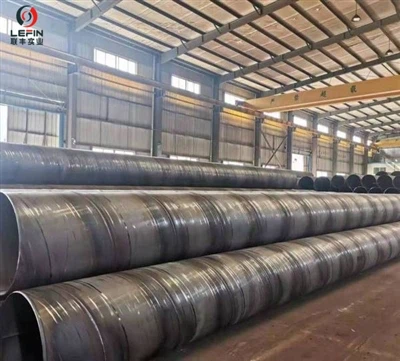
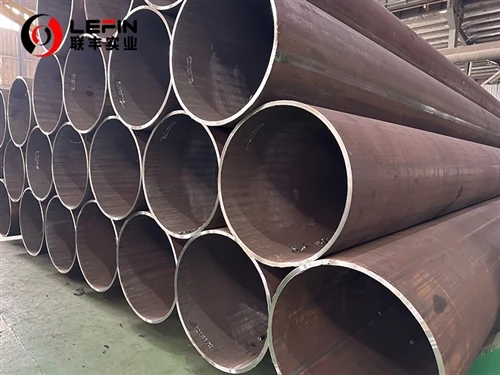
Spiral welding, straight seam welding: Lack of penetration, slag inclusion, gas porosity, undercut, weld bead, the weld is a weak area, stress concentration causes direct cracking; excessive welding heat input, brittleness in the heat-affected zone.
3. Improper heat treatment
Too fast cooling during normalizing and annealing leads to quenching stress; insufficient tempering, residual stress not released, and subsequent slow cracking.
4. Cutting, beveling, chamfering processing
Sawing, flame cutting generate thermal stress and hardened layer, resulting in micro cracks at the end, which expand subsequently.
3. Stress and External Force Causes
1. Residual Internal Stress
After rolling, welding, and cold drawing, the internal stress has not been relieved. The steel pipe has its own tensile stress inside, and it will naturally crack even without external force.
2. Mechanical Overload from External Forces
Compression, impact, bending, uneven force distribution during lifting and installation, and exceeding the design yield strength of the steel pipe.
3. Stress Concentration
Cracks occur at the pipe opening notch, scratches causing pits, sharp corners from thread processing, and sudden changes in wall thickness. Local stress is magnified several times, leading to immediate cracking.
4. Causes of Corrosion and Deterioration of Environment and Medium
1. Low-temperature embrittlement
Low-carbon and low-alloy steel pipes exhibit a significant drop in impact toughness at extremely low temperatures. Even slight vibrations or impacts can cause brittle fracture and cracking.
2. Corrosion cracking
- Stress corrosion: Moisture, acids, alkalis, chloride ions + tensile stress, resulting in stress corrosion cracks (SCC).
- Intergranular corrosion: The medium erodes the grain boundaries, causing gradual cracking.
- Hydrogen corrosion, sulfide corrosion (common in oilfield and coal chemical pipeline systems).
III. Under what circumstances will steel pipes crack? Comprehensive overview of all scenarios
1. Cracking during production
- During hot rolling and piercing: The pipe billet has a low temperature and contains many inclusions, resulting in a direct tear at the piercing tip.
- During rolling process: Excessive reduction in pressure, improper adjustment of guide rollers, causing longitudinal cracking of the pipe wall.
- During cold drawing production: Poor lubrication of the molds, excessive deformation, and failure to anneal, leading to cracking during drawing.
- During welding formation: Poor weld formation, mismatch of welding current and voltage, immediate cracking of the weld.
- During straightening process: Excessive pressure on the straightening rollers, causing the pipe to be crushed and generating transverse cracks.

2. Cracking during storage/transport
- Cold-drawn pipes and welded pipes have not undergone stress relief, and sudden temperature changes during outdoor storage cause thermal expansion and contraction, leading to cracking.
- Improper binding during transportation and lifting, and unreasonable padding points, result in local compression and abrasion, causing cracking.
- Exposure to moisture, rain, rusting and corrosion, gradually expanding micro-cracks on the surface.
3. Post-processing cracking
- Flame cutting and grinding of pipe ends, thermal shock causes end cracks.
- Thread cutting, threading, slotting processing, cutting stress combined with sharp corner stress leads to cracking.
- Randomly truncating, rough knocking, vibration amplifies the existing micro-cracks.
4. Cracking during installation and use
- Forced alignment of pipes, hard pulling for connection, resulting in installation tensile stress.
- Exceeding the design pressure for pressure-bearing, water hammer impact, sudden pressure increase and decrease.
- Outdoor use in low temperatures, without insulation, causing brittle fracture.
- Foundation settlement of buried pipes, suspended loading, soil corrosion.
- High-temperature conditions: Long-term high-temperature creep, grain slip causing cracking; alternating hot and cold cycles, thermal fatigue cracking.
IV. How to Adjust and Avoid Cracks During Production (Practical Points for the Factory End)
1. Control of Raw Materials (Preventing Cracks from the Source)
1. Strictly control the steelmaking composition: reduce sulfur and phosphorus, control carbon equivalent, strictly control hydrogen content, select qualified billets, and avoid random mixing of scrap steel and other impurities.
2. All incoming billets must undergo flaw detection: ultrasonic/induction flaw detection, remove internal inclusions, layered, and shrinkage defects.
3. Uniform heating of billets: step-by-step furnace heating at a constant speed, avoiding local overheating and underheating, and ensuring sufficient holding time to achieve uniform microstructure.
2. Rolling/Cold Drawing Process Adjustment
1. Precise Temperature Control
For hot rolling, the initial and final rolling temperatures are strictly controlled to avoid the brittle zone; in a low-temperature environment, the heating temperature of the billet is appropriately increased.
2. Reasonable Distribution of Reduction
Reduce the single rolling deformation amount, use multiple passes with small reduction to avoid excessive stress in one go; optimize the spacing of rolls and guides to ensure uniform wall thickness and meet the ellipticity requirements.
3. Anti-cracking in Cold Drawing Process
Before cold drawing, perform spheroidization annealing to eliminate work hardening; polish the molds and provide sufficient lubrication to reduce friction stress; use multiple passes of drawing and add annealing processes in the middle.
3. Special anti-cracking measures for welded steel pipes
1. Match the welding current, voltage, and welding speed to prevent incomplete penetration, undercutting, and slag inclusion.
2. Preheat before welding and cool slowly after welding. High-carbon steel/alloy steel pipes must be tempered after welding to relieve stress.
3. Conduct in-line ultrasonic and X-ray flaw detection on weld seams, and immediately remove cracked steel pipes.
4. Heat treatment for stress relief (key process)
1. Cold-drawn pipes, thick-walled pipes, and alloy pipes must undergo stress relief annealing/normalizing to release residual stresses from rolling and welding.
2. Control the cooling rate. Prohibit air cooling or rapid cooling. Use furnace cooling, slow cooling in pits to avoid hardening structures.
5. Post-processing and straightening control
1. Fine-tune the straightening roller pressure to prevent excessive straightening from causing transverse cracks; re-inspect after straightening.
2. Use low-speed processing for pipe mouth rounding and chamfering to avoid direct burning of the pipe mouth by flame cutting; instead, use mechanical sawing to reduce thermal cracks.
3. Make a rounded transition at the pipe mouth after processing to eliminate stress concentration caused by sharp corners and gaps.
6. Online quality inspection
Full-process eddy current, ultrasonic, and hydrostatic tests are conducted to detect micro-cracks in advance and prevent products with cracks from being released from the production line.
IV. How to Adjust and Avoid Cracks During Production (Practical Points for the Factory End)
1. Type selection and compatibility (select the right pipe first)
1. Low-temperature environment: Select steel pipes resistant to low-temperature impact (such as Q355C/D/E), and avoid using ordinary low-carbon steel.
2. Corrosive media (acid, alkali, chemical, seaside): Select galvanized pipes, stainless steel, anti-corrosion alloy pipes. Ordinary carbon steel pipes are prone to stress corrosion cracking.
3. High-pressure and high-temperature conditions: Select thick-walled, seamless steel pipes. Reject thin-walled welded pipes as substitutes.
2. Storage and Transportation Notes
1. Store the finished steel pipes flat to avoid being suspended or subjected to single-point stress; use layered wooden supports to prevent direct hard contact and squeezing.
2. Cover them during rainy days to prevent rusting due to rain exposure and cracking caused by sudden temperature changes; keep them away from environments with acid and alkali corrosion.
3. Use flexible lifting belts for transportation and lifting. Do not directly press the pipe mouth or body with steel wire ropes. Strictly prohibit rough handling and impact.
3. Cutting and Secondary Processing
1. Try to use mechanical cold cutting as much as possible, and minimize the use of flame hot cutting; when flame cutting is necessary, remove the hardened layer and micro-cracks after the cutting.
2. After threading and slotting, make chamfers and rounded corners to eliminate the stress concentration at the sharp corners during the processing.
3. If the stress in the processed steel pipe is high, local annealing can be performed to relieve the stress.
4. Installation Construction Specifications
1. Pipeline installation must not be carried out by forcibly aligning or forcefully pulling or pushing. Leave sufficient thermal expansion allowance to avoid residual tensile stress during installation.
2. The spacing of supports and bearings must comply with regulations to prevent the pipeline from remaining suspended, sinking, or bending under force.
3. For high-temperature pipelines, expansion joints should be installed to compensate for thermal expansion and contraction, preventing thermal stress from causing cracks.
5. Operation and Maintenance Protection
1. Do not operate beyond pressure or load limits to avoid water hammer and sudden pressure fluctuations.
2. Insulate and prevent freezing for low-temperature pipelines to avoid brittle cracking; prohibit direct impact and knocking on pipelines in winter.
3. Apply anti-corrosion coatings and cathodic protection to buried pipelines to isolate soil chloride ions, acids, and alkalis from corrosion.
4. Regular inspections: Focus on inspecting welds, pipe openings, and elbow sections (where stress is the highest and cracking is most likely to occur), and promptly cut and replace any minor cracks to prevent their expansion and rupture of the pipeline.

VI. Quick Summary
1. Root cause of cracking: Material defects + residual stress + improper process + external force / low temperature / corrosion combined;
2. Scenarios prone to cracking: Production rolling / welding, cold drawing hardening, cutting thermal shock, low-temperature use, corrosive environment, forced installation;
3. Production prevention of cracking: Control raw materials, control temperature, reasonable reduction, post-weld heat treatment, stress relief, on-line flaw detection;
4. Usage prevention of cracking: Select the right material, gentle storage and transportation, cold cutting processing, standardized installation, control pressure, anti-corrosion, and anti-freezing.