Introduction to EN 10219
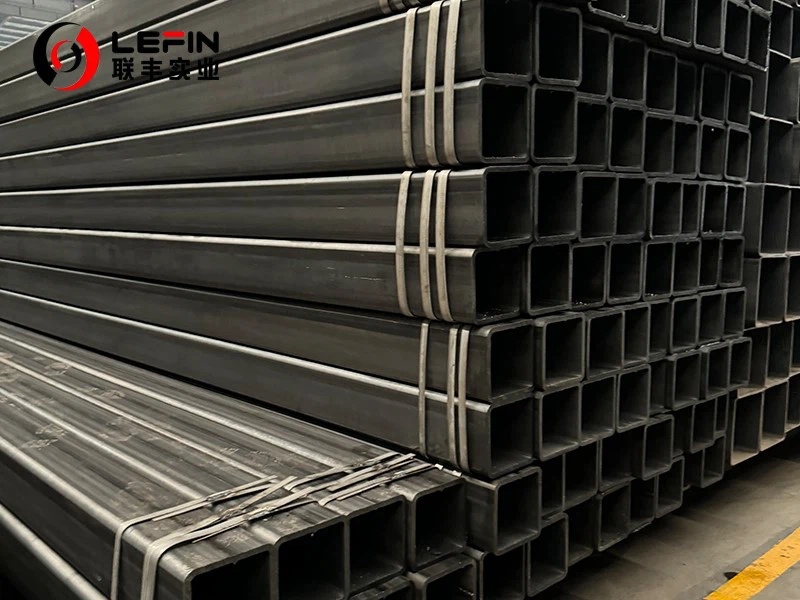
EN 10219 is the pivotal European standard specifying the requirements for cold-formed welded structural hollow sections of non-alloy and fine-grain steels. These sections, produced in square, rectangular, and circular profiles, are renowned for their excellent dimensional accuracy, high strength-to-weight ratio, and cost-effectiveness.
Scope of the EN 10219 Standard
The EN 10219 standard is systematically divided to address all critical aspects of product specification and quality control:
- EN 10219-1: Technical Delivery Conditions
This part establishes the fundamental requirements for the steel's chemical composition, mechanical properties (yield strength, tensile strength, impact toughness), and the conditions for technical delivery. It is the core document ensuring material performance and weldability for structural applications.
- EN 10219-2: Tolerances, Dimensions, and Sectional Properties
A vital resource for designers and specifiers, this part defines the permissible dimensional tolerances and provides the sectional properties (area, moment of inertia, section modulus, etc.) for standard sizes. Cold-forming allows for notably tighter tolerances on outside dimensions, wall thickness, and straightness compared to hot-finished products.
- EN 10219-3: Technical Delivery Conditions for High-Strength and Weather Resistant Steels (Voluntary)
Introduced as a supplement, this voluntary part extends the material range to include higher-strength and atmospheric corrosion-resistant steels (e.g., weathering steel), primarily intended for mechanical applications outside the EU Construction Products Regulation (CPR).
The Cold-Forming Manufacturing Process
The defining feature of EN 10219 hollow sections is the cold-forming manufacturing process. This method shapes steel at or near room temperature through a precise, multi-stage operation:
Forming: A coiled steel strip is uncoiled, leveled, and progressively shaped through a series of rolls into a circular, square, or rectangular tube.
Welding: The open seam is welded using High-Frequency Welding (HFW) technology, creating a clean, strong, and narrow weld seam.
Sizing & Finishing: The welded tube is passed through more rolls for final calibration to exact dimensions. The cold-working can induce strain hardening, potentially increasing yield strength, particularly in the corners.
Key Characteristics of the Process:
High Precision: Enables excellent control over dimensions and shape.
Superior Surface Finish: Produces a smooth, scale-free surface ideal for painting or exposed architectural use.
Material Effects: The cold-working alters the steel's microstructure, which is accounted for in the standard's property specifications.
Common Steel Grades
EN 10219-1 covers a series of common structural steel grades suitable for cold-forming and welding. The grade designation, like S355J2H, conveys key information:
S: Structural Steel
355: Minimum Yield Strength (355 MPa)
J2: Impact Toughness rating (Tested at -20°C)
H: Hollow Section
Chemical Composition
The composition limits are crucial for weldability, formability, and achieving the required mechanical properties. The following table outlines typical maximum percentages for primary elements in common grades based on EN 10219-1 and related base material standards.
Typical Chemical Composition (Maximum % by weight)
| Steel Grade | Carbon (C) | Manganese (Mn) | Silicon (Si) | Phosphorus (P) | Sulfur (S) |
|---|---|---|---|---|---|
| S235J0H, S235J2H | 0.17 | 1.40 | 0.035 | 0.030 | 0.030 |
| S275J0H, S275J2H | 0.20 | 1.50 | 0.035 | 0.030 | 0.030 |
| S355J0H, S355J2H | 0.22 | 1.60 | 0.035 | 0.030 | 0.030 |
| S355K2H | 0.22 | 1.60 | 0.035 | 0.030 | 0.030 |
Note: Fine-grain steels achieve their properties through micro-alloying (e.g., with Niobium or Vanadium) and controlled thermo-mechanical processing. The specified composition ensures good cold-forming capability and weldability without preheating for most thicknesses.
Mechanical Properties
The standard specifies minimum guaranteed values for key mechanical properties. The cold-forming process can lead to a variation in yield strength around the section perimeter, which is considered in the design standards.
Typical Mechanical Properties (Minimum Requirements)
| Steel Grade | Yield Strength (ReH) Min. (MPa) | Tensile Strength (Rm) (MPa) | Elongation at Fracture (Min. %) | Impact Toughness (Charpy V-notch, Min. J) |
|---|---|---|---|---|
| S235J0H, J2H | 235 | 360 - 510 | 26 | 27 J @ 0°C (J0) / -20°C (J2) |
| S275J0H, J2H | 275 | 430 - 580 | 22 | 27 J @ 0°C (J0) / -20°C (J2) |
| S355J0H, J2H | 355 | 470 - 630 | 20 | 27 J @ 0°C (J0) / -20°C (J2) |
| S355K2H | 355 | 470 - 630 | 20 | 40 J @ -20°C |
Key Property Explanations:
Yield Strength (ReH): The critical stress for structural design, indicating the onset of permanent deformation. The cold-forming process may elevate the actual yield strength above the stated minimum.
Tensile Strength (Rm): The maximum stress the material can withstand.
Elongation: A measure of ductility, vital for absorbing energy and indicating good formability.
Impact Toughness: The material's resistance to brittle fracture at low service temperatures, with J2 and K2 grades specified for colder environments.

Key Product Advantages And Applications
Sharp Corners and Precise Geometry: The process yields sections with well-defined, sharp corners and excellent dimensional consistency, simplifying fabrication and enabling sleek architectural aesthetics.
Excellent Surface Quality: A smooth, virtually scale-free surface reduces preparation work for painting or powder-coating.
Material Efficiency: The ability to produce complex, high-strength sections from coil stock makes it a highly efficient and cost-effective manufacturing route.
Weldability: The controlled chemical composition ensures good weldability using common arc welding processes.
- EN 10219 cold-formed hollow sections are incredibly versatile and are employed across numerous industries:
Building & Construction: Primary and secondary structural frames, roof trusses, purlins, and column supports in commercial and industrial buildings.
Architectural & Interior Design: Exposed structures, handrails, canopies, curtain wall mullions, and decorative features where visual appeal is paramount.
Industrial & Mechanical Engineering: Frames for machinery, agricultural equipment, conveyor systems, storage racks, and guardrails.
Infrastructure: Support structures for signage, lighting gantries, and lightweight bridges.
To understand the critical differences between EN 10219 cold-formed sections and EN 10210 hot-finished sections, and to guide your material selection, read our detailed comparison: [EN 10210 vs. EN 10219: Choosing the Right Structural Hollow Section].