Introduction to European Structural Hollow Sections
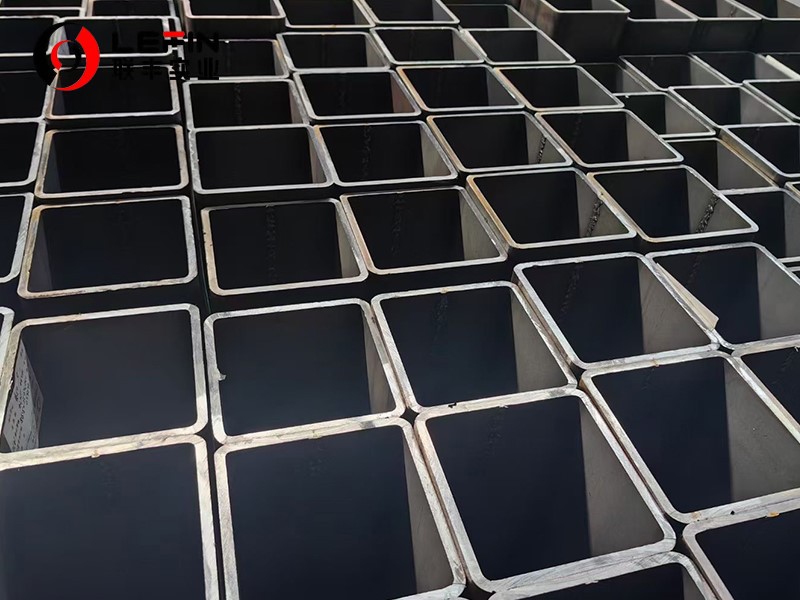
European construction and mechanical engineering, structural steel hollow sections-including square, rectangular, and circular profiles-are vital components prized for their excellent strength-to-weight ratio, appealing appearance, and efficient structural performance. Two key standards guide their use: EN 10210 and EN 10219.
These standards complement rather than compete, each addressing distinct manufacturing processes that yield materials with unique properties suited to specific applications. Understanding their differences is essential for selecting the right material, ensuring compliance, and effectively balancing cost and performance.
EN 10210: Hot-Finished Structural Hollow Sections
1 Overview and Scope
EN 10210 covers the specifications for hot-finished structural hollow sections made from non-alloy and fine-grain steels . The term "hot-finished" (or "hot-formed") means that the steel is shaped at high temperatures, typically above the recrystallization point, which simplifies the forming process and can enhance the material's mechanical properties.
The standard is divided into parts, with the most relevant being:
EN 10210-1: Covers the technical delivery conditions .
EN 10210-2: Specifies tolerances, dimensions, and sectional properties .
A more recent addition, EN 10210-3, provides technical delivery conditions for high-strength and weather-resistant steels.
2 Manufacturing Process
- Forming Process: The steel sections are formed hot, often through processes like thermomechanical forming .
- Heat Treatment: The standard applies to sections that are "formed hot, with or without subsequent heat treatment, or formed cold with subsequent heat treatment" above 580°C to achieve specific mechanical properties equivalent to a hot-formed product .
- Product Forms: It applies to seamless, electric welded, and submerged arc welded steel structural hollow sections of circular, square, rectangular, or elliptical forms .
This high-temperature forming results in a product with:
Uniform material properties throughout the cross-section.
Relieved residual stresses from the manufacturing process.
Improved toughness and ductility.
3 Common Steel Grades and Mechanical Properties
EN 10210-1 covers a range of common non-alloy and fine-grain steel grades. The designation system reveals key properties. For example, in S355J2H:
S: Structural steel
355: Minimum yield strength in MPa (355 MPa)
J2: Impact toughness designation (tested at -20°C)
H: Hollow section
Common grades under EN 10210 include S235JRH, S275J0H, S275J2H, S355J0H, S355J2H, and S355K2H .
4 Typical Applications
Hot-finished sections are often specified for highly stressed applications and in environments where superior toughness is required.
- Heavy-duty building columns and frames
- Offshore and marine structures
- Bridge construction
- Heavy industrial plants and machinery
EN 10219: Cold-Formed Structural Hollow Sections
1 Overview and Scope
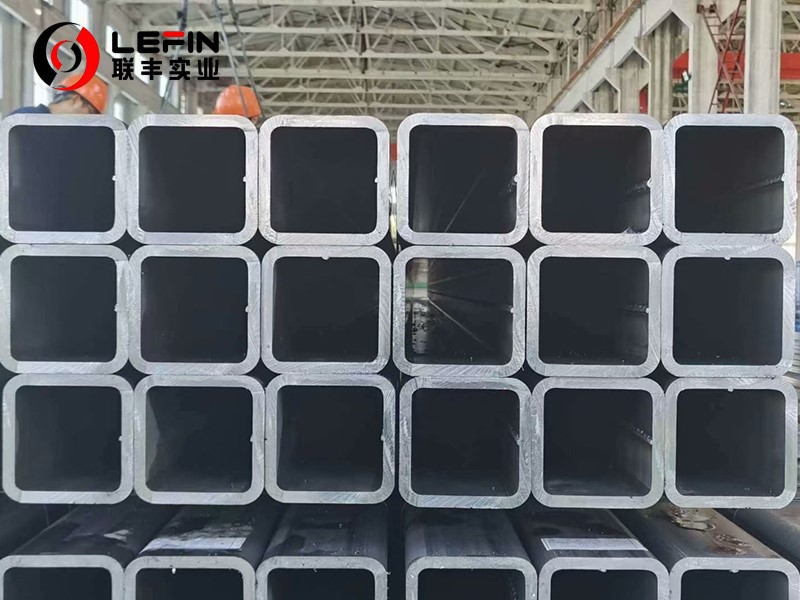
EN 10219 specifies the requirements for cold-formed welded structural hollow sections of non-alloy and fine-grain steels . "Cold-formed" signifies that the shaping process occurs at or near room temperature, which allows for tighter dimensional control.
Like EN 10210, this standard is split into parts:
EN 10219-1: Deals with technical delivery conditions .
EN 10219-2: Defines tolerances, dimensions, and sectional properties .
2 Manufacturing Process
This standard covers hollow sections that are formed at ambient (room) temperature.
- Forming Process: The sections are cold-formed, meaning the steel strip or plate is shaped into a circular, square, or rectangular form without the application of heat during the forming stage .
- Welding and Heat Treatment: The process involves electric welding (often high-frequency welding) or submerged arc welding. The cold-formed product is typically without subsequent heat treatment other than the heat treatment specifically applied to the weld seam itself .
3 Common Steel Grades and Mechanical Properties
EN 10219-1 covers a similar set of steel grades to EN 10210, such as S235J0H, S235J2H, S275J0H, S275J2H, S355J0H, S355J2H, and S355K2H . The mechanical properties, such as minimum yield and tensile strength, are comparable to their hot-finished counterparts for the same grade designation.
4 Typical Applications
Cold-formed sections are widely used where precise dimensions, a good surface finish, and cost-effectiveness are key.
- Building frames and trusses
- Architectural and decorative structures (e.g., glass curtain walls )
- Stadiums and large arenas
- Machinery and equipment frames
- General structural purposes in construction
Key Differences Between EN 10210 and EN 10219
Choosing between a hot-finished and a cold-formed hollow section depends on the specific requirements of your project. The table below summarizes the core differences.
| Feature | EN 10210 (Hot-Finished) | EN 10219 (Cold-Formed) |
|---|---|---|
| Manufacturing Process | Formed and welded at high temperatures. | Formed and welded at room temperature. |
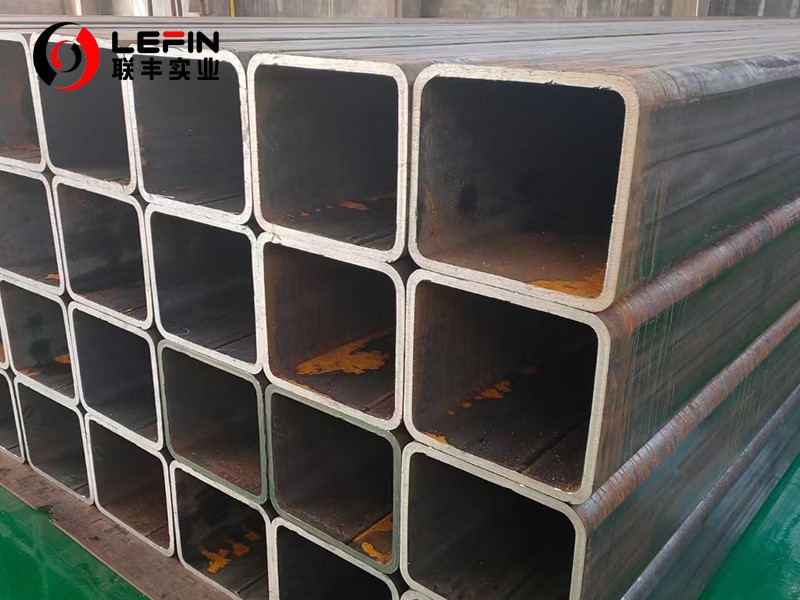
| Corner Radii | Larger, more rounded corners. | Smaller, sharper corners . |
| Mechanical Properties | More uniform properties; residual stresses are relieved. | Cold-working can increase strength but may leave residual stresses. |
| Dimensional Tolerances | Generally wider tolerances. | Tighter tolerances and better control . |
| Surface Finish | Mill scale is present. | Smother, more consistent finish. |
| Cost-Effectiveness | Generally higher cost for standard grades. | Often more economical for standard sizes and applications . |
| Primary Application Focus | Heavy-duty, high-stress, and critical applications. | General structural, architectural, and cost-sensitive applications. |
Why the Manufacturing Process Matters:
The hot-working process of EN 10210 results in a product that is generally more ductile and with fewer internal stresses, making it suitable for dynamic loading and harsh environments. The cold-forming process of EN 10219 allows for excellent precision and is highly efficient for mass production of standard sections.
Conclusion
Both EN 10210 (hot-finished) and EN 10219 (cold-formed) hollow sections are pillars of the European structural steel market. There is no "better" standard, only the "more suitable" one for a given application.
- Select EN 10210 when your project involves high-stress, critical structural elements, dynamic loads, or environments where superior impact toughness and ductility are non-negotiable.
- Select EN 10219 for general construction, architectural applications, and projects where dimensional precision, aesthetic finish, and cost-efficiency are the primary drivers.
As a professional steel pipe manufacturer, we ensure that all our products strictly comply with the relevant EN standards, providing you with reliable, high-performance materials for your global projects.
Frequently Asked Questions (Q&A)
Q1: Which standard has higher strength?
A: Strength is primarily defined by the steel grade (e.g., S355 is stronger than S235), not the standard itself. For the same steel grade, the minimum yield and tensile strength values are comparable in both EN 10210 and EN 10219. However, the cold-forming process can lead to a localized increase in yield strength in the corners of EN 10219 sections.
Q2: Are the dimensions for the same nominal size (e.g., 100x100x5) identical in both standards?
A: While very similar, the dimensional tolerances differ. EN 10219, being cold-formed, typically has tighter tolerances on outside dimensions and wall thickness. The most visible difference is the larger external and internal corner radii in EN 10210 sections. Always consult Parts 2 of the respective standards for precise tolerances.
Q3: What is the significance of the 'J2', 'J0', and 'H' in the steel grade name?
A: The 'J2' and 'J0' indicate the impact toughness testing temperature.
J0: Charpy V-notch impact tested at 0°C.
J2: Tested at -20°C, making it more suitable for colder climates.
H: Simply stands for "Hollow Section."