Introduction to EN 10210
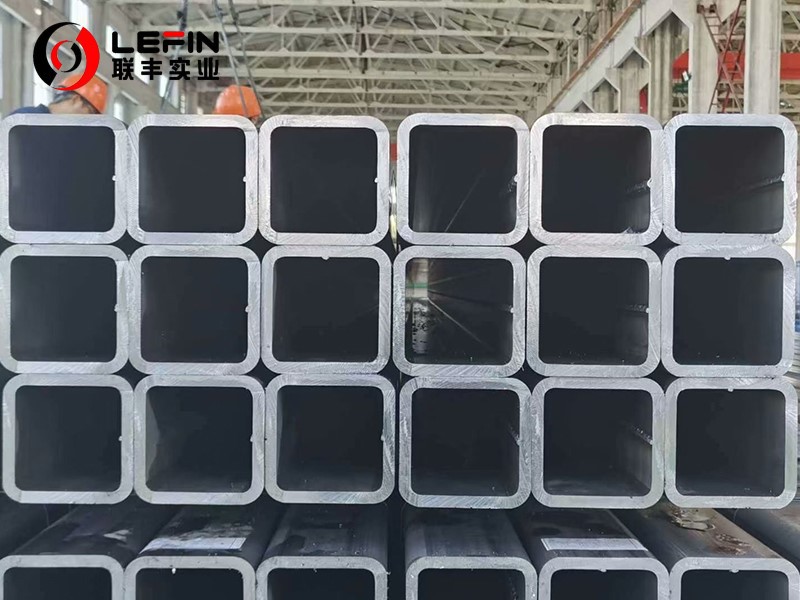
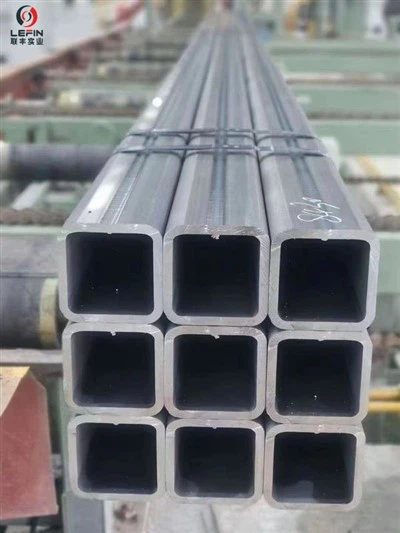
EN 10210 is a fundamental European standard that specifies the requirements for hot-finished structural hollow sections made from non-alloy and fine-grain steels. These sections-available in circular, square, rectangular, or elliptical forms-are a cornerstone of modern construction, valued for their superior strength, durability, and performance in critical applications .
For B2B purchasers in the construction and heavy industries, understanding EN 10210 is key to sourcing high-quality steel components that ensure structural integrity, compliance with European regulations, and long-term reliability in demanding environments.
Scope and Structure of the EN 10210 Standard
The EN 10210 standard is systematically organized into distinct parts, each focusing on critical aspects of the product specification:
EN 10210-1: Technical Delivery Conditions
This part covers the essential requirements for the steel's chemical composition, mechanical properties, and the technical conditions under which the products are delivered. It ensures the material's quality and performance consistency .
EN 10210-2: Tolerances, Dimensions, and Sectional Properties
This is a crucial document for designers and purchasers, as it defines the permissible limits for dimensions, mass, and cross-sectional properties for sections with wall thicknesses up to 120 mm in the following size ranges :
- Circular: Outside diameters up to 2,500 mm
- Square: Outside dimensions up to 800 mm x 800 mm
- Rectangular: Outside dimensions up to 750 mm x 500 mm
- Elliptical: Outside dimensions up to 500 mm x 250 mm
The Hot-Finishing Manufacturing Process
The defining characteristic of EN 10210 hollow sections is their hot-finishing manufacturing process. This involves shaping the steel at high temperatures, typically above its recrystallization point. The process can start from a seamless pierced billet or a welded pre-form, which is then hot-rolled or extruded to its final shape . It applies to hollow sections formed hot, with or without subsequent heat treatment, or formed cold with subsequent heat treatment above 580 °C to obtain equivalent mechanical conditions to those obtained in the hot formed product .
Key benefits of this process include:
Refined Grain Structure: The high temperatures lead to a uniform and fine grain structure throughout the material.
Relieved Stresses: Residual stresses from forming are significantly reduced, enhancing dimensional stability.
Enhanced Ductility and Toughness: The product exhibits improved mechanical properties, making it suitable for dynamic and impact loading.
Common Steel Grades, Chemical and Mechanical Properties
EN 10210-1 covers a range of common structural steel grades, including non-alloy base steel, non-alloy quality steel, fine grain non-alloy quality steel and fine grain alloy special steels . The designation system is informative. For example, in S355J2H:
- S: Structural Steel
- 355: Minimum Yield Strength in MPa (355 MPa or ~355 N/mm²)
- J2: Designation for Impact Toughness (Charpy V-notch tested at -20°C)
- H: Denotes Hollow Section
Commonly specified grades include: S235JRH, S275J0H, S275J2H, S355J0H, S355J2H, and S355K2H .
The choice of grade depends on the required strength, service temperature, and necessary impact toughness for the application.
1 Chemical Composition
The chemical composition is fundamental to the steel's hardenability, weldability, and mechanical properties. The following table outlines the typical maximum percentages for common grades, based on limits specified in EN 10210-1 and comparable standards like EN 10025.
Table 1: Typical Chemical Composition (Maximum % by weight)
| Steel Grade | Carbon (C) | Manganese (Mn) | Silicon (Si) | Phosphorus (P) | Sulfur (S) |
|---|---|---|---|---|---|
| S235JRH | 0.18 - 0.20 | 1.00 - 1.50 | ≤ 0.045 | ≤ 0.045 | ≤ 0.045 |
| S275J0H | 0.20 - 0.23 | 1.00 - 1.50 | ≤ 0.045 | ≤ 0.045 | ≤ 0.045 |
| S275J2H | 0.20 - 0.23 | 1.00 - 1.50 | ≤ 0.045 | ≤ 0.045 | ≤ 0.045 |
| S355J0H | 0.22 - 0.24 | 1.00 - 1.60 | ≤ 0.045 | ≤ 0.045 | ≤ 0.045 |
| S355J2H | 0.20 - 0.24 | 1.00 - 1.60 | ≤ 0.045 | ≤ 0.045 | ≤ 0.045 |
| S355K2H | 0.20 - 0.24 | 1.00 - 1.60 | ≤ 0.045 | ≤ 0.045 | ≤ 0.045 |
Note: Fine-grain steels may also contain micro-alloying elements like Niobium (Nb) or Vanadium (V) to enhance strength and toughness through grain refinement. The exact composition can vary by manufacturer and product thickness. Always consult the manufacturer's inspection certificate for the precise composition.
2 Mechanical Properties
The hot-finishing process results in a homogeneous microstructure, which directly influences the following key mechanical properties. These values represent the minimum requirements as per EN 10210-1.
Table 2: Typical Mechanical Properties
| Steel Grade | Yield Strength (ReH) Min. (MPa) | Tensile Strength (Rm) (MPa) | Elongation at Fracture (Min. %) | Impact Toughness (Charpy V-notch, Min. J) |
|---|---|---|---|---|
| S235JRH | 235 | 360 - 510 | 26 | Not specified |
| S275J0H | 275 | 430 - 580 | 22 | 27 J at 0°C |
| S275J2H | 275 | 430 - 580 | 22 | 27 J at -20°C |
| S355J0H | 355 | 470 - 630 | 20 | 27 J at 0°C |
| S355J2H | 355 | 470 - 630 | 20 | 27 J at -20°C |
| S355K2H | 355 | 470 - 630 | 20 | 40 J at -20°C |
Key Property Explanations:
- Yield Strength (ReH): The stress at which the material begins to deform plastically. It is a critical design criterion for structural components.
- Tensile Strength (Rm): The maximum stress the material can withstand while being stretched or pulled before necking and failure.
- Elongation: A measure of the material's ductility, indicating how much it can stretch before breaking. The hot-finished process typically results in good ductility.
- Impact Toughness: The material's ability to absorb energy and resist fracture at specified low temperatures (e.g., -20°C for J2 grades), making it suitable for structures in cold climates.
Key Product Characteristics and Advantages
Rounded Corners: Hot-finished sections naturally have larger external and internal corner radii compared to cold-formed sections, due to the material flow at high temperatures.
Superior Material Uniformity: The hot-working process results in more homogeneous mechanical properties across the entire cross-section.
Excellent Weldability and Formability: The refined microstructure and lower residual stress make these sections ideal for welding and further fabrication.
Robust Performance in Harsh Environments: The enhanced toughness and ductility make EN 10210 sections the preferred choice for applications exposed to low temperatures, fatigue, or dynamic stresses.
Presence of Mill Scale: The surface typically has a mill scale, which may require removal for certain aesthetic applications.
Typical Applications
EN 10210 hot-finished hollow sections are specified for highly stressed, critical, and safety-oriented applications:
Heavy-Duty Building Structures: Columns and beams in commercial, industrial, and high-rise buildings.
Bridge Construction: Main arches, supports, and girders.
Offshore and Marine Structures: Jackets, topsides, and port facilities due to their toughness.
Heavy Industrial Plants: Support structures for power plants, chemical plants, and heavy machinery.
Infrastructure Projects: Stadiums, airport terminals, and other large-span structures.
To understand how EN 10210 hot-finished sections compare with EN 10219 cold-formed sections, read our comparative analysis: [EN 10210 vs. EN 10219: Choosing the Right Structural Hollow Section ].