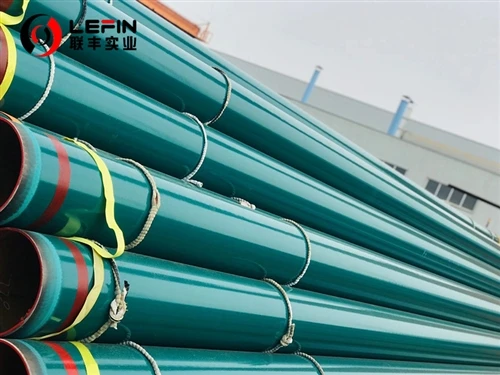
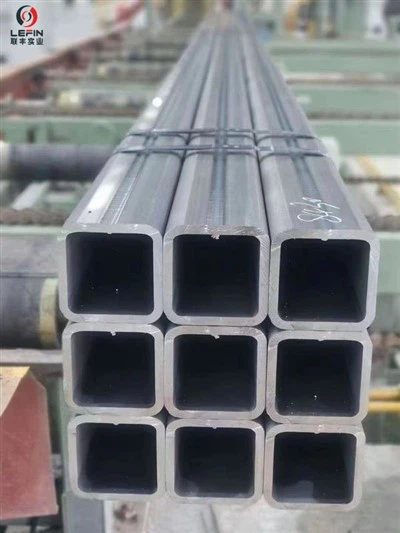
Steel pipe anti-corrosion is achieved by applying a protective layer on the surface of the steel pipe to isolate corrosive media, thereby significantly extending its service life.
| Major categories of anti-corrosion methods | Specific technology/type | Main features/Applicable scenarios |
| External anti-corrosion technology | 3PE/2PE anti-corrosion | Three-layer (epoxy powder - adhesive - polyethylene) or two-layer (adhesive - polyethylene) structure. It has excellent comprehensive performance and is the first choice for buried long-distance pipelines. It is resistant to chemical corrosion and has good mechanical properties |
| Epoxy coal tar asphalt anti-corrosion | It is composed of epoxy coal tar paint and a glass cloth reinforcing layer. It has a relatively low cost and is often used on the outer wall of pipes. However, proper maintenance is required | |
| High-density polyethylene outer jacket anti-corrosion | High-density polyethylene outer casing. It has high mechanical strength, but it needs to be protected from sun exposure and aging. It is often used to protect steel pipes from mechanical damage during transportation and installation | |
| FBE epoxy powder anti-corrosion | Epoxy powder is electrostatically sprayed to form a film in one go. Strong adhesion, good temperature resistance and environmentally friendly operation | |
| Internal anti-corrosion technology | IPN8710 anti-corrosion | The coating is non-toxic and resistant to various media such as acids, alkalis and salts. It is mainly used on the inner walls of drinking water pipelines and meets hygiene standards |
| Internal anti-corrosion with FBE epoxy powder | The inner wall of the pipe is treated with epoxy powder by electrostatic spraying or thermal spraying. The coating is smooth, reducing fluid resistance and preventing corrosion and scaling on the inner wall |
|
| Cement mortar lining | Large-diameter steel pipes (usually DN≥300) lined with cement mortar. It is cost-effective and can effectively prevent water quality deterioration, but it may increase fluid resistance. |
|
| Metal coating technology | Hot-dip galvanizing |
Immerse the steel pipe in molten zinc at approximately 500℃. The coating is thick, providing cathodic protection (sacrificial anode), with good durability, and is widely used in various industries |
| Cold galvanizing (electro-galvanizing | Galvanization is achieved through electrochemical principles. The coating is relatively thin, and the anti-corrosion period is shorter than that of hot-dip galvanizing, but the cost is lower | |
| Other structural protections | FRP casing method | Wrap fiberglass reinforced plastic materials around the steel pipe. Corrosion-resistant and wear-resistant, it is suitable for special corrosive environments or for repairing old pipelines |
| On-site spraying method | Epoxy resin, polyurethane and other coatings are sprayed on steel pipes at the construction site. It is flexible in construction and suitable for steel structures of various shapes and sizes. |

💡 How to choose the anti-corrosion method
The choice of which anti-corrosion method to use depends on the specific application scenarios and environment of the steel pipe.
• Buried pipelines:
For buried pipelines of oil, natural gas, water transmission, etc., 3PE anti-corrosion is the best choice in terms of comprehensive performance. If cost is taken into account, epoxy coal tar pitch is also a commonly used solution, and cathodic protection measures can be considered for addition based on the corrosiveness of the soil.
• Non-buried overhead pipelines:
It is advisable to apply coatings for external anti-corrosion. Coatings such as epoxy resin and ethylene paint can be selected.
• For the transportation of sensitive media such as drinking water:
Internal anti-corrosion must use non-toxic coatings, such as IPN8710 or fusion-bonded epoxy powder (FBE), to ensure water quality safety.
• High-temperature environment:
Special coatings such as silicone high-temperature anti-corrosion can be considered, which can withstand temperatures up to 600℃.
• Balance between economy and durability:
For large-diameter water transmission pipelines, using cement mortar lining on the inner wall is a relatively economical solution. For outdoor structures with high durability requirements, hot-dip galvanizing offers a very good cost performance.

🔧 Construction quality is key
No matter how good the anti-corrosion materials are chosen, if the construction is improper, the effect will be greatly reduced.
• Surface treatment:
This is the cornerstone of anti-corrosion engineering. The surface of the steel pipe must undergo strict rust and oil removal treatment. Generally, sandblasting rust removal should reach the Sa2.5 grade standard to expose the metallic luster.
• Coating thickness:
It is essential to ensure that the anti-corrosion coating reaches the designed critical thickness (typically exceeding 150μm) in order to form an effective protective barrier.
• Environmental control:
During construction, it is necessary to control the temperature and humidity on site and avoid working in windy, sandy, rainy, snowy or condensation environments.
• Process interval:
Strictly control the coating interval time between each coat in accordance with the material requirements to avoid affecting the adhesion between layers.