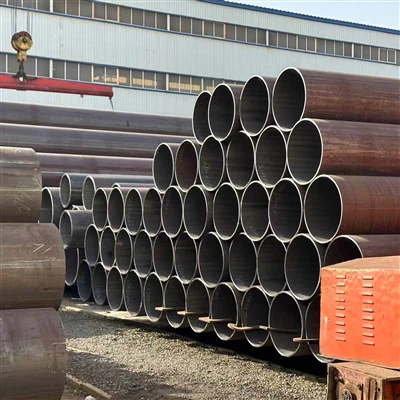
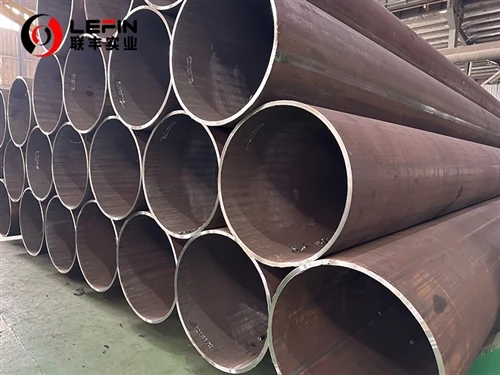
When you are sourcing cold‑formed welded structural hollow sections for your projects, EN 10219 is one of the most frequently referenced European standards you will come across. This standard sets out the technical delivery conditions for hollow sections made from non‑alloy and fine‑grain steels, formed cold without subsequent heat treatment other than possibly the weld line.
This guide walks you through what EN 10219 covers, how the steel grades are named and what they mean, which grades are most commonly used in real‑world applications, and - most importantly - how to select the right one for your specific requirements. The two grades you will see most often in everyday procurement are S235 and S355, and we will pay particular attention to the differences between them and when to choose one over the other.

Overview of EN 10219
EN 10219 is the European standard for cold‑formed welded structural hollow sections. It applies to circular hollow sections (CHS), square hollow sections (SHS), rectangular hollow sections (RHS) and elliptical forms, manufactured by electric welding or submerged arc welding (SAW). The hollow sections are formed at room temperature, with no subsequent heat treatment except that the weld seam may be heat treated. The standard is divided into several parts, of which Parts 1 and 2 are the most commonly used for non‑alloy and fine‑grain steels, while Part 3 covers high‑strength and weather‑resistant grades.
A key point to understand up front: under EN 10219, the steel grade refers to the feedstock material used for cold‑forming, not the finished hollow section in the same way as EN 10210 does for hot‑finished sections. This means the metallurgy changes slightly during the cold‑forming process - but for practical procurement purposes, the mechanical properties are generally comparable to what you would expect from the same grade designation under EN 10025, the standard for structural steel products.
EN 10219 hollow sections are available with wall thicknesses up to 40 mm, covering sizes from small square sections up to 500 mm × 500 mm for square sections and outside diameters up to 2500 mm for circular sections.
Decoding the Steel Grade Designation
Before looking at individual grades, it helps to understand how the naming system works. Let us take S355J2H as an example.
| Component | Meaning |
|---|---|
| S | Structural steel |
| 355 | Minimum yield strength (in MPa) for wall thickness ≤ 16 mm |
| J2 | Charpy impact test qualification (temperature and energy level) |
| H | Hollow section |
The impact designation follows a consistent pattern:
| Suffix | Temperature | Minimum impact energy (KV) |
|---|---|---|
| JR | Room temperature | 27 J |
| J0 | 0 °C | 27 J |
| J2 | −20 °C | 27 J |
| K2 | −20 °C | 40 J |
| L | −50 °C | 27 J (typically for fine‑grain grades) |
| N | Normalized or normalized rolled (fine‑grain steel, −20 °C ≥40 J) | |
| M | Thermomechanically rolled (fine‑grain steel, −20 °C ≥40 J) |
The suffix also indicates the delivery condition and whether the steel is a fine‑grain grade. For example, S355NH is a normalized fine‑grain steel with guaranteed impact properties at −50 °C, while S355MH is thermomechanically rolled.
In everyday commercial procurement, the grades you will encounter most often are S235JRH, S275J0H, S275J2H, S355J0H and S355J2H, alongside various NH/NLH and MH/MLH grades. But when we look at actual order volumes across the European market, S235 and S355 dominate. S275 sits in between but is noticeably less common - in continental Europe, S235 is very often preferred over S275 for general structural work.
Mechanical Properties at a Glance
The following table summarises the key tensile and impact properties for the most widely used EN 10219 steel grades (thickness ≤ 16 mm, which is the most common range for structural hollow sections). Values are based on the standard requirements.
| Steel Grade | Min. Yield Strength (MPa) | Tensile Strength (MPa) | Min. Elongation (%) | Impact Test Temperature | Min. Impact Energy |
|---|---|---|---|---|---|
| S235JRH | 235 | 360 – 510 | 24 | Room temperature (20 °C) | 27 J |
| S275J0H | 275 | 410 – 560 | 20 | 0 °C | 27 J |
| S275J2H | 275 | 410 – 560 | 20 | −20 °C | 27 J |
| S355J0H | 355 | 470 – 630 | 20 | 0 °C | 27 J |
| S355J2H | 355 | 470 – 630 | 20 | −20 °C | 27 J |
| S355K2H | 355 | 470 – 630 | 20 | −20 °C | 40 J |
| S355NH | 355 (≤ 16 mm) | 470 – 630 | 20 | −50 °C | 27 J |
| S460NH | 460 (≤ 16 mm) | 530 – 720 | 17 | −50 °C | 27 J |
| S460MH | 460 | 530 – 720 | 17 | −20 °C | 27 J (or higher) |
For thicker walls (16 < t ≤ 40 mm), the yield strength reduces slightly. For S235JRH it becomes 225 MPa, for S275 grades 265 MPa, and for S355 grades 345 MPa.
A quick note on chemical composition: higher strength grades generally have slightly higher carbon equivalents (CEV). S235JRH has a maximum CEV of 0.35 %, while S355J0H and S355J2H go up to 0.45 %. This difference has practical implications for welding - but for most standard welding procedures, all of these grades are considered readily weldable without special precautions.
S235 vs S275 vs S355: Which One Do You Actually Need?
If you look at what European fabricators and contractors order day in and day out, S235 and S355 are the two workhorses. S275 exists, and you will see it specified from time to time, but it is not as widely used as the other two. There is a practical reason for this: the jump in strength from S235 to S355 is significant, while the cost difference is relatively modest. For many structural applications, if S235 is not strong enough, engineers often step directly up to S355 rather than stopping at S275. Let us look at each grade in practical terms.
S235 - The Reliable All‑Rounder
S235 is the baseline structural steel grade for cold‑formed hollow sections. It is what you reach for when the application does not demand extreme strength but does require good workability, straightforward welding and cost‑effectiveness.
- Minimum yield strength: 235 MPa (≤ 16 mm)
- Tensile strength range: 360 – 510 MPa
- Typical delivery condition: Cold‑formed + stress‑relieved annealed (+R)
- Impact options: JR (room temperature) is the most common
S235JRH has a very low carbon equivalent (CEV ≤ 0.35 %), which makes it highly weldable without preheating in most cases. It is also easy to cut, bend and fabricate, which translates into lower processing costs at your workshop.
- Typical applications for S235:
Light‑duty building frames and mezzanine structures
Guardrails, handrails and safety barriers
Sign posts and street lighting poles
Mechanical components in non‑critical load‑bearing positions
Temporary structures and scaffolding
Furniture frames and racking systems
In continental European practice, S235 is often the default choice for general structural work. For many B端 buyers, this is the grade they specify when the design loads are moderate and project budgets need to be tightly controlled.
S355 - The Heavy‑Duty Performer
S355 delivers approximately 50 % higher yield strength than S235 at a relatively modest cost premium - typically 15 % to 25 % higher per tonne, depending on market conditions and order volume. This strength‑to‑cost ratio makes S355 extremely attractive for applications where weight reduction matters or where higher load‑bearing capacity is required.
- Minimum yield strength: 355 MPa (≤ 16 mm)
- Tensile strength range: 470 – 630 MPa
- Typical delivery condition: Normally delivered in the normalized (+N) condition, which refines the grain structure and ensures consistent toughness
- Impact options: J0H (0 °C), J2H (−20 °C), K2H (−20 °C with 40 J), NH (−50 °C)
S355 has a higher carbon equivalent (CEV up to 0.45 %) than S235, which means welding may require a little more attention - but for properly equipped fabrication shops, this is rarely a problem. S355 also offers excellent low‑temperature toughness, with the J2 grades certified to deliver 27 J at −20 °C.
- Typical applications for S355:
Primary structural columns and beams in multi‑storey buildings
Bridge components and infrastructure projects
Heavy machinery frames and crane structures
Offshore platforms and marine applications (often with impact‑certified grades)
Wind turbine towers
Lattice girders for long‑span roofs (from 20 m and above)
S355J2H is probably the single most requested grade among the higher‑strength options. It combines the 355 MPa yield strength with impact‑tested performance at −20 °C, making it suitable for outdoor structures in most European climates.
S275 - The Middle Child
S275 sits between S235 and S355 in terms of strength (275 MPa minimum yield). It has its uses, but in the real world it is specified less often than the other two. That said, S275J0H and S275J2H are still relevant for certain applications:
Medium‑load bearing frames for industrial buildings
Mechanical equipment where S235 is not quite strong enough but S355 would be over‑specified
Static load environments such as building structures and mechanical frames
If you are already procuring S235 for general use and S355 for heavy loads, you may find that adding S275 to your inventory does not always make commercial sense unless a specific client specification requires it.
How to Choose: A Practical Selection Framework
When a buyer asks us which grade to use, we usually walk through a short list of decision points.
1. Start with the design load
Look at the required yield strength. If the design calls for a yield strength of 235 MPa or less, S235 is your grade. If the required strength exceeds 235 MPa, or if weight reduction is a priority, S355 becomes the natural next step. The 50 % strength increase from S235 to S355 often allows you to use a thinner wall section for the same load‑bearing capacity - which can offset the higher material price with reduced tonnage.
2. Consider the service temperature
Indoor applications in temperate climates: The standard JR impact rating (room temperature) is usually sufficient. S235JRH or S355J0H will work.
Outdoor structures in most of Europe: J0 impact rating (0 °C) is often the minimum. S275J0H or S355J0H are safe choices.
Cold regions (Nordic countries, mountain areas, Siberia) or dynamic loads: J2 rating (−20 °C) is strongly recommended. S355J2H is the most common choice here.
Arctic or extremely low‑temperature environments: NH or NLH grades with −50 °C impact testing may be required.
3. Look at the application type
The table below gives a quick reference:
| Application Type | Recommended Grade | Reasoning |
|---|---|---|
| Light structural frames, racking, furniture | S235JRH | Cost‑effective, easy to fabricate, sufficient strength |
| General building structures (moderate loads) | S235JRH or S275J0H | Balance of cost and performance |
| Heavy building structures, columns, main beams | S355J0H or S355J2H | High strength, weight savings |
| Bridges, crane runways, offshore structures | S355J2H / S355K2H / S355NH | High strength plus certified low‑temperature toughness |
| Architectural exposed elements | S235JRH (smooth finish) | Cold‑formed sections under EN 10219 offer tighter tolerances and a cleaner surface |
| Very high‑load / weight‑sensitive applications | S460MH or S460NH | Premium strength, requires careful design and welding |
4. Factor in fabrication and welding
For shops that do a lot of welding, S235 is the easiest to work with. S355 requires slightly more discipline, particularly on thicker sections, but any competent workshop will handle it without issues. If your fabrication team is more comfortable with lower‑carbon materials, or if you are dealing with very complex welded assemblies, S235 may be the safer choice even if the strength requirement is borderline.
Main Product Forms: CHS, SHS and RHS
EN 10219 covers three main hollow section profiles, each suited to different structural roles.
| Profile Type | Abbreviation | Typical Applications |
|---|---|---|
| Circular Hollow Sections | CHS | Columns, piles, transmission towers, fluid transport, aesthetic architectural features |
| Square Hollow Sections | SHS | Columns, compression members, building frames, mechanical parts |
| Rectangular Hollow Sections | RHS | Beams, purlins, lattice girders, frames with directional loading |
Cold‑formed sections under EN 10219 generally have sharper external corners and are available in a wider range of small sizes compared to hot‑finished sections. They are also typically lower in cost for smaller dimensions, making them the preferred choice for mechanical, furniture and non‑primary structural use.
EN 10219 vs EN 10210: A Quick Comparison for Buyers
If your procurement team deals with both standards, it helps to know the difference. Both are harmonised under the EU Construction Products Regulation (CPR) and both can carry CE marking. But they are not interchangeable.
| Aspect | EN 10219 (Cold‑Formed) | EN 10210 (Hot‑Finished) |
|---|---|---|
| Forming process | Formed cold at room temperature | Formed hot (above recrystallisation temperature) |
| Surface finish | Sharper corners, generally smoother finish | Slightly rounded corners, less precise |
| Dimensional tolerance | Tighter tolerances | Slightly looser tolerances |
| Residual stress | Some residual stress from forming | Stress relieved by the hot process |
| Typical applications | General fabrication, exposed architecture, furniture, mechanical parts | Heavy structural works, primary load‑bearing members, bridges |
| Cost | Generally lower for small to medium sizes | Generally higher |
A practical point: the same grade designation means slightly different things under the two standards. Under EN 10210, the grade refers to the steel in the finished section. Under EN 10219, it refers to the feedstock - so while the mechanical properties are broadly equivalent, the sectional properties of SHS and RHS are not the same. When you are writing specifications, you should always state both the standard number and the grade.
Q&A - Common Questions from Buyers
Q1: Is S355 always better than S235?
Not always. Better is a matter of fit. S355 has much higher yield strength, but it also costs more and has a slightly higher carbon equivalent (CEV), which means welding requires a little more care. If your design loads are low, S235 is the more economical choice. There is no point paying for strength you do not use.
Q2: Can I weld EN 10219 hollow sections without preheating?
For S235JRH in typical thicknesses up to 16 mm, yes. For S355 grades, particularly in thicker sections or cold conditions, you should follow a qualified welding procedure - but for most workshop environments, preheat is not automatically required. Check your CEV and follow the recommendations of EN 1011 or your own WPS.
Q3: Can EN 10219 hollow sections be galvanized?
Yes. Hot‑dip galvanising is commonly applied to EN 10219 hollow sections, and it offers excellent corrosion protection. However, due to the residual stresses present in cold‑formed sections, you should discuss the galvanising process with your supplier to ensure proper venting and to minimise the risk of distortion or hydrogen embrittlement. With proper design and process control, galvanising EN 10219 sections works well.
Q4: Are EN 10219 grades equivalent to ASTM A500?
There is no direct one‑to‑one equivalence, but for practical comparison:
ASTM A500 Grade B (minimum yield 315 MPa) sits somewhere between S275 and S355.
ASTM A500 Grade C (minimum yield 345 MPa) is closer to S355.
If you are substituting one standard for another, you should check the actual mechanical properties and design accordingly rather than assuming equivalence.
Final Thoughts
Choosing the right steel grade under EN 10219 comes down to three things: the load your structure must carry, the temperature it will face in service, and the balance you want between material cost and fabrication efficiency.
S235JRH is your go‑to for general‑purpose fabrication. It is easy to work with, well‑priced and perfectly adequate for a very wide range of structural applications.
S355J2H is your high‑performance option. It delivers nearly 50 % more yield strength than S235 and is impact‑tested at −20 °C, making it suitable for demanding structural roles, outdoor environments and safety‑critical applications.
Most buyers keep both in their stock portfolio and choose between them project by project, with S275 playing a smaller, role‑specific part when specified by particular clients or design codes.
When you are ready to place your order, provide your supplier with three pieces of information: the EN 10219 standard, the complete steel grade (for example, S355J2H, not just S355) and the required profile dimensions. That level of precision avoids costly misunderstandings and ensures you receive exactly what your project needs.
If you have questions about a particular grade or a specific application, contact our technical team -- LEFIN STEEL, We have experience supplying EN 10219 hollow sections to buyers across Europe, the Middle East and beyond, and we are happy to help you make the right selection for your next project.