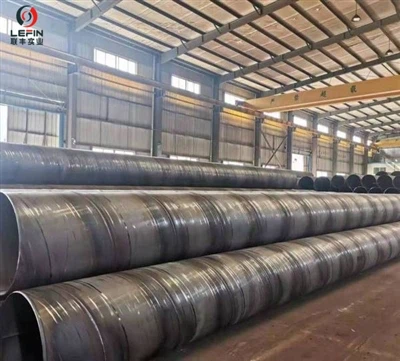
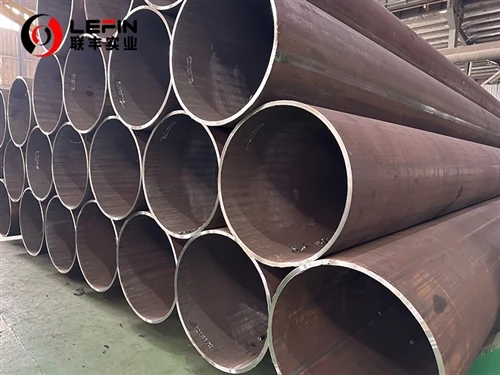
The mainstream foreign steel pipe standards (commonly referred to as "external standards" in the industry, such as API, ASTM, EN, ISO series) have clear mandatory quality requirements for the welds of welded steel pipes, and these requirements must be verified through corresponding testing items. The testing requirements increase progressively with the standard level and the strictness of the application conditions.
I. Core requirements of external standards for steel pipe welds
For different application scenarios, the mainstream external standards have varying focuses on weld requirements, covering three main dimensions: mechanical properties, defect limits, and geometric dimensions:
1. API SPEC 5L (Pipeline Steel for Oil and Gas, the most widely used pipeline standard worldwide)
- Performance requirements: The tensile strength of the weld shall not be lower than the lower limit of the base material standard; for PSL2 grade, it is mandatory to have the Vickers impact energy in the weld and heat affected zone, as well as the guided bending test (the length of cracks after bending shall be ≤ 3.18mm). For large-diameter welded pipes, the drop hammer tear test is also required to verify the crack arrest performance.
- Defect limits: Absolute prohibition of cracks and incomplete penetration defects; single pores shall have a diameter of ≤ 3mm, and the total length of dense pore clusters shall be ≤ 6mm; in any 150mm weld seam, the total length of slag shall be ≤ 12.5mm.
- Geometric requirements: The weld fillet height and misalignment have clear tolerances, and the lateral offset of the weld shall not exceed the standard limit.
2. ASTM Standard Series
- ASTM A53 (General Fluid/Structural Welded Pipes): The weld must be fully fused, with the weld strength not less than 90% of the base material. The weld shall not leak under water pressure test; ERW welded pipes with NPS ≥ 2 are mandatory to undergo non-destructive electrical testing of the welds. UT/RT and other advanced inspections can be supplemented and agreed upon by the buyer and seller.
- ASTM A672 (Medium Temperature High Pressure Electrofusion Welded Pipes): It is mandatory to conduct radiographic testing on the entire length of the weld. Each batch must undergo a weld lateral bending test, and the weld deposited metal must undergo chemical composition analysis separately.
3. EN Series (EN 10217 Pressure Pipe for Welding, EN 10208 Pipeline Pipe)
- Defect Limits: The depth of surface defects on the weld shall not exceed 5% of the wall thickness or 3mm (whichever is smaller), and minor defects with a depth of ≤ 0.3mm can be released; internal defects shall be in accordance with the corresponding non-destructive testing acceptance grade.
- Performance Requirements: All grades of welded pipes must pass the flattening/bending test to verify the weld plasticity; for high-pressure pipes of test category 1, the weld shall meet the tensile and impact performance requirements consistent with the base material.
- Process Requirements: The welding process must be evaluated as qualified in advance, and weld rework must follow the established procedures.
4. ISO 3183 (International Standard Pipeline Tube)
Compared with the technical requirements of API 5L, the weld inspection corresponds to the series of non-destructive testing standards of ISO 10893. There are unified regulations on the inspection methods, comparison test blocks, and acceptance criteria.

II. Common Detection Methods for Welds
Under the external standard system, the detection of steel pipe welds is divided into two categories: 100% full inspection and batch sampling inspection. It covers three directions: non-destructive testing, destructive tests, and appearance size verification:
1. Non-destructive testing (mainly comprehensive inspection, with core verification of weld internal/surface integrity)
- Ultrasonic testing (UT) : The most mainstream full inspection method for welded pipes, it can detect surface defects such as incomplete fusion, cracks, and slag inclusions inside the weld seam. All grades of API 5L PSL2 and EN 10217 are required to have 100% weld coverage. Generally, artificial grooves with a depth of 12.5% of the wall thickness are taken as the comparison benchmark. Defects exceeding the benchmark amplitude are judged as non-conforming.
- Radiographic testing (RT): High-precision in identifying volumetric defects such as pores and slag. ASTM A672 requires full weld RT inspection. API 5L is mostly used for supplementary weld inspection at pipe ends or as an alternative to UT, allowing for the intuitive retention of defect image records.
- Eddy current/ electromagnetic testing (ET): Often used for online rapid detection of ERW high-frequency welded pipes, capable of identifying surface and near-surface defects. It is a routine electrical test item for ordinary welded pipes such as ASTM A53.
- Hydrostatic test: A mandatory sealing verification for each steel pipe. The test pressure is calculated according to the standard (usually corresponding to 60% to 95% yield strength), and the pressure is held for ≥5 seconds (extended to 15 seconds for high-pressure pipes). If there is no leakage or deformation at the weld seam, it is considered qualified.
2. Destructive tests (batch sampling, verifying the mechanical properties of weld seams)
Samples are taken by furnace number and production batch. The core items include:
- Tensile test in the transverse direction: To verify the tensile strength of the weld seam, it should not be lower than the standard value of the base material;
- Guided bending test (forward bend + reverse bend): To assess the plastic deformation ability of the weld seam, no excessive cracks should occur after bending;
- V-notch impact test: For PSL2, low-temperature, and high-pressure conditions, to detect the impact toughness of the weld seam and the heat affected zone;
- Compression test: A routine item for small-diameter welded pipes, with the weld seam placed in the vertical direction under force, and no cracks after compression are considered qualified.
3. Appearance and Dimension Inspection
Inspect each weld seam visually for surface formation. Measure the weld bead height, width, misalignment, and undercut depth. Confirm that there are no surface defects such as pores, cracks, or weld spurs. The dimensional tolerances must comply with the corresponding standard requirements.

III. Is weld inspection mandatory?
The weld inspection of welded steel pipes is a mandatory requirement stipulated by external standards. However, the strictness and coverage of the inspection items vary depending on the product grade and application scenario:
1. All necessary items for welded steel pipes:
individual hydraulic pressure tests and individual visual inspections of appearance. These are the basic mandatory requirements for all externally marked butt-welded pipes, directly verifying the sealing performance and surface quality of the welds.
2. Mandatory non-destructive full inspection for medium and high-grade welded pipes:
- For API 5L PSL2, EN 10217, ASTM A672 high-pressure pipes, etc., 100% weld non-destructive testing (UT/RT) is mandatory;
- For API 5L PSL1 and ASTM A53 ordinary-grade welded pipes, the basic requirements are water pressure + electrical testing / appearance. For higher grades, additional non-destructive testing can be provided according to the purchase agreement.
3. Special conditions with additional strict requirements:
In scenarios such as acidic service, low-temperature environment, submarine pipelines, and high-pressure boilers, additional items such as weld hardness testing, TOFD diffraction testing, and drop hammer tear test will be included. These will be specified in the technical agreement.
Additional explanation:
Seamless steel pipes do not have longitudinal welds and do not require special weld inspection requirements. However, the pipe body itself still needs to meet the non-destructive testing requirements stipulated in the corresponding standards.