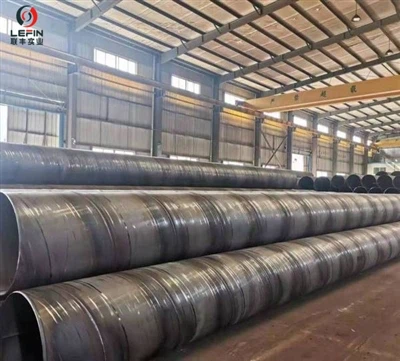
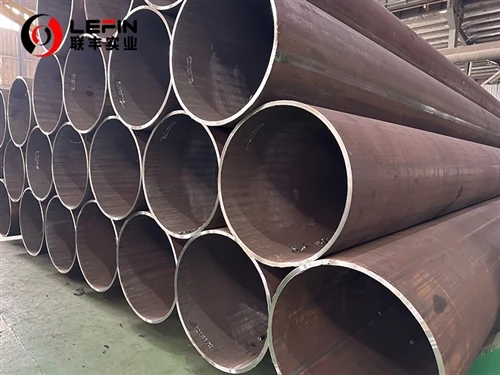
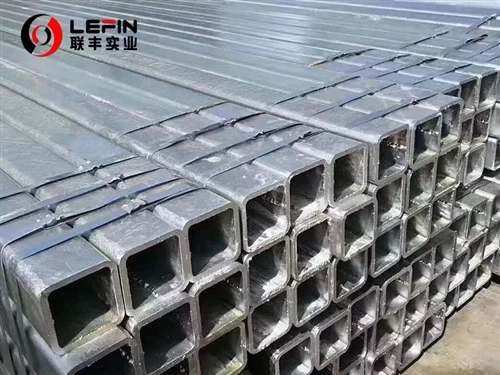
For procurement managers, structural engineers, and fabrication specialists, choosing the correct hollow structural section (HSS) can make the difference between a cost‑effective, durable structure and one that fails prematurely or complicates fabrication. The ASTM A500 standard – "Standard Specification for Cold‑Formed Welded and Seamless Carbon Steel Structural Tubing in Rounds and Shapes" – is the go‑to specification for square, rectangular, and round HSS used in building, bridge, and industrial applications.
In this guide, we break down the four ASTM A500 grades (A, B, C, and D), compare their mechanical properties, typical uses, and provide a clear decision framework

Quick Look at ASTM A500
What it covers
A500 is made for structural use – columns, beams, bracing, frames. Unlike pipe standards (like A53 or A106), it doesn't care about hydrostatic pressure. It cares about mechanical strength: yield and tensile.
How it's made
Cold‑formed from steel strip or plate, then electric‑resistance welded (ERW) or seamless. The cold‑working boosts strength but also leaves some residual stress – which the standard already accounts for.
Where it fits vs other specs
A36 – That's for wide‑flange beams and angles, not HSS. A500 Grade B has similar strength but different rules for forming.
A53 Grade B – Yield is only 35 ksi, lower than A500 Grade B's 42 ksi. Not a substitute for structural framing.
A1085 – Newer, tighter tolerances, better toughness, but also pricier.
For most jobs, A500 gives you the best balance of price and performance.
The Four Grades – What's Different
Here are the minimum mechanical requirements for the finished tube.
| Grade | Yield (ksi) | Tensile (ksi) | Elongation (%)* |
|---|---|---|---|
| A | 33 | 45 | 25 |
| B | 42 | 58 | 23 |
| C | 46 | 62 | 21 |
| D | 36 | 58 | 23 |
*Elongation varies a bit with wall thickness; these are typical for the 0.120–0.500 in. range.
Chemistry – max percentages
| Grade | Carbon | Manganese | Phosphorus | Sulfur |
|---|---|---|---|---|
| A | 0.26 | – | 0.035 | 0.035 |
| B | 0.26 | – | 0.035 | 0.035 |
| C | 0.23 | 1.35 | 0.035 | 0.035 |
| D | 0.23 | 1.35 | 0.035 | 0.035 |
One big extra for Grade D
Charpy V‑notch impact test: 25 ft·lbf average at 40°F (4°C). That's why Grade D is the go‑to for low‑temperature work.
Wait – why does Grade D have a lower yield (36 ksi) than Grade C (46 ksi)?
Because toughness comes first. They dialed down the carbon and manganese to keep the steel ductile in the cold. 36 ksi is still plenty strong for most cold‑climate structures.
What Shapes Can You Get
All four grades come in:
Round – columns, piles, rollers, poles.
Square – most popular for columns, trusses, space frames. Equal strength both ways, easy to connect.
Rectangular – beams, lintels, architectural exposed steel. The long side gives more bending stiffness in one direction.
Size range – From ½ inch up to 16 inches (outside dimension for round; side length for square/rect). Wall thickness from 0.065 in. to 0.625 in. Heavier walls possible by special order.
Availability reality check
Grade B and C are stocked everywhere.
Grade A is rare – usually a mill run.
Grade D is made by major mills (Atlas, Nucor, Bull Moose) but expect lead times because of the impact testing.
What Each Grade Is Actually Used For
Grade A – 33 ksi yield
Light jobs. Sign posts, handrails, tent frames, greenhouses, non‑load‑bearing architectural stuff. Also any part that needs severe bending, flaring, or flattening after tube forming. Low strength, high formability. If your stress requirements are minimal, this works – but don't expect it on a local warehouse shelf.
Grade B – 42 ksi yield (the workhorse)
This is what most people buy.
Building columns, beams, bracing – warehouses, mezzanines, steel buildings.
Bridge secondary members, sign structures, pedestrian bridges.
Conveyor frames, crane runways, machinery frames.
Agricultural implements, truck frames, trailers.
Best balance of strength, ductility, weldability, and cost. If you're not sure which grade to start with, start here.
Grade C – 46 ksi yield
When you need more muscle.
Main columns in tall buildings, heavy equipment bases, offshore modules.
Seismic frames – higher strength means smaller sections, less seismic mass.
Instead of going to a heavier wall in Grade B, you can often jump to Grade C with the same wall thickness – less weight, same strength.
Heavy trailers, container handling gear.
Grade D – 36 ksi yield + impact tested
This one is for the cold.
Arctic construction, refrigerated warehouses, structures above -20°F.
Bridges and buildings in northern climates where the temperature regularly drops below freezing.
Offshore platforms in the North Sea or northern US/Canadian coasts.
Dynamic loads in cold weather – crane bumpers, railroad equipment.
How to Actually Choose – A Practical Framework
You've got four factors: strength needed, forming difficulty, service temperature, and budget.
Here's a quick comparison table.
| Factor | Grade A | Grade B | Grade C | Grade D |
|---|---|---|---|---|
| Strength (yield) | 33 ksi | 42 ksi | 46 ksi | 36 ksi |
| Formability | Excellent | Good | Fair (larger bend radii) | Good |
| Weldability | Excellent | Excellent | Good (no preheat unless thick) | Excellent |
| Low‑temp toughness | Not rated | Not rated | Not rated | Mandatory (40°F) |
| Relative cost | Base (but rare) | +5‑10% | +15‑20% | +25‑35% |
| Typical lead time | Long (mill run) | Short (stock) | Short‑med | Med‑long |
Step‑by‑step decision process
- What's the coldest temperature the structure will see?
If it's regularly below 32°F (0°C) or an engineer calls for impact testing, you need Grade D. Period. Grades B and C don't have that documented toughness, no matter how strong they are.
- How much strength does the section need?
You have two levers: grade (yield) and wall thickness.
Stress under 33 ksi → Grade A is fine, but Grade B is often cheaper and easier to find.
Most building columns fall in the 33–42 ksi range → Grade B is the sweet spot.
If stress is above 42 ksi but below 46 ksi → Try Grade C before increasing wall thickness.
Above 46 ksi → You need a bigger section or a different standard (like A1085 Grade 50 or 65).
- What kind of fabrication?
Severe bending, tight radii, flattening, flaring → Stick with Grade A or B. Grade C might crack.
Ordinary welding, drilling, sawing – all grades are fine. Use ER70S‑6 or E7018. No preheat needed unless the wall is over ½ inch.
- Run the cost numbers
Grade A looks cheap on paper, but a special mill run kills the savings.
Grade B is the most cost‑effective for about 80% of projects.
Grade C lets you drop wall thickness. Example: a 0.375" wall Grade B column → 0.312" wall Grade C column, same strength, 17% less weight. Compare price per pound – often Grade C wins.
Only use Grade D when the spec absolutely requires low‑temp toughness. Otherwise, Grade B or C with a little extra coating may do the job for less money.
Q&A – What Buyers Actually Ask
Q1: Can I swap Grade C for Grade B if the drawing says Grade B?
A: Yes, for strength‑governed parts (tension, compression, bending). Grade C is stronger, so it safely exceeds Grade B requirements. Two checks though:
Connections – higher strength material doesn't make your bolts or welds stronger. Verify connection capacity.
Deflection – both grades have the same modulus (29,000 ksi). If deflection was the limiting factor, Grade C won't help.
Q2: Is A500 Grade B the same as A36?
A: No. A36 is for structural shapes like beams and plates – yield 36 ksi. A500 Grade B is 42 ksi yield. Plus, A36 isn't approved for HSS in most codes because its chemistry and forming aren't right. Order A500 for tubing.
Q3: Any special welding rules for Grade C or D?
A: Standard carbon steel practices work. Low‑hydrogen electrodes (E7018) or ER70S‑6 wire with CO₂ or Ar/CO₂. No preheat needed for wall up to 0.5 in. at room temperature. For Grade D, don't water‑quench the weld – that kills impact toughness.
Final Take
Choosing the right A500 grade doesn't have to be complicated. Just remember:
Grade A – Only when you need extreme formability or very low stress. Not a general‑use grade.
Grade B – Default for most structural jobs. Strong, weldable, affordable, and everywhere.
Grade C – When you want higher strength without upsizing the section, or to save weight by reducing wall thickness.
Grade D – Mandatory when low‑temperature impact toughness is written into the contract or code.
We keep a deep inventory of A500 Grade B and Grade C in all popular HSS shapes. For Grade D or custom impact‑tested material, our team can help coordinate mill production with full certs.
Note: All mechanical property values and chemical limits are based on ASTM A500 – 21a standard. Always consult the latest revision of the specification and local building codes.
Not sure which grade fits your next project? Send us your design drawings or load tables. Our LEFIN STEEL will give you a free grade optimization check – no obligation, no over‑selling.