Introduction
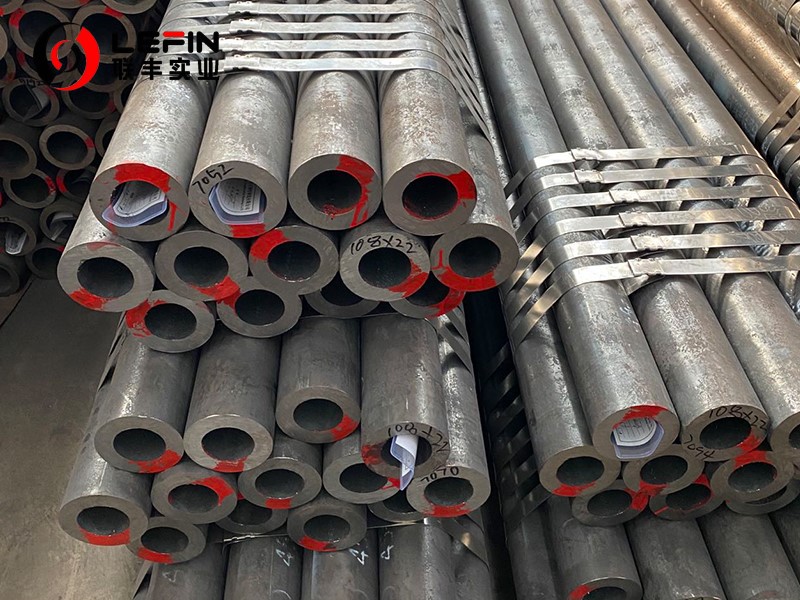
In the global industrial landscape, ASTM International standards represent benchmarks for quality and reliability, particularly for steel pipes used in critical applications. Among these, ASTM A53 and ASTM A106 are two predominant specifications for carbon steel pipes. While often mentioned together, they serve distinct roles based on operational conditions. As a professional steel pipe manufacturer, we provide both grades to meet diverse industrial requirements-from general-purpose fluid transport to high-temperature service. This guide details their specifications, grades, products, applications, and key differences to inform your procurement decisions.
ASTM A53
1. Standard Overview & Scope
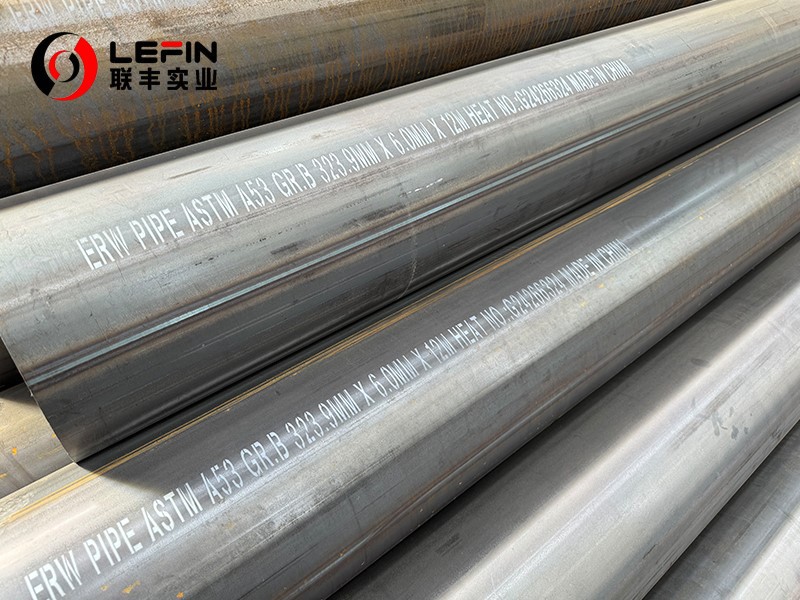
ASTM A53 (also referenced as ASME SA53) covers seamless and welded, black and hot-dipped galvanized steel pipes with nominal (average) wall thickness. It is designed for mechanical and pressure applications, as well as general use in conveying steam, water, air, and gas lines. The standard accommodates both welding and forming operations like coiling, bending, and flanging (with exceptions for continuously welded pipes).
2. Available Grades and Key Specifications
ASTM A53 includes the following primary grades, with Grade B being the most commonly specified:
- Grade A: Lower mechanical strength, suitable for general applications.
- Grade B: Enhanced strength, ideal for pressure-containing parts.
Table: ASTM A53 Mechanical Properties (Typical)
| Grade | Tensile Strength min. (MPa) | Yield Strength min. (MPa) |
|---|---|---|
| A | 330 | 205 |
| B | 415 | 240 |
Chemical Composition Highlights: A53 is a carbon steel pipe with limitations on alloying elements to ensure weldability and formability.
3. Main Product Types and Manufacturing Processes
Seamless Pipes: Manufactured using hot-working processes, suitable for high-pressure applications.
Electric Resistance Welded (ERW) Pipes: Welded longitudinally, not recommended for flanging.
Hot-Dipped Galvanized: Zinc-coated for corrosion resistance in exposed environments.
Dimensional Range: Covers a wide spectrum of standard pipe sizes (NPS) and wall thickness schedules (e.g., Sch. 40, 80, 160).
4. Typical Applications
Low-Pressure Steam & Water Lines
Architectural & Structural Uses
Air & Gas Plumbing Systems
Mechanical Components and General Engineering
ASTM A106
1. Standard Overview & Scope
ASTM A106 specifically governs carbon steel seamless pipes for high-temperature service. It is the preferred choice for applications involving elevated temperatures, such as in power boilers, petrochemical plants, and refinery pipelines.
2. Available Grades and Key Specifications
This standard provides three grades with progressively higher strength and carbon content:
- Grade A: Used for lower pressure and temperature.
- Grade B: The most widely used grade for high-temperature fluid conveyance.
- Grade C: Offers the highest strength for demanding conditions.
Table: ASTM A106 Mechanical Properties
| Grade | Tensile Strength min. (MPa) | Yield Strength min. (MPa) |
|---|---|---|
| A | ≥330 | ≥205 |
| B | ≥415 | ≥240 |
| C | ≥485 | ≥275 |
Table: ASTM A106 Chemical Composition (Maximum % or Range)
| Element | Grade A | Grade B | Grade C |
|---|---|---|---|
| C | ≤0.25 | ≤0.30 | ≤0.35 |
| Mn | 0.27-0.93 | 0.29-1.06 | 0.29-1.06 |
| P | ≤0.035 | ≤0.035 | ≤0.035 |
| S | ≤0.035 | ≤0.035 | ≤0.035 |
| Note | Cu, Ni, Cr, Mo, V sum ≤ 1.00% | ||
3. Main Product Types and Manufacturing Processes
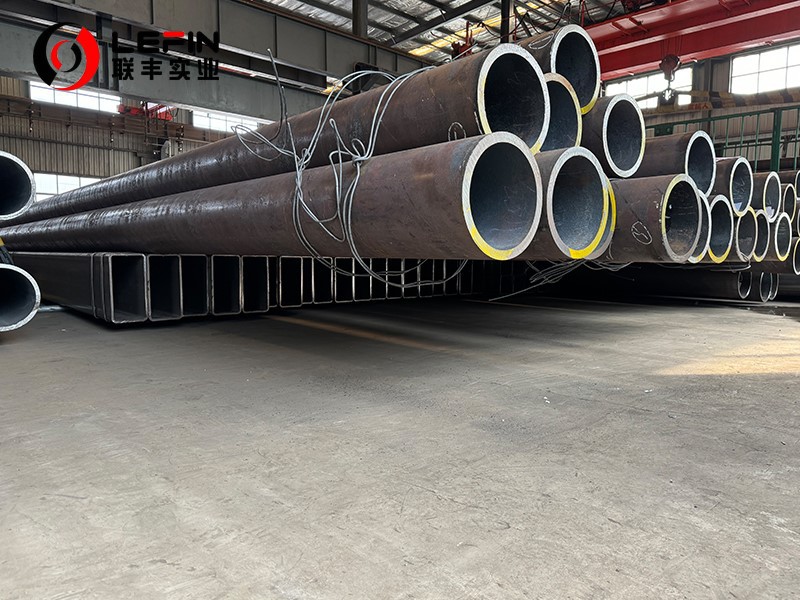
Seamless Pipes Only: Produced via hot piercing of solid round steel billets and elongation.
Hot-Rolled & Cold-Drawn: Cold-drawn pipes offer superior surface finish and dimensional accuracy, while hot-rolled suits larger diameters.
Wall Thickness Schedules: Ranges from Sch 5S to Sch 160, including XS (extra strong) and XXS (double extra strong).
Heat Treatment: Can be supplied with stress-relieving annealing or normalization.
4. Typical Applications
Petroleum Refining & Petrochemical Plants
Power Generation & Boiler Tubes
High-Temperature/Pressure Fluid Transmission (water, oil, gas)
Pipelines in Construction & Machinery Manufacturing
Key Differences: A53 vs. A106
| Feature | ASTM A53 | ASTM A106 |
|---|---|---|
| Scope | General purpose, mechanical & pressure applications | High-temperature service |
| Temperature Limit | Typically up to ~350°C | Suitable for -28.9°C to 565°C |
| Pipe Types | Seamless & Welded (ERW), Galvanized or Black | Seamless Only |
| Common Grades | Grade A, B | Grade A, B, C |
| Material Emphasis | Balanced properties for formability & welding | Enhanced strength & creep resistance at high temperatures |
| Typical Use Cases | Plumbing, low-pressure steam, structural supports | Power plants, refineries, high-pressure/temperature lines |
Core Distinction: While both are carbon steel standards, ASTM A53 is a general-purpose pipe available in welded/seamless forms, whereas ASTM A106 is a seamless-only pipe engineered for sustained high-temperature performance.
How to Select the Right Standard
Selecting between ASTM A53 and A106 hinges on your service environment, mechanical requirements, and budget:
Choose ASTM A53 if:
Your application involves low to moderate pressures and temperatures (generally below 350°C).
You require welded pipes or galvanized corrosion protection.
The project is cost-sensitive for non-critical general fluid conveyance or structural uses.
Choose ASTM A106 if:
Your system operates at elevated temperatures (up to 565°C) or high pressures.
Seamless construction is mandated for safety and reliability in critical service.
The piping will undergo significant thermal cycling or stress.
Industries include power generation, oil & gas refining, or high-temperature processing.
Note: Both standards require rigorous quality controls, including hydrostatic testing, nondestructive electric tests, and mechanical tests (tensile, yield strength, elongation) to verify compliance.
Conclusion
Understanding the nuances between ASTM A53 and A106 ensures optimal performance, safety, and cost-efficiency in your projects. As an experienced manufacturer, we adhere strictly to these standards, providing certified products with comprehensive quality assurance (including API, CE, and ISO9001 certifications). Our LEFIN STEEL offer both ASTM A53 and A106 pipes in full grade ranges and size schedules, supported by technical expertise to guide your selection.
Contact us today to discuss your specific requirements and receive tailored product recommendations.
- For a more in-depth look at this versatile standard, please refer to our dedicated article, *ASTM A53 Steel Pipe: A Versatile Choice for General Purpose and Pressure Applications*.
- For a more detailed analysis of this high-temperature standard, explore our dedicated article, *ASTM A106 Seamless Steel Pipe: The High-Temperature Specialist*.