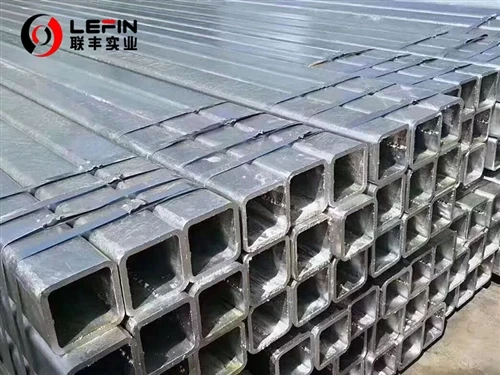
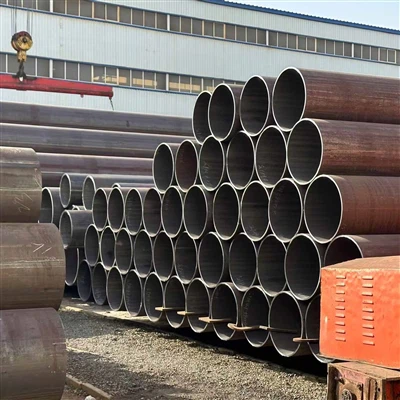
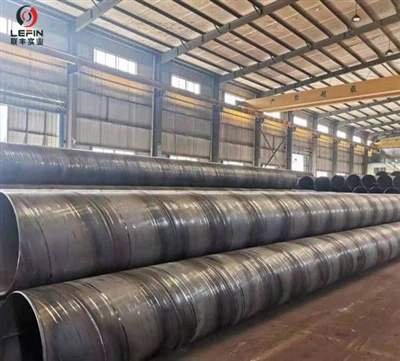
This guide breaks down the structural, chemical, and application-level differences between these two standards ASTM A53 Grade B and ASTM A106 Grade B, specifically for seamless pipe (Type S) where the overlap is most pronounced. The goal is straightforward: give purchasing managers and project engineers the clarity needed to specify the right standard for the right service, without paying for properties the application does not require.
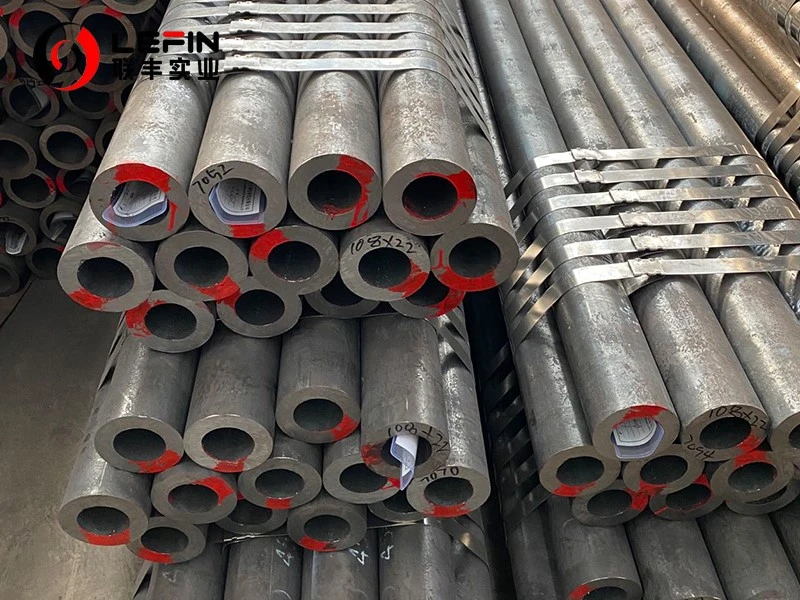
Standard Scope: Different Jobs, Different Specifications
ASTM A53 is the general-purpose specification. It covers black and hot-dipped zinc-coated (galvanized) pipe, welded and seamless, intended for mechanical and pressure applications, as well as ordinary uses in steam, water, gas, and air lines. It is a broad, utilitarian standard.
ASTM A106 is a specialized specification. Its full title-Seamless Carbon Steel Pipe for High-Temperature Service-signals its intent. It is engineered for piping systems that must maintain structural integrity and creep resistance at elevated temperatures, typically in refinery process units, boiler external piping, and petrochemical plants.
Procurement implication: If your end-use is a high-temperature process line, A106 is the default. If it is a utility header or structural support, A53 is usually sufficient and more economical.
Manufacturing Routes and Product Forms
This is the most visible differentiator in any purchase order.
| Feature | ASTM A53 | ASTM A106 |
|---|---|---|
| Permitted manufacturing | Seamless (Type S), ERW (Type E), Furnace-welded (Type F) | Seamless only |
| Grades available | Grade A, Grade B | Grade A, Grade B, Grade C |
| Galvanizing | Available (per ASTM A123) | Not covered |
ASTM A53 explicitly permits electric resistance welding (ERW), which is significantly cheaper and faster to produce than seamless pipe. When a buyer specifies "A53 Grade B," the mill may deliver ERW unless "Type S" is explicitly stated on the purchase order. ASTM A106 contains no such ambiguity: it is seamless by definition, and no welded variant is permitted.
For buyers focused on seamless product specifically, the relevant comparison is A53 Type S Grade B versus A106 Grade B.
Chemical Composition
While the mechanical property tables for Grade B are identical between the two standards, the chemistry requirements are not. These differences matter for welding, high-temperature performance, and long-term reliability.
| Element (Grade B) | ASTM A53 | ASTM A106 |
|---|---|---|
| Carbon (max) | 0.30% | 0.30% |
| Manganese | ≤1.20% | 0.29–1.06% |
| Phosphorus (max) | 0.05% | 0.035% |
| Sulfur (max) | 0.045% | 0.035% |
| Silicon (min) | Not specified | 0.10% |
The two real differences are silicon and the P/S limits.
A106 requires silicon ≥ 0.10%, because the steel has to be fully killed. Silicon does two things: it deoxidizes the steel, and it keeps the pipe stable at high temperature. A53 has no silicon requirement, so it can be semi-killed - fine for water, air, and low-pressure work, but a thinner safety margin once you get near 400°C.
A106 also caps phosphorus and sulfur at 0.035% (A53 allows 0.05% and 0.045%). Tighter limits mean better weldability and less hot-shortness cracking on critical process joints.
Mechanical Properties
For Grade B, the room-temperature tensile and yield requirements are the same under both standards:
| Property | A53 Gr.B & A106 Gr.B |
|---|---|
| Tensile strength (min) | 415 MPa (60 ksi) |
| Yield strength (min) | 240 MPa (35 ksi) |
| Elongation (min, 50mm) | 30% |
This equivalence is precisely why dual certification is so common. A seamless mill producing Grade B chemistry that meets the A106 silicon minimum can certify the same heat to both standards without altering the rolling or heat-treatment process.
However, A106 offers Grade C (yield 275 MPa, tensile 485 MPa), which has no A53 equivalent. If a project requires higher strength without moving to alloy steel, A106 Gr.C is the only path within these two standards.
Low Temperatures and Code Compliance
This is where the two standards split in practice.
- A106 Gr.B: accepted to 427°C (800°F) in process piping. ASME B31.3 allowable stress stays flat across that range - hence the default choice for refinery and petrochemical line classes.
- A53: moderate service only. Seamless Type S handles some heat; ERW Type E is capped near 343°C (650°F).
Weld joint factor: B31.3 gives ERW E = 0.85 vs. 1.0 for seamless. That means a thicker wall for the same pressure rating - which wipes out most of ERW's price edge on pressure-critical lines.
Rule of thumb: above 350°C, or under B31.3 process requirements - specify A106. Utility water, compressed air, low-pressure steam, structural - A53 is enough.
Applications
| Service / Industry | Recommended Standard | Rationale |
|---|---|---|
| Refinery process piping (crude, FCC, hydrotreating) | A106 Gr.B | High-temp creep resistance, code default |
| Boiler external piping & main steam lines | A106 Gr.B | Up to 427°C, killed steel chemistry |
| Heat exchanger shells & channels (hot side) | A106 Gr.B | Thermal stability |
| Fire protection sprinkler systems | A53 Gr.B Type E (galvanized) | Cost-effective, code-accepted for this service |
| Structural pipe (columns, bracing, signage) | A53 Gr.B | Mechanical properties sufficient, no pressure boundary |
| Utility water & compressed air headers | A53 Gr.B | Moderate temperature, cost-sensitive |
| Low-pressure steam (auxiliary) | A53 Gr.B Type S | Seamless preferred but A106 not mandated |
Q&A
Q1: Can I substitute A53 Type S for A106 in a high-temperature line if the mechanical properties match?
No. Mechanical equivalence at room temperature does not address the silicon minimum and tighter impurity limits that govern high-temperature behavior. More importantly, ASME code piping classes typically specify A106 explicitly. Substitution requires engineering approval and may void code compliance.
Q2: Why is A106 more expensive than A53 Type S if the mechanical properties are the same?
The cost premium is modest for seamless product. It reflects the additional chemistry control (silicon addition, tighter P/S), the mandatory killed-steel practice, and-in some markets-higher demand pressure from refinery and power projects. For ERW A53, the cost gap is larger because the welding process itself is cheaper.
Q3: Can A53 pipe be galvanized while A106 cannot?
Yes. ASTM A53 explicitly covers hot-dipped galvanized pipe per ASTM A123. A106 does not include galvanizing in its scope. If your project requires coated pipe for atmospheric corrosion protection, A53 is the appropriate standard.
For specific project requirements, always check the governing piping code (ASME B31.1, B31.3, or B31.9) as well as ASTM A106 and ASTM A53, and confirm the material specification with your engineering team before finalizing. For detailed guidance, contact the LEFIN STEEL team.