I. Overview of Five Manufacturing Methods
| Method | Technological process | Weld Seam | Typical Specification/Thickness | Characteristics |
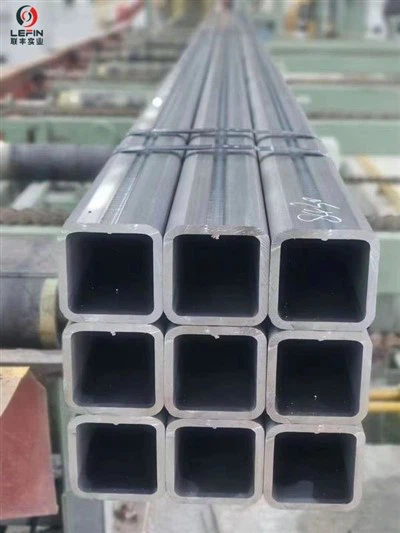
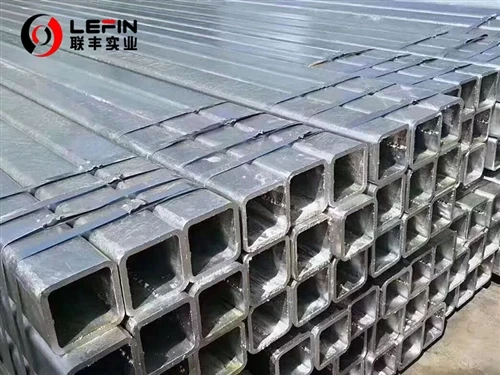
| ① Direct Forming (DFT, Direct Forming) | Steel strip→ Roll bending → Direct square tube billet → High Frequency Welding → Diameter Reduction and Shaping | One HFW/ERW weld seam Thin wall | Mainly small to medium specifications, generally 3–12mm, up to 500×500 | High efficiency, material saving, strong sharing of die tools; corner pure bending, high-strength steel prone to cracking |
| ② Round-to-Square (Round-to-Square, Welded Tube Base Tube) | Steel strip → First welded into round tube → Formed into square/mesh by a shaping machine | One weld seam (usually at the corner or edge) | From small to medium to large specifications, with a wide thickness range | Utilizing existing round tube production lines for modification, low investment, good process control; corner formed in a closed cavity, compressive and tensile reduction possible |
|
③ Hot-Rolled Seamless Square Forming (Round-to-Square/ Hot-Rolled Square Forming) |
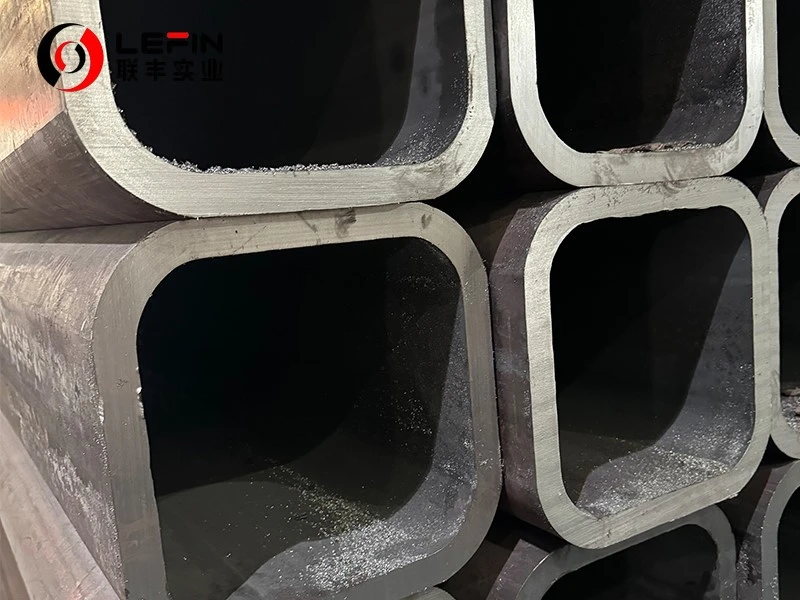
Steel bar → Piercing → Hot-Rolled Seamless Tube → Heating → Multi-pass Rolling into Square | No weld seam | Thick wall, large specifications, 200×200–400×400, wall thickness 10–40mm | No weld seam, uniform wall thickness, good corner quality; low efficiency, high cost |
|
④ Cold Drawing/ Cold Rolling into Square (Seamless Cold Drawing) |
Seamless tube → Sequential drawing/rolling into square with constant temperature molds | No weld seam | From small to medium specifications, high precision, thin/wide wall possible | Maximum precision, good surface; large deformation, low efficiency, high cost |
| ⑤ Hot Extrusion Heating | round billet to 1100–1200℃ → One-time extrusion forming | No weld seam | Extra large diameter, thick wall, small batch of alloys/stainless steel | One-time forming, full corner; equipment expensive, small batch, high unit cost |
Supplement: In the cold bending welded pipe industry, "Direct Forming" and "Round-to-Square" both belong to welded cold forming (EN 10219); hot-rolled hollow sections are EN 10210; seamless cold-drawn square tubes follow the seamless standard.
II. How to Select (Offer Pricing to Customers / Decision Table for Selection Process)
| Your Requirements | Recommended Process | Reasons |
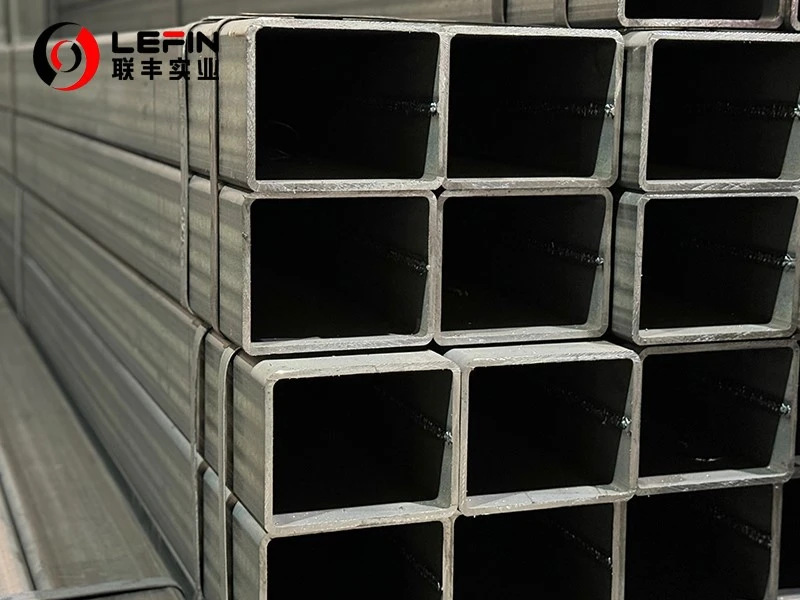
| Ordinary structure, large quantity, medium/small size, thin wall (≤ 8–10mm), cost-sensitive | Directly formed welded pipe | High efficiency, material saving, mainstream in construction / fences / scaffolding / frameworks |
| Thick wall (10mm+), high-strength steel Q355/Q460, concerned about corner cracking, using old round pipes | Round to square welded pipe | Corner compression forming, crack resistance, good shape control |
| Load-bearing columns, box columns, no welds allowed, thick wall large size (200×200 or above) | Hot-rolled seamless round pipe reshaped to square | No welds, uniform wall thickness, good corner quality |
| High precision matching, surface requirements high, medium/small size, equipment / decoration / fluid | Cold-drawn seamless square pipe | Best precision and surface, high price |
| Alloy / stainless steel / large thick-walled small batch special shapes | Hot extrusion | One-time forming, high cost |
Several quick judgment rules:
- Want to be cheap, large quantity, thin wall → Direct reshaping;
- Want thick wall, high strength, afraid of cracking → Round to square;
- Want no welds, load-bearing → Seamless (hot-rolled reshaped to square / cold-drawn);
- Want high precision and bright surface → Cold-drawn.