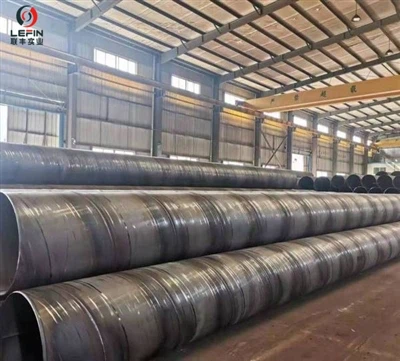
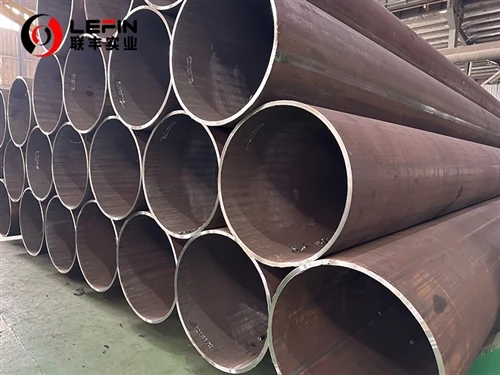
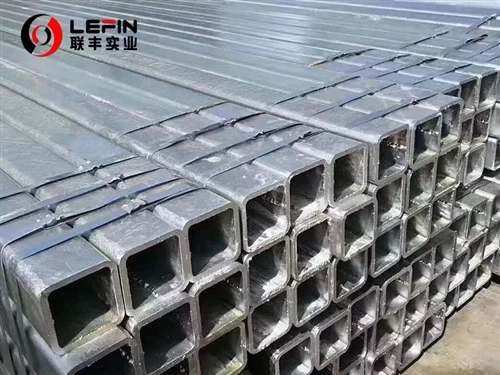
Definition And Basic Features
A Sharp Corner Hollow Section is a hollow structural profile with a right Angle edge, usually in the shape of a square (SHS), rectangle (RHS), or other polygon (such as a hexagon), with a sharp right Angle (no rounded transition) at the corner.
Key features:
• Right Angle: The corners are not smooth, and are 90° or a specific Angle.
Hollow structure: hollow inside, both lightweight and high strength characteristics.
• Uniform wall thickness: Consistent wall thickness is usually guaranteed by cold bending or welding processes.
Manufacturing process
(1) Main production methods
Cold Forming:
• The metal sheet (such as carbon steel, stainless steel, aluminum alloy) is directly bent into a right Angle shape through multi-pass roll molding.
• Advantages: low cost, high efficiency, suitable for mass production.
• Disadvantages: The corner is prone to residual stress due to cold working.
Welded Process:
• The sheet metal is cut and welded into a closed section (such as a square or rectangle), and the corners are welded to form a right Angle.
• Advantages: Complex section can be customized, flexible material selection.
Disadvantages: welds can become structural weaknesses and require non-destructive testing (NDT).
(2) Key process parameters
• Material selection: Carbon steel (e.g. S355), stainless steel (304/316), aluminum alloy (6063-T5).
• Wall thickness range: usually 1.5mm to 20mm, depending on application scenario.
• Surface treatment: hot dip galvanizing, plastic spraying, anodizing (aluminum alloy) to improve corrosion resistance.

Application scenery
Building and steel structure:
• Frame structure: used for plant, warehouse columns, beams, right Angle for modular assembly.
• Truss system: right-angle joints are easier to achieve rigid connections (such as welded or bolted connections).
• Curtain wall support: lightweight and simple in appearance, suitable for modern architecture.
Machinery and equipment:
• Mechanical frame: Support structure for machine tools, automation equipment, right Angle design to facilitate the installation of sensors or rails.
• Conveying system: conveyor support, drum support, need high rigidity and accurate alignment.
Transportation:
• Vehicle chassis: truck, trailer chassis skeleton, lightweight design to reduce energy consumption.
• Rail transit: subway cars, internal structural parts of high-speed rail.
Home and decoration:
• Furniture design: bookshelves, table legs, etc., right Angle shape fits the modern minimalist style.
• Decorative components: stair handrails, display shelves, the surface can be polished or sprayed with personalized colors.

More product information
Standard: BS EN 10210, BS EN 10219, ASTM A500, GB/T 3094-2000, GB/T 6728-2002, JIS G3466, AS 1163
Corner Type: Radius Corner, Sharp Angle Corner, Right Angle Corner
Application: Heavy steel structure, Aerospace Engineering, High-speed rail, Shipbuilding, For machinery, For automobiles and high-speed trains, For chemical industry and boiler, For bridge.
Outside diameter: (SHS)20*20-1200*1200mm Wall Thickness: 1.3mm-50mm
Outside diameter: (RHS)20*30-1200*1500mm Wall Thickness:1.2-50mm
Length: 4m, 6m, 12m or as your required
Brand: LEFIN STEEL
Analysis of advantages and disadvantages
Advantages:
1. Right Angle design: easy to align and assemble.
2. Lightweight: hollow structure to reduce weight.
3. High rigidity: suitable for bearing bending and torsional loads.
4. Low cost: the cold bending process is economical and efficient.
Disadvantages:
1. Stress concentration: The right Angle is easy to produce stress concentration, need additional strengthening.
2. Poor fatigue resistance: right angles may reduce life under dynamic loads.
3. Appearance limitations: Edges may not apply to scenes that require a rounded appearance.
4. Anti-corrosion challenge: the corner is easy to accumulate ash or water, requiring strict surface treatment.