Introduction
In modern structural engineering, the demand for high-strength steel hollow sections has grown significantly as projects seek to reduce weight, lower carbon footprints, and achieve more efficient designs. Among the European standards governing these products, EN 10210 stands as the benchmark for hot-finished structural hollow sections.
For procurement professionals and engineers in the 30–50 age bracket, understanding the nuances of EN 10210 and its high-grade S460 offerings is essential for making informed sourcing decisions. This guide provides a comprehensive overview of the EN 10210 standard, the S460 steel grade family, its applications, and critical selection criteria.
The EN 10210 Standard
EN 10210 is the European standard that specifies technical delivery conditions for hot-finished structural hollow sections made from non-alloy and fine-grain steels. It applies to hollow sections formed hot-with or without subsequent heat treatment-or formed cold with subsequent heat treatment above 580 °C to achieve equivalent mechanical properties.
The standard is divided into three parts:
| Part | Title | Content |
|---|---|---|
| EN 10210-1 | Technical delivery conditions | Chemical composition, mechanical properties, testing requirements, and inspection documentation |
| EN 10210-2 | Tolerances, dimensions and sectional properties | Dimensional tolerances for circular, square, rectangular, and elliptical sections |
| EN 10210-3 | Technical delivery conditions for high strength and weather resistant steels | Extended grades for specialized applications |
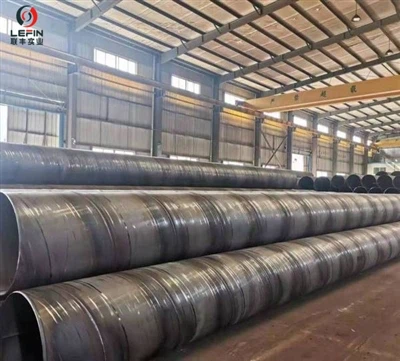
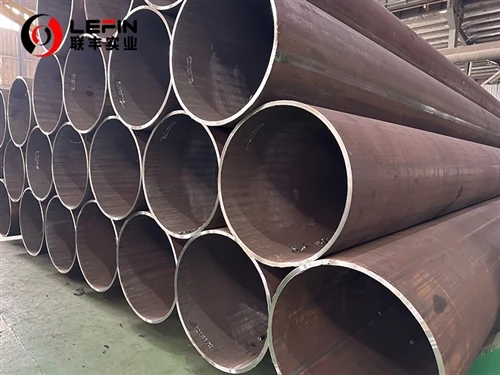
EN 10210 covers hot-finished seamless, electric welded (ERW), and submerged arc welded (SAW/LSAW) hollow sections. Products manufactured under this standard are fully compliant with CE marking and are certified as suitable for all structural applications.
The S460 Steel Grade
The S460 designation follows a logical naming system under EN 10210:
| Component | Meaning |
|---|---|
| S | Structural steel |
| 460 | Minimum yield strength of 460 MPa for thickness ≤ 16 mm |
| N | Normalized or normalized-rolled condition |
| H | Hollow section |
For thicknesses up to 16 mm, S460 delivers a minimum yield strength of 460 N/mm². As thickness increases, the yield strength decreases slightly:
≤ 16 mm: 460 MPa
> 16 mm to ≤ 40 mm: 440 MPa
> 40 mm to ≤ 65 mm: 430 MPa
The tensile strength ranges from 540 MPa to 720 MPa, with minimum elongation of 17%.
S460 Sub-Grades: S460NH, S460NLH, and S460MH
Within the S460 family, multiple sub-grades exist to address different service conditions. The most common are:
1 S460NH
S460NH is the standard normalized fine-grain steel grade. Key characteristics:
Fully normalized structural hollow sections
Free of internal stresses due to the normalizing process
Impact toughness: 40J at -20°C (minimum average)
Carbon Equivalent (CEV): ≤ 0.53
Suitable for conventional low-temperature environments
2 S460NLH
S460NLH offers enhanced low-temperature performance. Key characteristics:
Same yield and tensile strength as S460NH
Superior impact toughness at lower temperatures
The suffix "L" indicates low-temperature applicability
Suitable for arctic and alpine conditions
Commonly used in bridge girders, high-altitude railway bridges, and offshore structures
While S460NH and S460NLH share many similarities under EN 10210-1 as fine-grain structural steels, they differ critically in low-temperature impact performance.
3 S460MH
S460MH is the thermo-mechanically rolled (M-condition) counterpart:
CEV: ≤ 0.46 (lower than S460NH)
Suitable for cold-formed applications under EN 10219
Offers good weldability due to lower CEV
Comparison
| Property | S460NH | S460NLH | S460MH |
|---|---|---|---|
| Condition | Normalized (N) | Normalized (N) | Thermo-mechanical (M) |
| Yield Strength (≤16mm) | 460 MPa | 460 MPa | 460 MPa |
| Tensile Strength | 540–720 MPa | 540–720 MPa | 540–720 MPa |
| Impact Test Temp | -20°C | -50°C | -20°C |
| CEV (max) | 0.53 | 0.53 | 0.46 |
| Material Number | 1.8953 | 1.8956 | 1.8849 |
Chemical Composition (Cast Analysis)
For EN 10210-1 S460 grades (thickness ≤ 65 mm):
| Element | S460NH / S460NLH (max %) |
|---|---|
| C | 0.22 |
| Si | 0.60 |
| Mn | 1.00–1.70 |
| P | 0.035 |
| S | 0.030 |
| Nb | 0.050 |
| V | 0.20 |
| Al (total, min) | 0.020 |
| Ti | 0.03 |
| Cr | 0.30 |
| Ni | 0.80 |
| Mo | 0.10 |
| Cu | 0.70 |
| N | 0.025 |
The low carbon content (≤0.22%) ensures excellent weldability and formability. S460NH and S460NLH are classified as alloy special steels.
Applications
S460 hollow sections are specified across a wide spectrum of demanding structural applications:
Building and Construction:
High-rise building frameworks
Stadiums and public buildings
Steel structures and steel buildings
Railway stations, airports, and bus terminals
Infrastructure:
Bridges – including bridge girders and railway bridge trusses
Communication towers
Offshore platforms
Industrial:
Heavy machinery supports
Crane girders and equipment
Agricultural equipment
Specialized Applications
S460NH: General structural applications, conventional low-temperature environments
S460NLH: Arctic and alpine structures, polar region applications, low-temperature bridges, wind turbine towers
S460MH: Cold-formed structural applications
S460 vs. S355
For procurement decision-making, understanding the difference between S460 and the more common S355 is essential:
| Property | S355 | S460 | Advantage |
|---|---|---|---|
| Yield Strength (≤16mm) | 355 MPa | 460 MPa | S460: +30% |
| Yield Strength (≤40mm) | 345 MPa | 440 MPa | S460: +28% |
| Tensile Strength | 470–630 MPa | 540–720 MPa | S460: higher |
| CEV | Lower | Higher | S355: better weldability |
Key Considerations When Choosing S460 Over S355:
Advantages of S460:
Weight savings: At least 20% weight reduction compared to S355 in strength-limited applications
Reduced carbon footprint: Lighter structures mean less material and lower transportation emissions
Material cost savings: Though the steel grade costs more per tonne, the reduced tonnage often results in overall project savings
Lighter structures: Enables more slender and aesthetically pleasing designs
Trade-offs:
Higher CEV: Requires more careful welding procedures
Higher material cost per tonne
Limited availability in certain sizes compared to S355
Q&A
Q1: Can S460NH and S460NLH be used interchangeably?
No. While they share the same yield and tensile strength, S460NLH offers superior low-temperature impact toughness. Using S460NH in a -50°C application would be a design failure. Always verify the required impact test temperature.
Q2: What does the "H" in S460NH stand for?
"H" indicates Hollow section. This distinguishes it from plate or section products.
Q3: What sizes are available in S460 hollow sections?
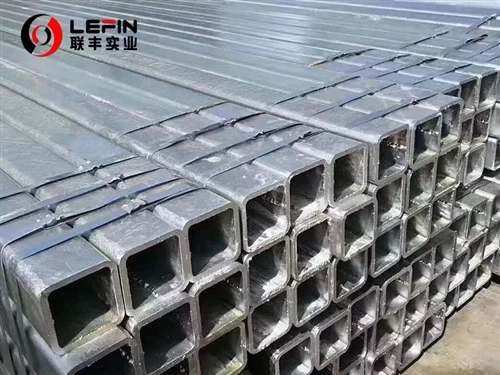
S460 is available in circular (OD up to 2,500 mm), square (up to 800 mm × 800 mm), and rectangular (up to 750 mm × 500 mm) sections. Wall thicknesses range up to 120 mm for circular sections.
For technical inquiries or to request a quotation for EN 10210 S460 hollow sections, please contact our sales engineering team. We provide full technical support, including grade selection assistance, welding procedure recommendations, and project-specific sizing.