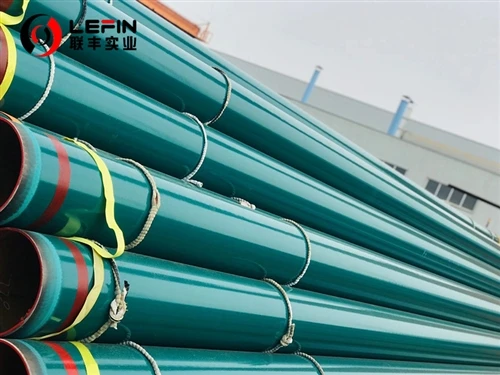
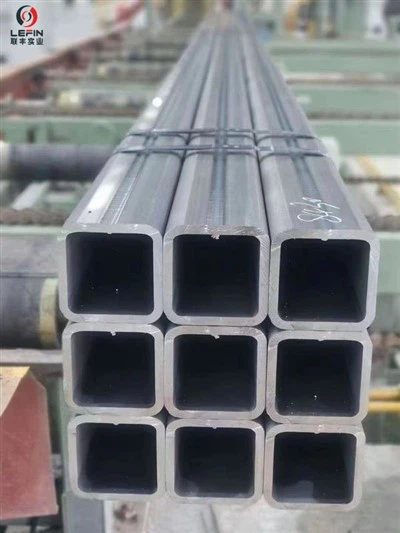
EN 10210 Steel Grades Overview
EN 10210 covers hot-finished structural hollow sections (pipes, square/rectangular tubes) made from non-alloy and fine-grain steels. The grades (S235, S275, S355) differ primarily in yield strength, impact toughness, and chemical composition, making each suitable for specific applications.
| Grade | Yield Strength (ReH) | Tensile Strength (Rm) | Key Characteristics |
|---|---|---|---|
| S235 | ≥ 235 MPa | 360–510 MPa | Lowest strength, excellent weldability, cost-effective. |
| S275 | ≥ 275 MPa | 430–580 MPa | Balanced strength/ductility, general-purpose use. |
| S355 | ≥ 355 MPa | 470–630 MPa | High strength, enhanced toughness (especially J2H/K2H grades). |

Detailed Applications by Grade
S235 (e.g., S235JRH, S235J0H, S235J2H)
A.Typical Uses:
- Lightweight Structures:
Roof trusses, scaffolding, and support frames.
Architectural features (e.g., canopies, façades) where high strength is not critical.
- Non-Critical Infrastructure:
Handrails, signage structures, and temporary installations.
Agricultural equipment (e.g., greenhouse frames).
B.Advantages:
- Easy to weld and machine due to lower carbon content.
- Cost-effective for projects with minimal load requirements.
C.Limitations:
- Not suitable for heavy-load or low-temperature environments (unless impact-tested grades like S235J2H are used).
S275 (e.g., S275J0H, S275J2H)
A.Typical Uses:
- General Construction:
Medium-load building frames, industrial walkways, and platforms.
Bridge components (secondary elements, pedestrian bridges).
- Transport & Machinery:
Chassis parts for trucks/trailers, crane booms.
Support structures for conveyor systems.
B.Advantages:
- Better strength-to-weight ratio than S235, reducing material usage.
- Good weldability with moderate toughness (e.g., S275J2H for -20°C environments).
C.Limitations:
- Less economical than S355 for high-stress applications.
S355 (e.g., S355J0H, S355J2H, S355K2H)
A.Typical Uses:
- Heavy-Duty Structures:
High-rise buildings, offshore oil rigs, and wind turbine towers.
Bridges (main load-bearing components).
- Critical Environments:
S355J2H/K2H: Arctic pipelines, shipbuilding, and mining equipment (resists brittle fracture at -20°C).
Earthquake-resistant structures (high energy absorption).
B.Advantages:
- Superior strength allows thinner sections, saving weight/cost.
- Enhanced toughness (especially S355K2H with 40J impact energy at -20°C).
C.Limitations:
- Higher cost than S235/S275.
- May require preheating for welding in thick sections.

Grade Selection Guidelines
| Factor | S235 | S275 | S355 |
|---|---|---|---|
| Load Requirements | Low | Medium | High |
| Budget | Most economical | Mid-range | Higher cost |
| Environment | Mild climates | Moderate cold | Extreme cold (J2H/K2H) |
| Welding Needs | Easy | Moderate | May need precautions |
Key Takeaways
S235: Choose for lightweight, cost-sensitive projects.
S275: Ideal for general construction with moderate loads.
S355: Best for heavy-load, low-temperature, or safety-critical applications.