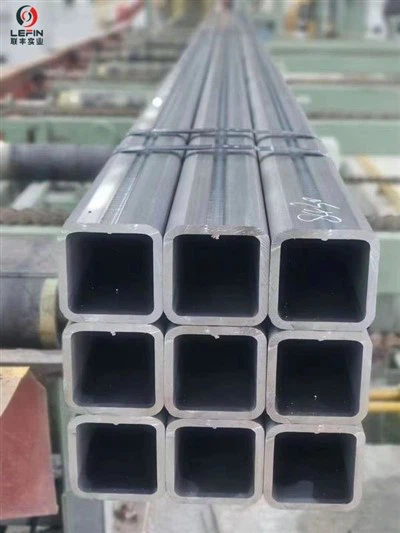
In sea transportation, container transportation and bulk cargo transportation are two completely different modes of cargo transportation. The choice of steel pipe exports needs to take into account multiple factors such as the characteristics of the goods, cost, safety and transportation efficiency. The following is the specific analysis:
---
I. Container Transportation vs. Bulk Cargo Transportation in Sea Transportation
1. Container transportation
• Definition: Goods are loaded into standardized containers (such as 20-foot / 40-foot cabinets, etc.) and transported by container ships.
• Applicable goods:
• Industrial manufactured goods (such as machinery, electronic products, small steel pieces).
Goods that need to be moisture-proof, damage-proof and theft-proof.
• Features:
• Standardized operation: Containers can be seamlessly connected to ships, trucks and railways to achieve multimodal transport.
• High safety: Fully sealed throughout the process to prevent goods from being exposed to damp or polluted environments.
• Cost structure: Charged based on the number of containers, suitable for medium and small batch goods.
2.Bulk cargo transportation
• Definition: The goods are directly loaded in the cargo hold of a bulk carrier without fixed packaging.
• Applicable goods:
• Bulk cargo (such as coal, ore, grain, steel raw materials).
Oversized/overweight goods that do not require packaging or are difficult to box.
• Features:
• High flexibility: It can transport irregularly shaped or oversized goods (such as long steel pipes and steel plates).
• Low unit cost: Charged based on the weight or volume of the goods, suitable for large-scale transportation.
• Complex loading and unloading: Specialized equipment (such as grabs and conveyor belts) is required, and the risk of cargo damage is relatively high.
II. Selection of Transportation Methods for Steel Pipe Exports
There are various types of steel pipes (such as welded pipes, seamless pipes, galvanized pipes, etc.), with different lengths, diameters, weights and protection requirements. The transportation mode should be selected by comprehensively considering the following factors:
1. Analysis of Goods Characteristics
• Size and weight:
Small-sized steel pipes (length ≤6 meters, diameter ≤30cm) : can be packed into containers (fixed to prevent collision).
• Extra-long/extra-large steel pipes (length >12 meters, diameter >50cm) : They are usually transported in bulk (either bare or bundled).
• Protection requirements:
Galvanized pipes and precision steel pipes need to be moisture-proof and rust-proof. Containers are preferred. Ordinary steel pipes can be packed in bulk.
2. Differences in Operation procedures
• Container transportation:
Before packing, steel pipes should be fixed (using wooden frames, binding straps, etc.) to prevent sliding during transportation.
• Booking space in advance and coordinating container transportation are required.
• Bulk cargo transportation:
Steel pipes that are exposed or bundled and directly stacked in the ship's cabin need to be treated for moisture-proofing and rust prevention (such as oiling and covering with waterproof cloth).
Loading and unloading rely on port cranes or conveyor belts. It is necessary to confirm the capacity of port equipment in advance.
3. Other key factors
• Transportation timeliness: Container ships operate frequently, ensuring more stable timeliness. Bulk carriers may have to wait for consolidation, and the cycle is relatively long.
• Convenience of customs clearance: Containerized goods usually have clear packaging lists, making customs clearance more convenient. Bulk goods need to provide more detailed weight and specification certificates.
• Insurance cost: The risk of cargo damage in container transportation is low, and the insurance rate is relatively low. Bulk cargo transportation may have higher insurance premiums due to exposure to the environment.
III. Recommended Plan for Steel Pipe Export
1. The situation of choosing container transportation
• Small-batch exports (such as tens of tons) : Transportation is carried out using less-than-Container Load (LCL) or full container load (FCL) containers.
• High value-added steel pipes: such as precision seamless pipes and galvanized pipes, require moisture-proof and collision-proof protection.
• Limited destination port conditions: Container handling has strong versatility and is suitable for ports with poor infrastructure.
2. The situation of choosing bulk cargo transportation
• For large-scale exports (such as over 1,000 tons) : The unit cost of bulk carriers is significantly lower than that of containers.
• Extra-long/overweight steel pipes: They cannot be packed into standard containers and need to be transported in bulk either bare or bundled.
• Low cost priority: For instance, ordinary carbon steel pipes have low requirements for protection and aim for the lowest transportation cost.
3. Special scenario: Mixed transportation of containers and bulk cargo
• Segmented transportation: Short steel pipes are transported in containers, while extra-long steel pipes are transported by bulk carriers in batches.
• "Bulk to container" model: Bulk cargo is loaded into containers (such as open-top containers or frame containers), taking into account both protection and cost.
Iv. Operational Suggestions
Measure the specifications of the steel pipes in advance: Confirm whether they are suitable for the size of the container (about 12 meters inside a 40-foot container).
2. Consult freight forwarders or shipping companies: Obtain information such as bulk cargo schedules, container weight limits, and port loading and unloading conditions.
3. Anti-rust treatment: For bulk cargo transportation, anti-rust oil should be applied; for container transportation, desiccants should be placed.
4. Purchase insurance: Especially for bulk cargo transportation, it is recommended to take out All Risks.
Summary
• Container transportation: Suitable for small-batch, high-value steel pipes that require protection. The operation is standardized and highly safe.
• Bulk cargo transportation: Suitable for large quantities of low-value, oversized steel pipes, with lower costs but more complex management.
Core principle: Make a comprehensive decision based on the characteristics of the goods, transportation volume, budget and timeliness. If necessary, a combination of the two methods can be used.