How to Choose Anti-corrosion Coatings for Steel Pipes
Before choosing the coating, remember the most basic principle: the outside and the inside of the pipe should be considered separately. The outside is protected against the environment such as soil, atmosphere, and water, while the inside is protected against the transported medium (water, oil, gas, sewage). The corrosion mechanisms on both sides are different, so often, two sets of coatings are needed, and it is not advisable to use one layer to cover all, as it would be too convenient.
I. First, determine where the pipe is located and what it transports
When you receive a requirement, ask yourself several questions: Is the pipe buried underground, suspended on the ground, submerged in water, or to be passed through roads or rivers? Is the soil dry, does it contain a lot of salt, or is the groundwater level high? What medium does it transport, such as drinking water, sewage, crude oil, natural gas, or chemical liquids? What is the annual temperature? How many years are planned to be used and is the budget tight? The answers to these questions directly determine the coating grade.
In simple terms, the more adverse the environment and the longer the lifespan required, the thicker, more composite, and more expensive the coating should be; for temporary projects with less corrosion, an economical solution is sufficient.
II. Common Coatings for the Outer Wall
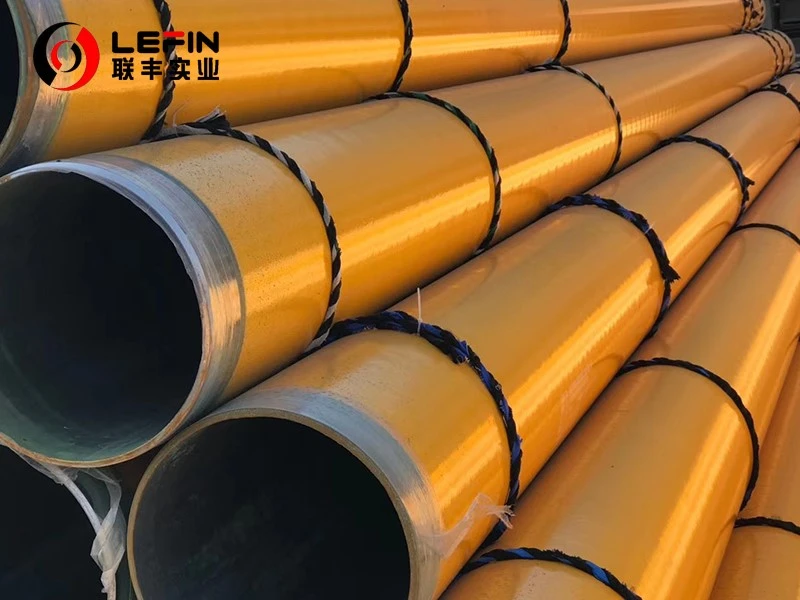
Fused Epoxy Powder (FBE) is to electrostatically spray epoxy powder onto a preheated steel pipe, melting and solidifying into a dense film with a thickness of approximately 300 to 500 micrometers. It has good adhesion, is resistant to chemical corrosion, and works well with cathodic protection. It is a common factory coating solution for long-distance onshore pipelines and has a lifespan of generally 20 to 40 years. The disadvantage is that it is afraid of sunlight - ultraviolet rays will cause aging over time, so it is not suitable for long-term exposure on the ground; in addition, in situations where it is prone to scratches such as rock backfilling or directional drilling and pulling, it alone is not enough; sometimes, a wear-resistant outer covering layer is needed.
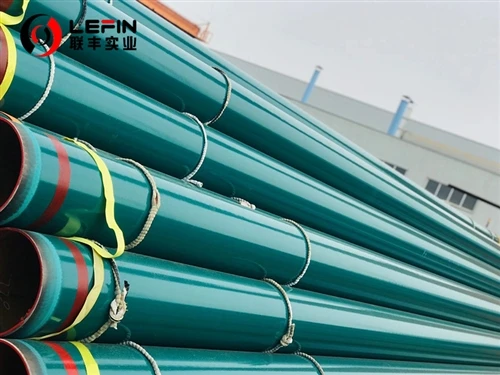
Three-Ply Polyethylene (3PE) is a very comprehensive structure for buried main pipelines today: the bottom layer is epoxy powder adhered to the steel pipe, the middle layer is a glue that bonds the inside and outside, and the outer layer is polyethylene for mechanical protection, with a total thickness of more than 2 millimeters. It is waterproof, resistant to soil stress, resistant to impact and scratching, and has a lifespan of up to 30 to 40 years or even longer, suitable for areas with strong soil corrosion, where there are rocks for backfilling, and where pipeline crossing is required. The drawback is that the price is relatively high, and ordinary polyethylene has limited temperature resistance, with normal temperature types generally not exceeding 60°C and high-temperature types around 80°C; at higher temperatures, it is necessary to replace with other materials.
Three-Ply Polypropylene (3LPP) has a similar structure to 3PE, but the outer layer is polypropylene, which can withstand up to 100°C or even 140°C. It is mostly used in high-temperature pipelines and deep-water high-pressure environments, but it is more expensive. Ordinary engineering projects at normal temperatures generally do not use it.
Two-Ply Polyethylene (2PE) has no epoxy layer at the bottom and is simply a glue layer and polyethylene, with lower cost. However, its adhesion and anti-anode peel ability are not as good as 3PE, and large-diameter pipes are usually not recommended.
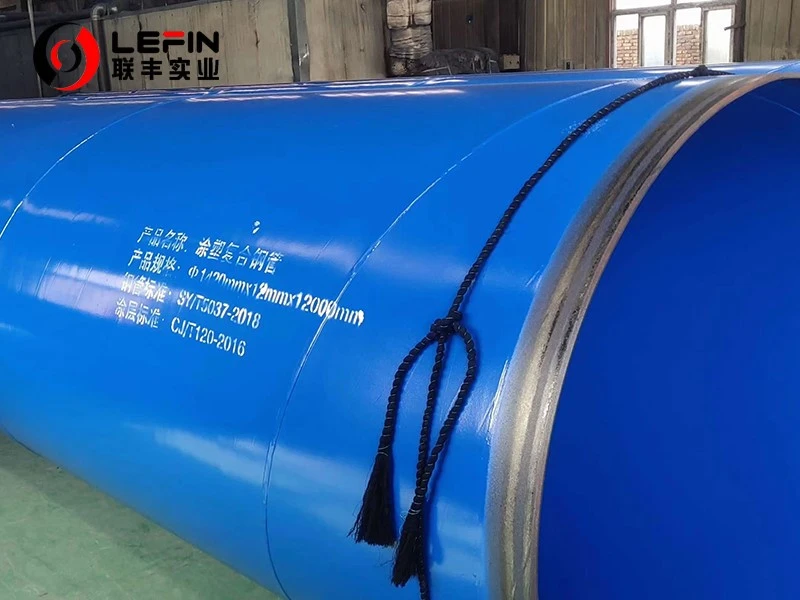
TPEP can be understood as a "double-layer reinforced version": the inner wall is epoxy powder, and the outer wall is 3PE, providing protection on both sides. It is commonly used in projects with high requirements for internal and external anti-corrosion, such as long-distance water transmission, municipal pressure sewage, and old pipe repair, with a lifespan of over 30 years. Of course, the price is also the highest.
Epoxy Coal Tar Pitch is the traditional solution, using epoxy coal tar pitch coatings brushed with glass cloth to form "three oils two cloths" or "five oils three cloths", with strong layer thickness, adhesion, and resistance to water and chemicals. It is widely used in buried sewage pipes, underwater projects, and old pipe repair. The disadvantage is that the construction is slow, and rust removal requirements are high, and it contains coal tar, which is increasingly restricted in terms of environmental protection. Many new projects are gradually being replaced.
Oil Pitch Coating is an older method, where asphalt is sandwiched between glass cloth. It is cheap, but it is easily penetrated by plant roots and not resistant to bacterial corrosion. It cannot be used in soil with strong bacterial corrosion such as swamps and reeds. Now it is basically in the direction of being phased out.
Exposed and Openly Installed Pipes on the Ground The logic is different. The pipelines in the ground manholes, pump houses, and station facilities are exposed to sunlight, rain, and atmospheric moisture. The commonly used system is as follows: a zinc-rich primer as the base coat (with a little sacrificial protection), an epoxy intermediate coat as a barrier, and a polyurethane or fluorocarbon top coat that resists ultraviolet rays and has good weather resistance. The top coat must be resistant to sunlight and cannot directly apply the FBE used for underground applications to the overhead structure for exposure to the sun.
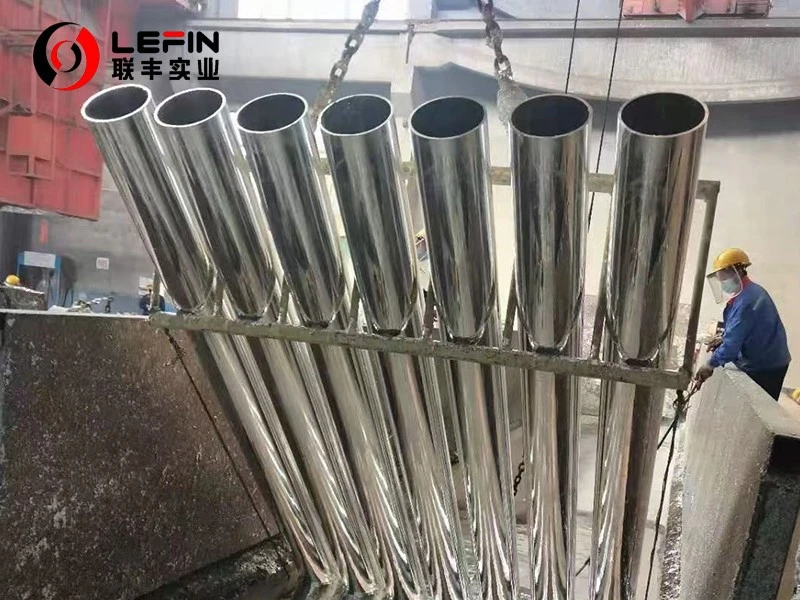
Hot-dip galvanizing is the most familiar, with a thin zinc layer and low cost. It protects steel by corroding the zinc first in the atmospheric environment, and is widely used in exposed structural components and fire protection wet systems. However, special attention should be paid: galvanizing is not suitable for underground and water immersion. Zinc is consumed rapidly in wet soil, and in some strongly corrosive soils, it can deteriorate in as little as a few years or even less; moreover, zinc becomes brittle when the temperature exceeds 60°C. Therefore, underground water supply and sewage pipes should not be galvanized.
III. Commonly used coatings on the inner walls
The coatings on the inner walls directly come into contact with the transported medium, and the selection follows the medium.
Unsaturated liquid epoxy lining is the most commonly used type, with a thickness of two to three hundred to five hundred micrometers, good adhesion, chemical resistance, smooth surface, and can reduce water flow resistance. It can be used for water transmission, industrial water, water containing crude oil, and weakly corrosive media. If it is for drinking water, the epoxy must have corresponding hygiene-level certification and cannot be used randomly as ordinary industrial epoxy.
FBE epoxy powder lining is of the same process as the external anti-corrosion powder, applied uniformly in the factory, and is commonly used for water supply and oil and gas gathering pipelines. The disadvantage is that the lining repair at the welds on site is relatively troublesome.
IPN8710 interpenetrating network epoxy is a common non-toxic coating in the water supply field in China, resistant to acids and alkalis, and has good adaptability to pH fluctuations. It is widely used in drinking water pipes and key parts of sewage treatment plants, and has a slightly higher cost than ordinary epoxy.
Glass fiber epoxy belongs to the "high-end" lining in the lining category, thick paste type, with strong anti-seepage and corrosion resistance, specifically designed to deal with harsh media such as high chloride ions, produced water, and acidic gases containing H₂S/CO₂. The construction requirements and prices are higher.
Cement mortar lining is very economical on large-diameter water supply pipes and drainage main pipes, and the larger the pipe diameter, the more cost-effective. The mortar is in an alkaline environment, which can protect the steel surface by passivating and sealing minor cracks with continued hydration. Its drawback is poor crack resistance, and it is prone to shrinkage and cracking in areas with large temperature differences, and it is not resistant to acidic media. It is afraid of bumps during transportation and installation.
HDPE lining or steel-plastic composite pipes rely on the chemical inertness of polyethylene for anti-corrosion, do not form deposits, and have low friction coefficient, suitable for sewage and corrosive chemical fluids. However, they are limited in high-pressure and high-temperature environments. The interface transition section is a weak link.
IV. How to lay according to common working conditions
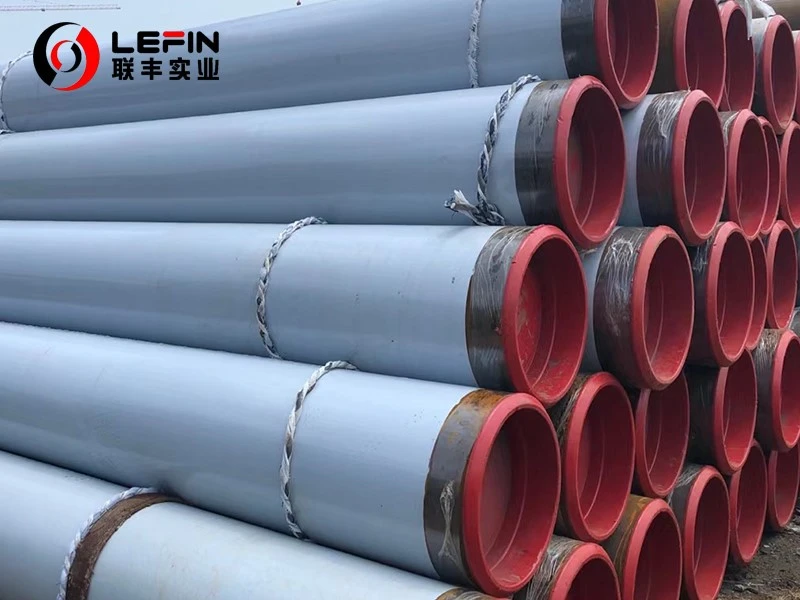
For long-distance municipal drinking water transmission, the outer wall is generally 3PE reinforced grade or FBE, and the inner wall uses epoxy or FBE with drinking water certification, along with cathodic protection. For large-diameter water supply pipes, the inner wall uses cement mortar lining at the lowest cost, and epoxy can be used if the budget is high. For pressure pipes for sewage and wastewater, the corrosion is complex, and TPEP or 3PE with epoxy coal tar pitch and glass fiber lining are commonly used; for environments with sulfur compounds, high chloride, and heavy bacterial corrosion, higher grades should be selected. For long-distance transportation of crude oil and refined oil, the outer wall is FBE or 3LPP, and the inner wall depends on the water content, chloride ions, and acid gas content, and anti-corrosion agents may be injected in acidic conditions, or even select corrosion-resistant alloy materials.
The inner wall of dry natural gas pipes can be lined with a reduced-resistance epoxy lining to improve transportation efficiency. For overhead stations, the outer wall is preferably 3PE thickened or FBE with a wear-resistant coating, and scratch resistance is the top priority.