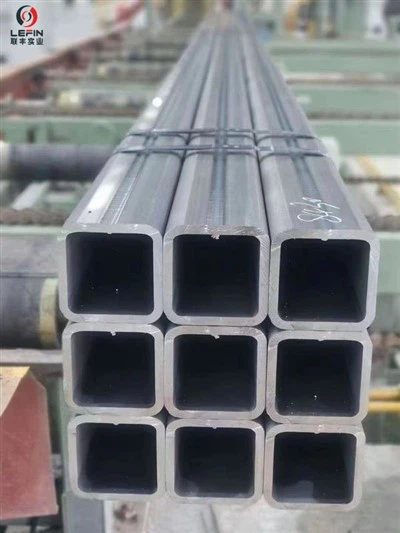
Steel pipe oiling is a common process in steel pipe production and anti-corrosion treatment. Its main purpose is to prevent rust, lubricate, and meet different storage and processing requirements. The following table can help you quickly understand the types of oiling, their functions, and the main differences between light oiling and heavy oiling.
| Classification |
Specific type /comparison item |
Specifications |
| Type of oiling |
Anti-rust oil | Provide basic corrosion protection to reduce rusting and corrosion on the surface of steel pipes |
| Bending pipe stretching oil | It is used in processing techniques such as bending, stretching and stamping of steel pipes, playing a role in lubrication, cooling, preventing cracking and improving the yield of finished products | |
| Hot-dip galvanizing oil | It is used after the hot-dip galvanizing process to protect the hot-dip galvanized coating and provide additional anti-corrosion protection | |
| Main function |
Anti-rust protection | An oil film is formed on the surface of the steel pipe to isolate oxygen and moisture, prevent or delay corrosion, and extend the service life. Depending on the amount of oil applied, the rust prevention period can reach several months. |
| Lubrication processing | Reduce friction during cold working processes such as pipe bending and stretching to prevent the workpiece from cracking or being scratched, protect the mold, and improve processing accuracy and efficiency. | |
| Improve the appearance | Make the surface of the steel pipe more lustrous, improve its texture and aesthetic appeal. | |
| Light oiling vs. heavy oiling |
Oil application amount | Light oiling: Apply less oil. Re-oiling: A large amount of oil is applied |
| Rust prevention cycle | Light oiling: The rust prevention period is relatively short. Re-oiling: Longer rust prevention period, providing more lasting protection | |
| Applicable scenarios | Light oiling: Mainly used for short-term rust prevention or in situations where the oiling needs to be thoroughly removed before subsequent processing (such as welding, spraying). Re-oiling: Suitable for steel pipes that need to be stored or transported for a long time, especially in damp environments. | |
| Subsequent processing | Light oiling: Easy to clean. Reapplying oil: A more professional degreasing process may be required to remove it. |
💡 How to choose and construction points
Choosing the appropriate oiling and construction methods is of vital importance:
-
Select the oil type as needed:
If the steel pipes are mainly used for long-term storage or outdoor stacking, anti-rust oil should be given priority or re-coating oil treatment should be required. If steel pipes need to undergo plastic processing such as bending and stretching, special process oils like bending and stretching oil must be used.
-
Pay attention to the oiling methods:
Common oiling methods include immersion, brushing and spraying, etc., with the aim of ensuring uniform oil film coverage.
-
Pay attention to safety and environmental protection:
The oiling process may involve grease and chemical substances, and safety operation procedures must be followed. At the same time, some oil products may release volatile substances during the curing process, and environmental protection requirements need to be taken into consideration.