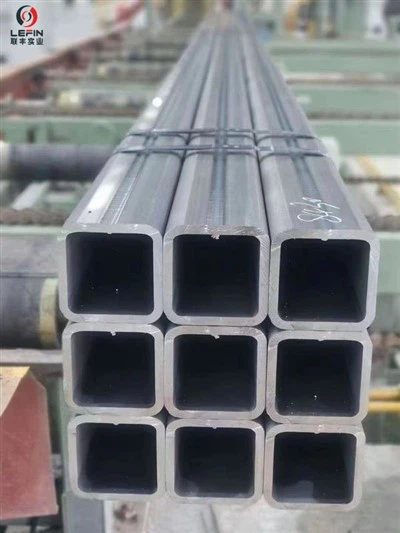
EN 10210, EN 10219 and EN 10255 are three common European steel pipe standards, but their positioning and applicable scenarios are fundamentally different. In simple terms, EN 10210 and EN 10219 mainly target steel pipes for structural purposes, while EN 10255 is aimed at steel pipes for pipelines.
The following table can help you quickly grasp the core differences between them:
| Characteristic Dimensions | EN 10210 (for Structures) | EN 10219 (for Structures) | EN 10255 (for piping) |
|---|---|---|---|
| Core location | Hot-formed structural hollow profiles | Cold-formed welded structural hollow profiles | Welded or seamless steel pipes, suitable for threading and welding |
| Main processes | hot rolling or hot expansion forming, with low residual stress | After cold bending forming, welding is carried out, ensuring high dimensional accuracy. | Welding or seamless manufacturing can be performed, and the ends can be processed with threads. |
| Key performance | It features excellent toughness and impact resistance, making it suitable for high dynamic loads |
It has high strength and dimensional accuracy, and is suitable for static loads |
Good processability (weldability, sealing property), used for fluid transportation |
Typical application |
Bridges, offshore platforms, heavy machinery, high-temperature application | Building frames, mechanical skeletons, guardrails, brackets | Low-pressure fluid transportation such as water, gas and oil, and heating systems |
| Common steel grades | S235JRH, S275J2H, S355J2H, | S235JR, S275JR, S355JR | Non-alloy steels such as S235 |
| Cross-sectional shapes | Circular, square, rectangular and elliptical. | Circular, square and rectangular | Mainly circular |
| Compliance | The building use must comply with the EU Building Products Regulation (CPR). | The building use must comply with the EU Building Products Regulation (CPR). | CE certification may also be required when it is used in the piping system within buildings |
💡 Choose the standard according to the purpose
After understanding their differences, the selection criteria become very clear:
• Choose EN 10210 (hot-formed structural tube) :
If your project involves heavy structures that are subject to high dynamic loads, impacts, or may operate in high-temperature environments, such as large Bridges, offshore oil platforms, heavy mining machinery, or lifting equipment, then EN 10210 is the best choice. The high toughness and low residual stress brought by its thermoforming process are the key to safety.
• Choose EN 10219 (cold-formed structural pipe) :
If the project involves static or low-impact load building structures, such as the frames, roof trusses, indoor support columns, billboards, photovoltaic brackets, etc. of high-rise buildings, and there are high requirements for dimensional accuracy and surface quality, EN 10219 usually has a more cost-effective advantage.
• Select EN 10255 (Pipes) :
If steel pipes are used for fluid transportation, such as in the water supply, gas, heating systems of buildings, or in low-pressure oil pipelines, irrigation systems, etc., then products that meet the EN 10255 standard must be chosen. It is specially designed for pipe connection and sealing and is not suitable to be used as a main load-bearing structural component.

💎 Summary
To sum up briefly:
EN 10210 and EN 10219 are the "skeletons" of buildings, responsible for bearing weight and providing support. The former is like an "athlete", good at withstanding severe impacts; The latter is like a "model", with precise appearance and is suitable for static scenes.
EN 10255 is the "blood vessel" of a building, responsible for transporting fluids.