Introduction
Procurement professionals work in the steel industry. Engineers and specifiers also work in this field. They often need to choose the right hollow structural section (HSS) for a given project. This choice is not a small one. It directly changes the structural safety of the final product. It also changes how much the fabrication will cost. And it changes the overall project budget.
In North America, one standard is used more than any other for cold‑formed carbon steel structural tubing. That standard is ASTM A500. It covers welded tubing and seamless tubing. Among the grades listed in this standard, two grades are specified most often. These are Grade B and Grade C. This guide gives you a full and direct comparison of these two grades. We look at their chemical makeup. We look at their mechanical properties. We look at their common uses, and also give you a step‑by‑step way to decide which grade fits your needs best.

Understanding ASTM A500
A.Scope of the Standard
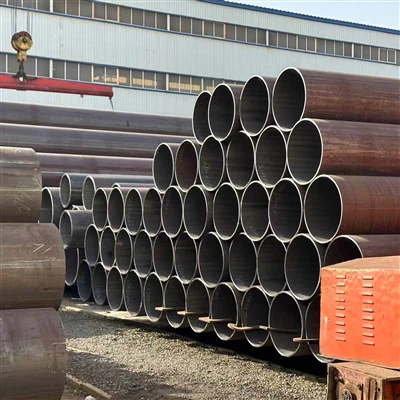
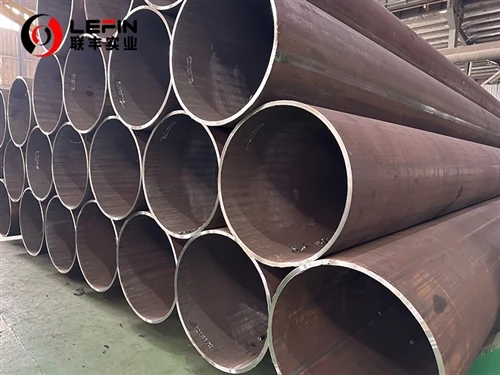
ASTM A500 is the standard specification for cold‑formed welded and seamless carbon steel structural tubing in rounds, squares, and rectangles. It is the primary standard used in the United States for hollow structural sections (HSS) that serve as structural members in building construction, bridges, industrial equipment, and countless other applications.
B.Manufacturing Methods
Under ASTM A500, tubing can be produced by two primary methods:
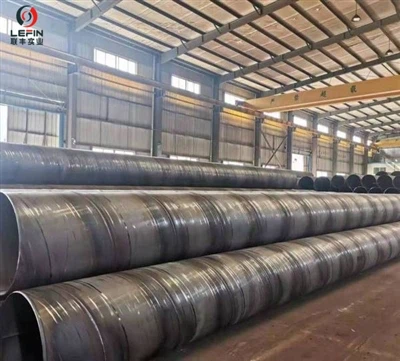
- Welded tubing – Formed from flat‑rolled steel strip, then welded longitudinally along the seam
- Seamless tubing – Produced by piercing a solid billet, resulting in a tube without a welded seam
Both manufacturing routes yield products that must meet the same mechanical and chemical requirements specified for each grade.
C.Shapes Covered
ASTM A500 covers three primary shape :
- Round structural tubing
- Square structural tubing
- Rectangular structural tubing
D.Why This Standard Matters
This standard is popular because it gives a good balance. The tubing has enough strength for structural work. At the same time, it is easy to form and easy to weld. The standard sets clear rules that can be enforced. Every producer must follow the same rules. This means that buyers get consistent quality. That consistency is very important for projects where safety and performance are top concerns.
Grade B vs. Grade C – A Detailed Comparison
Grade B and Grade C are both part of ASTM A500. But they are not the same. The main differences are in their mechanical properties. There are also small differences in their chemical composition. Knowing these differences is the key to making a smart buying decision.
A. Chemical Composition Limits
Both grades are carbon steels. But Grade C usually allows a little more carbon and manganese. This helps it reach higher strength. The table below shows the maximum limits for each element.
| Element | Grade B (max %) | Grade C (max %) |
|---|---|---|
| Carbon | 0.26 | 0.26 |
| Manganese | 1.35 | 1.40 |
| Phosphorus | 0.035 | 0.035 |
| Sulfur | 0.035 | 0.035 |
| Copper (when specified) | 0.20 min | 0.20 min |
- These values come from the ladle analysis. The actual values on a mill test report may be a little different. Always check the certified report from the producer for exact numbers.
B. Mechanical Properties – The Big Difference
The most important difference between Grade B and Grade C is in their mechanical properties. The yield strength and tensile strength are not the same. The table below gives the minimum required values.
| Property | Grade B | Grade C |
|---|---|---|
| Yield Strength, min (ksi) | 42 | 50 |
| Yield Strength, min (MPa) | 290 | 345 |
| Tensile Strength, min (ksi) | 58 | 62 |
| Tensile Strength, min (MPa) | 400 | 425 |
| Elongation in 2 in., min % | 23 | 21 |
- Grade C offers approximately 19% higher minimum yield strength (50 ksi vs. 42 ksi) compared to Grade B. This increase in strength comes with a slight reduction in ductility, as reflected in the marginally lower elongation requirement.
C. Fabrication Behavior
a.Formability
- Grade B: With its lower yield strength and slightly higher elongation, Grade B offers superior formability. It is the preferred choice for applications requiring tight bending radii, complex shapes, or cold‑forming operations.
- Grade C: While still formable, Grade C's higher strength makes it somewhat less ductile. Cold‑forming operations may require larger bend radii or pre‑heating to avoid cracking.
b.Weldability
Both grades exhibit good weldability using standard carbon steel welding practices (SMAW, GMAW, FCAW, SAW). However:
- Grade B: Its lower carbon equivalent makes it slightly more forgiving in field welding, particularly in cold weather conditions.
- Grade C: Welding is readily achievable but may benefit from preheat and interpass temperature control in thicker sections to prevent hydrogen‑induced cracking.
Available Product Forms and Sizes
You can get both Grade B and Grade C in many sizes and wall thicknesses. Below are the typical ranges.
A. Round Tubing
- Outside Diameter (OD): Typically ranges from 0.840" to 16.000" and larger
- Wall Thickness: From 0.109" to 0.625" and above
B. Square Tubing
- Nominal Size: From 0.500" × 0.500" to 16" × 16" and larger
- Wall Thickness: From 0.065" to 0.625"
C. Rectangular Tubing
- Nominal Size: Various combinations (e.g., 2" × 3" up to 12" × 20")
- Wall Thickness: From 0.109" to 0.625"
Size availability may vary by manufacturer. Custom sizes are often available upon request.
Typical Applications
A. Grade B Applications
Grade B's combination of good strength, excellent formability, and cost‑effectiveness makes it the workhorse grade for a broad range of structural and mechanical applications:
- Building construction – Columns, beams, and trusses in low‑ to mid‑rise buildings
- Bridge components – Secondary structural members, railings, and handrails
- Agricultural equipment – Frames, supports, and implement structures
- Industrial machinery – Conveyor systems, equipment frames, and material handling structures
- Architectural applications – Signage, awnings, canopies, and decorative structural elements
- Automotive and trailer frames – Where moderate strength and good formability are required
- Fencing and guardrails – Highway and perimeter safety barriers
B.Grade C Applications
Grade C's higher strength‑to‑weight ratio makes it the preferred choice for more demanding structural applications where weight reduction or higher load‑bearing capacity is critical:
- High‑rise building construction – Primary columns and heavy load‑bearing members
- Long‑span bridges – Main structural chords and heavy truss members
- Offshore and marine structures – Platforms, jack‑up rigs, and support structures
- Heavy industrial equipment – Crane booms, excavator arms, and mining equipment frames
- Transmission towers – Electrical utility structures requiring high strength
- Heavy‑duty trailers and transport equipment – Where higher payload capacity is needed
- Stadiums and large‑span roofs – Primary structural framing members
How to Choose Between Grade B and Grade C
For procurement professionals, the decision between Grade B and Grade C should be driven by a careful assessment of project requirements. Use the following framework as a guide:
Step 1 – Look at the Structural Loads
If the design loads are moderate, Grade B is usually enough. It will also cost less. If the design loads are high, Grade C may be required. Its higher yield strength lets you meet safety factors without making the section bigger.
Step 2 – Think About the Fabrication Work
If your project needs a lot of cold‑bending, tight radius bends, or complex shapes, Grade B is better. If your fabrication is mostly straight cuts, welding, and bolting, Grade C works well.
Step 3 – Check Weight Limits
If weight is a critical factor – for example, in mobile equipment or long‑span structures – Grade C helps. You can use a thinner wall and still get the same load capacity. That reduces the total weight.
Step 4 – Compare Costs
Grade B usually costs less per ton. So for projects where its strength is enough, it saves money. Grade C may cost a little more per ton. But it can lower the total project cost because you can use smaller sections and less steel overall.
Step 5 – Review Welding Conditions
If you will weld in the field, especially in cold weather or with limited preheat, Grade B is more forgiving. If you weld in a shop with controlled conditions, both grades are fine. Just follow standard good practices for Grade C.
- Here is a simple summary table for quick reference.
| Consideration | Choose Grade B | Choose Grade C |
|---|---|---|
| Moderate loads | Yes | No |
| High loads / heavy structures | No | Yes |
| Complex cold‑forming | Yes | No |
| Simple fabrication | Yes | Yes |
| Weight reduction is critical | No | Yes |
| Budget is very tight | Yes | No |
| Field welding in cold weather | Yes | No |
| Shop welding with good controls | Yes | Yes |
Frequently Asked Questions (Q&A)
Q1: Is Grade C always stronger than Grade B?
Yes. Grade C has a minimum yield strength of 50 ksi. Grade B has only 42 ksi. That is about 19% higher. Its tensile strength is also higher: 62 ksi vs. 58 ksi.
Q2: Which grade is easier to weld?
Both are easy to weld with standard carbon steel methods. But Grade B is slightly easier in the field because it has lower strength and a lower carbon equivalent. That makes it less sensitive to cold conditions.
Q3: Is Grade C more expensive than Grade B?
Yes, Grade C usually costs a little more per ton. The extra cost comes from tighter process controls and higher strength requirements. But the price difference is often offset by material savings – because you can use thinner walls or smaller sections.
Q4: Can I get ASTM A500 Grade B or C in seamless form?
Yes. The standard covers both welded and seamless tubing. Seamless is often chosen for high‑pressure services or for applications where a weld seam is not allowed.
Q5: What does "cold‑formed" mean in this standard?
It means the tubing is shaped at room temperature from flat steel. It is not hot‑rolled. Cold‑forming increases strength through work hardening. It also gives tighter dimensional tolerances.
Q6: How can I be sure my tubing meets ASTM A500?
Ask your supplier for mill test reports (MTRs). These reports give the chemical analysis and the mechanical test results. They also include a statement that the tubing complies with ASTM A500.
Conclusion
ASTM A500 Grade B and Grade C are both excellent choices for hollow structural sections, each serving distinct market needs:
Grade B is the versatile, cost‑effective workhorse – ideal for a wide range of general structural applications where moderate strength and excellent formability are required.
Grade C delivers superior strength‑to‑weight ratio – the go‑to choice for demanding structural applications where higher load capacity, weight reduction, or both are critical.
Our recommendation: Engage with your supplier early in the design phase. Provide your project specifications – including design loads, fabrication methods, and any weight constraints – and let us help you select the optimal grade for your specific application.
For more information, technical datasheets, or to request a quote, please contact our sales engineering team. We are committed to providing high‑quality ASTM A500 structural tubing that meets your exact specifications – on time and on budget.
LEFIN STEEL is a leading manufacturer and supplier of carbon steel structural tubing and pipe products. We specialize in ASTM A500 hollow structural sections in Grade B and Grade C, and we also produce to API, ASTM A106, A53, A501, EN 10219/10210, JIS G3444, G3466, and AS/NZS 1163 standards. With decades of experience and a commitment to quality, we serve customers across construction, infrastructure, industrial equipment, transportation, and energy sectors worldwide.
Product Detail Pages:
- ASTM A500 Grade B – Full specifications, sizes, and applications
- ASTM A500 Grade C – Full specifications, sizes, and applications