Overview

ASTM A500 is a foundational standard established by the American Society for Testing and Materials (ASTM) that specifies requirements for cold-formed welded and seamless carbon steel structural tubing in round, square, and rectangular shapes. As one of the most widely used and recognized specifications for structural tubing in North America, it is synonymous with economy, versatility, and reliable performance. For procurement managers and engineers, understanding the intricacies of ASTM A500 is essential for selecting the right material for a vast array of construction and manufacturing applications.
The cold-forming process, which shapes the steel at or near ambient temperature, gives A500 tubing its characteristic excellent surface finish, tight dimensional tolerances, and enhanced strength due to work hardening.
Standard Specification
ASTM A500 standardizes the chemical composition, mechanical properties, and dimensional tolerances for structural tubing. It is categorized into several grades to suit different design strength requirements.
The standard outlines the following primary grades:(Round Structural Tubing)
- Grade A: Minimum Yield Strength of 33,000 psi (230 MPa)
A general-purpose grade with good formability and weldability.
- Grade B: Minimum Yield Strength of 42,000 psi (290 MPa)
The most commonly specified grade, offering an optimal balance of strength, ductility, and economy.
- Grade C: Minimum Yield Strength of 46,000 psi (315 MPa)
A higher-strength grade used where increased load-bearing capacity is required without a significant increase in weight.
- Grade D: Minimum Yield Strength of 36,000 psi (250 MPa)
Often used in applications requiring good weldability and a strength level between Grade A and Grade B.
Table: Key Mechanical Properties of ASTM A500 Grades (Minimum Values)(Round Structural Tubing)
| Grade | Yield Strength (min) | Tensile Strength (min) |
|---|---|---|
| A | 33,000 psi (230 MPa) | 45,000 psi (310 MPa) |
| B | 42,000 psi (290 MPa) | 58,000 psi (400 MPa) |
| C | 46,000 psi (315 MPa) | 62,000 psi (425 MPa) |
| D | 36,000 psi (250 MPa) | 58,000 psi (400 MPa) |
Table: Key Chemical Composition(%) of ASTM A500 Grades
| Grade A, B and D | Grade C | |
| Carbon (C) | for heat analysis≤0.26% | for heat analysis≤0.23% |
| for product analysis ≤0.30% | for product analysis ≤0.27% | |
| Manganese (Mn) | for heat analysis≤1.35% | for heat analysis≤1.35% |
| for product analysis ≤1.40% | for product analysis ≤1.40% | |
| Phosphorus (P) | for heat analysis≤0.035% | for heat analysis≤0.035% |
| for product analysis ≤0.045% | for product analysis ≤0.045% | |
| Sulfur (S) | for heat analysis≤0.035% | for heat analysis≤0.035% |
| for product analysis ≤0.045% | for product analysis ≤0.045% | |
| Copper (Cu) | for heat analysis≥0.20% | for heat analysis≥0.20% |
| for product analysis ≥0.18% | for product analysis ≥0.18% |
- Carbon (C): The primary strengthening element in steel, significantly influencing tensile and yield strength. However, higher carbon content can reduce weldability and ductility. The controlled carbon content in A500 grades (max 0.26%) ensures an optimal balance between strength and formability .
- Manganese (Mn): Enhances strength and hardness while improving forgeability. Manganese also combines with sulfur to form manganese sulfides, preventing the formation of iron sulfide which can cause hot shortness during manufacturing processes .
- Phosphorus (P) & Sulfur (S): These elements are controlled as impurities. Excessive phosphorus can reduce ductility and impact toughness, while high sulfur content negatively affects weldability and surface quality. The strict limits (≤0.035% for both) ensure material consistency and performance .
Primary Product
ASTM A500 tubing is manufactured in three main shapes, each serving distinct structural and design purposes:
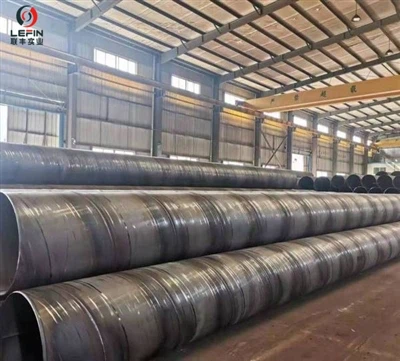
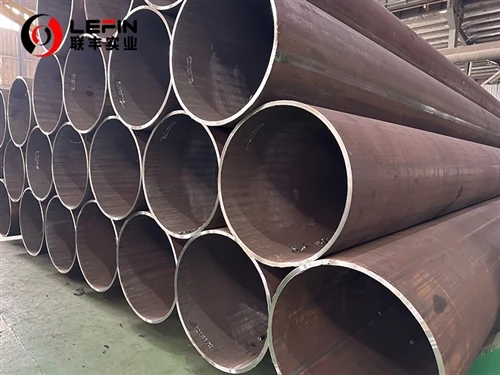
- Round Tubing (A500 Round): Designated by its outer diameter (OD) and wall thickness. It offers uniform strength in all directions and is often used for columns, handrails, and architectural features.
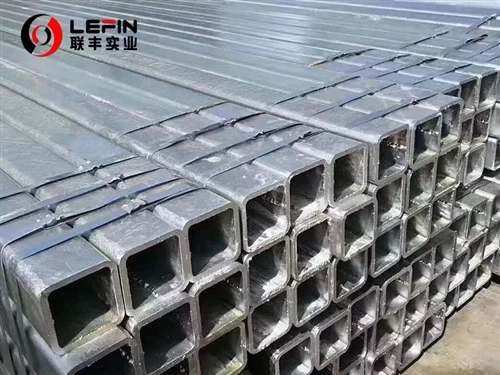
- Square Tubing (A500 Square): Defined by its side dimensions and wall thickness. Its symmetrical shape makes it ideal for frames, supports, and structures where easy connection and alignment are critical.
- Rectangular Tubing (A500 Rectangle): Specified by its depth, width, and wall thickness. It provides high strength against bending in one direction, making it perfect for use as beams, purlins, and in machine frames.
The standard provides comprehensive tables governing the permissible variations in outside dimensions, wall thickness, straightness, and camber, ensuring consistency and predictability for fabricators.
Applications
The exceptional strength-to-weight ratio and cost-effectiveness of ASTM A500 tubing make it the material of choice for a diverse range of industries:
- Building Construction: As primary structural members like columns, beams, and trusses in commercial and industrial buildings.
- Architectural and Ornamental Applications: For exposed structures like canopies, staircases, and handrails where a clean, smooth surface finish is desirable.
- Bridge Components: In railings, secondary supports, and pedestrian bridge frames.
- Industrial Structures: For support frames, work platforms, equipment guards, and conveyor system structures.
- Transmission Towers and Signage Supports: Utilizing its high strength and light weight for tall structures.
- Agricultural and Automotive Equipment: In machine frames, roll cages, and trailer chassis.
Grade Selection Guide
Choosing the correct grade is crucial for optimizing performance and cost.
- Select Grade A for: Non-critical structural applications, decorative projects, or situations where maximum formability is needed.
- Select Grade B for: The vast majority of general structural applications. It offers the best balance of performance and value.
- Select Grade C for: Heavily loaded components where maximizing strength and minimizing weight are priorities, such as in long-span trusses or high-capacity racks.
- Select Grade D for: Applications where weldability is a primary concern and a moderate strength level is sufficient.
Procurement decisions should always be made in consultation with design engineers and based on the specific stress calculations and service conditions of the project.
To understand how ASTM A500 compares to its hot-formed counterpart, ASTM A501, and to make the most informed material selection, read our comprehensive guide: [ASTM A500 vs. ASTM A501: A Comprehensive Guide to Structural Steel Tubing].
To learn about its hot-formed counterpart, explore our specialized article on [ASTM A501: Guide To Hot-Formed Structural Steel Tubing].