What is Oil Casing pipe?
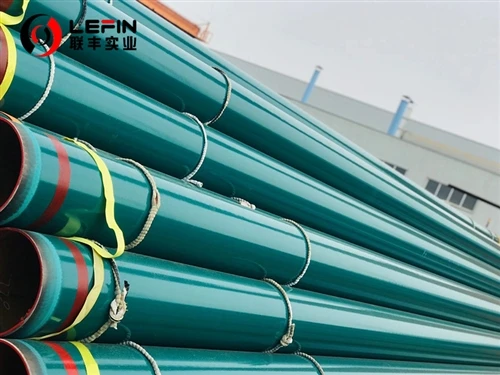
Oil casing pipe, also known as well casing pipe, is a critical component in the oil and gas industry used during the drilling and completion of oil and gas wells. It is a large-diameter steel pipe that lines the wellbore, providing structural support to the well and ensuring its integrity and safety during and after the drilling process.
Common Steel Grades for Oil Casing pipe
Oil casing pipe steel grades are classified according to their yield strength, tensile strength, chemical composition, heat treatment, and other characteristics. The American Petroleum Institute (API) standards, particularly API 5CT, categorize these grades to ensure compatibility with oil and gas operations. Here are some of the common API grades for oilfield casing pipes:
- J55: This is a widely used general-purpose grade, suitable for shallow wells. It has a minimum yield strength of 55,000 psi (379 MPa) and a minimum tensile strength of 75,000 psi (517 MPa). J55 is known for its affordability and versatility, making it a popular choice when cost is a primary consideration.
- K55: Slightly stronger than J55, K55 is classified as a medium-strength grade. It has a minimum yield strength of 55,000 psi (379 MPa) and a minimum tensile strength of approximately 95,000 psi (665 MPa). K55 is often used in shallow wells where moderate pressure containment is required.
- N80: This grade is available in two variants: N80-1 and N80Q. N80 has a minimum yield strength of 80,000 psi (552 MPa) and a minimum tensile strength of 100,000 psi (689 MPa). It is suitable for medium-deep wells and provides good resistance to corrosion, making it ideal for offshore applications.
- L80: L80 casing is designed for sour service applications, offering higher corrosion resistance. It has a minimum yield strength of 80,000 psi (552 MPa) and a minimum tensile strength of 95,000 psi (689 MPa). This grade is often used in environments where hydrogen sulfide (H2S) is present.
- P110: This is one of the highest grades of casing available, with a minimum yield strength of 110,000 psi (758 MPa) and a minimum tensile strength of 125,000 psi (862 MPa). P110 is suitable for high-pressure deep wells and is commonly used in offshore drilling operations due to its exceptional strength and ductility.
- Q125: Q125 is a premium-grade casing with exceptional strength, featuring a minimum yield strength of 125,000 psi (862 MPa) and a minimum tensile strength of 140,000 psi (965 MPa). It is typically used in extreme depths and high-pressure applications, often found in offshore wells.
These grades are selected based on the specific conditions of the well, including depth, pressure, and the potential presence of corrosive substances. The choice of casing grade is crucial for ensuring the stability and safety of oil and gas extraction operations .
Classification of Oil Casing pipe
Oil casing pipe is a critical component in oil and gas well construction, providing structural integrity and ensuring the well's stability and safety. Here is a detailed description of the classification of oil casing based on their specific functions and design properties:
- Conductor Casing:
Conductor casing is the first string of casing set in a well and is typically installed in the shallowest part of the wellbore. Its primary functions include protecting the near-surface formations from erosion, providing a stable base for the drilling rig, and enabling the circulation of drilling fluids.
This casing string is crucial for preventing washout of shallow formations and ensuring a good start for subsequent drilling operations. Conductor casing is usually cemented to the surface or to the mudline in offshore wells.
- Surface Casing:
Installed below the conductor casing, surface casing serves to provide blowout protection, isolate water sands, and prevent lost circulation. It is often set in competent rocks to prevent cave-ins of unconsolidated, weaker, near-surface sediments and to contain any potential shallow blowouts.
Surface casing also provides adequate shoe strength to drill into high-pressure transition zones and may cover the build section in deviated wells to prevent keyseating of the formation during deeper drilling. This string is typically cemented to the surface or to the mudline in offshore wells.
- Intermediate Casing:
Intermediate casing is positioned in the transition zone and is used to isolate unstable hole sections, lost-circulation zones, low-pressure zones, and production zones. It is often set in the transition zone from normal to abnormal pressure and is crucial for sealing off troublesome zones that could contaminate the drilling fluid or jeopardize drilling progress with possible hole problems.
Some wells may require multiple intermediate strings, and some intermediate strings may also serve as production strings if a liner is run beneath them.
- Production Casing:
The innermost layer, production casing, is designed to isolate the production zones and contain formation pressures in the event of a tubing leak.
It can be run through the production zone or set above the production zone and may also be exposed to injection pressures from fracture jobs, downcasing, gas lift, or the injection of inhibitor oil. A good primary cement job is critical for this string to ensure the isolation of production zones and the containment of formation pressures.
- Liner:
A liner is a casing string that does not extend back to the wellhead but is hung from another casing string.
Liners are used instead of full casing strings to reduce cost, improve hydraulic performance when drilling deeper, allow the use of larger tubing above the liner top, and not represent a tension limitation for a rig. Liners can be either an intermediate or a production string and are typically cemented over their entire length.
Each type of casing plays a distinct role in the well construction process, ensuring the well's integrity, safety, and efficient production of oil and gas.
Uses of Oil Casing pipe
Oil casing pipe serves multiple purposes in the oil and gas industry:
- Structural Support: It provides structural integrity to the wellbore, preventing collapse and ensuring the well's stability.
- Fluid Isolation: Casing isolates different geological formations, preventing fluid migration between them.
- Conduit for Fluids: It acts as a conduit for the passage of oil, gas, and drilling mud.
- Environmental Protection: Oil casing prevents oil and gas from leaking into the environment, protecting groundwater and surface resources.
- Pressure Containment: Especially in deep and high-pressure wells, casing is crucial for containing the high pressures produced during oil extraction.
In summary, oil casing pipe is an essential component in the oil and gas industry, providing structural support, ensuring well integrity, and facilitating the safe and efficient extraction of hydrocarbons.