If you've ever sat across from a procurement manager or an engineer and watched them flip between EN 10210 and EN 10219 on a spec sheet, you know the look. Same shapes. Same grade names. Similar price ranges. So what's the real difference?
The short answer: it's all about how the steel is formed. One is hot-finished. The other is cold-formed. And that single difference ripples through everything – mechanical properties, dimensional accuracy, residual stress, toughness, and ultimately, which projects each standard is best suited for.
This guide breaks down both standards, the grades available under each, and gives you a practical framework for choosing the right one. No fluff. Just the information you need to make a confident decision.
EN 10210 – Hot-Finished Structural Hollow Sections
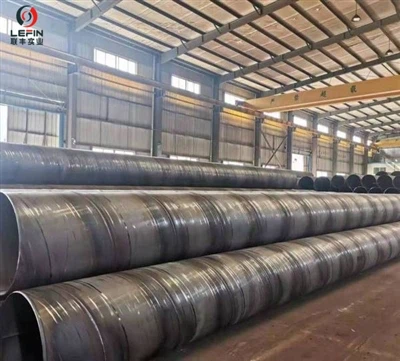
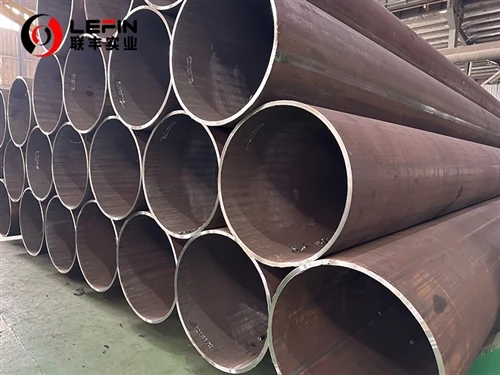
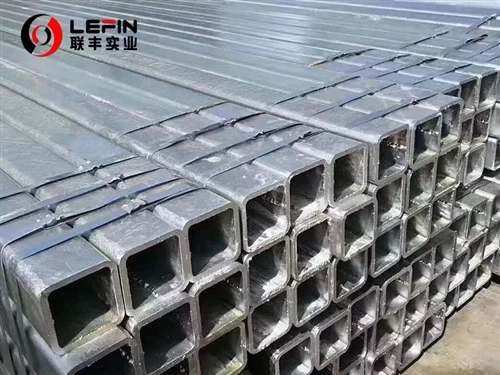
EN 10210 covers hot-finished seamless, electric welded, and submerged arc welded structural hollow sections in circular, square, rectangular, and elliptical forms. The steel is formed at high temperatures – typically above 580°C – with or without subsequent heat treatment.
What does that mean in practice?
The high-temperature forming process relieves internal residual stresses and creates a uniform, recrystallized grain structure throughout the cross-section. The result is a product with excellent toughness, consistent mechanical properties, and better performance under dynamic loads and low-temperature conditions.
Typical applications: Bridges, offshore platforms, high-rise buildings, power facilities, and any structural project with high safety requirements.
Common steel grades: S235JRH, S275J2H, S355J2H.
EN 10219 – Cold-Formed Welded Structural Hollow Sections
EN 10219 covers cold-formed welded structural hollow sections of circular, square, rectangular, and elliptical forms. The steel is shaped at or near room temperature using cold bending rollers, then welded – typically by high-frequency welding (HFW) or submerged arc welding (SAW).
Cold-forming offers some clear advantages. The process delivers high dimensional accuracy, smooth surfaces, and uniform cross-sections. Production is faster and more efficient, which translates to lower costs.
But there's a trade-off. Cold-forming introduces residual stresses into the material. And because there's no subsequent heat treatment (other than the weld line), those stresses stay in the finished product. Toughness and low-temperature performance are generally lower than hot-finished alternatives.
Typical applications: Factories, light steel structures, scaffolding, guardrails, agricultural machinery, and general construction where cost efficiency is a priority.
Common steel grades: S235JRH, S275J0H, S355J2H.
Comparison
| Feature | EN 10210 (Hot-Finished) | EN 10219 (Cold-Formed Welded) |
|---|---|---|
| Yield Strength (S355) | ≥355 MPa | ≥345 MPa |
| Tensile Strength (S355) | 470–630 MPa | 450–610 MPa |
| Tolerances | Tighter (±6% wall thickness) | Looser (±10% wall thickness) |
| Residual Stress | Low – relieved by hot forming | Present – from cold working |
| Toughness | Excellent; suited for low-temp and impact loads | Good, but lower than hot-finished |
| Surface Finish | Rougher mill scale (hot-rolled look) | Smoother, cleaner surface |
| Cost | Higher | More economical |
| Typical Use | Heavy-duty, high-safety, dynamic loads | General structural, cost-sensitive projects |
Understanding the Steel Grades
The grade names can be confusing, especially because the same grade name means something different under each standard.
Under the EN 10025 designation system:
S = Structural steel
235 / 275 / 355 = Minimum yield strength in MPa (for thickness up to 16 mm)
JR = Impact tested at room temperature (20°C)
J0 = Impact tested at 0°C
J2 = Impact tested at -20°C
H = Hollow section
So S355J2H means: structural steel, 355 MPa minimum yield, impact-tested at -20°C, hollow section.
Here's the catch: In EN 10210, the grade refers to the steel in the finished hollow section. In EN 10219, the grade refers to the steel feedstock used for cold-forming. The cold-forming process modifies the metallurgy, so the finished product's properties are not identical to the feedstock grade.
That's why it's critical to specify both the standard number and the grade – for example, "EN 10210 S355J2H" or "EN 10219 S355J2H." They are not interchangeable.
| Grade | Yield (MPa) | Typical Use |
|---|---|---|
| S235JR / S235JRH | ≥235 | Light structures, general fabrication, cost-sensitive projects |
| S275J0H / S275J2H | ≥275 | Medium-duty frames, bridges, industrial equipment |
| S355J2H / S355JR | ≥355 | Heavy loads, high-rise buildings, offshore, critical infrastructure |
How to Choose
Here's a simple process to work through when you're deciding between EN 10210 and EN 10219.
Step 1 – What's the load condition?
Heavy dynamic loads, impact, or fatigue → EN 10210. The hot-finished process gives you better toughness and more consistent mechanical properties.
Static or light-to-medium loads → EN 10219 is usually sufficient.
Step 2 – What's the service temperature?
Low temperatures or cold climates → EN 10210. The uniform grain structure and low residual stress mean better performance when the mercury drops.
Room temperature or moderate conditions → EN 10219 works fine.
Step 3 – How critical are dimensional tolerances?
Precision fabrication, automated assembly, tight fit-ups → EN 10219. Cold-forming delivers superior dimensional accuracy.
Standard structural work where small deviations are acceptable → EN 10210 is fine.
Step 4 – What's your budget?
Cost-sensitive project, large volumes → EN 10219. The simpler manufacturing process makes it more economical.
Performance is the priority, budget is secondary → EN 10210.
Step 5 – Does the project require CE marking for the European market?
Both EN 10210 and EN 10219 are harmonized standards under the EU Construction Products Regulation (CPR) and are the technical basis for CE marking. Either standard can get you there – but you need to specify correctly.
A simple rule of thumb:
Bridges, offshore, high-rise, critical infrastructure → EN 10210
General buildings, light structures, machinery, cost-driven projects → EN 10219
When in doubt → Start with EN 10210 and let your engineer tell you if you can downgrade. It's easier to spec down than to explain why you didn't spec up.
Q&A
Q1: Can I substitute EN 10219 for EN 10210 if the grade name is the same?
A: No. The same grade name – for example, S355J2H – does not mean the same thing in both standards. EN 10210 refers to the finished section's properties; EN 10219 refers to the feedstock. The cold-forming process changes the metallurgy. Always specify the full standard + grade combination.
Q2: Is EN 10210 always stronger than EN 10219 at the same grade?
A: Yes, slightly. For S355, EN 10210 gives you 355 MPa minimum yield vs. 345 MPa for EN 10219. The difference isn't huge, but in high-load applications, every megapascal counts.
Q3: Does EN 10210 only come as seamless?
A: No. EN 10210 covers seamless, electric welded, and submerged arc welded hot-finished sections. The "hot-finished" refers to the forming process, not the presence or absence of a weld.
EN 10210 and EN 10219 both produce structural hollow sections that look similar on the outside. But beneath the surface, they're fundamentally different products.
EN 10210 (hot-finished) gives you better toughness, lower residual stress, and more consistent mechanical properties. It's the choice for bridges, offshore platforms, high-rise buildings, and any project where safety and performance are paramount.
EN 10219 (cold-formed welded) gives you tighter dimensional accuracy, smoother surfaces, and lower cost. It's the choice for general construction, light structures, and cost-sensitive projects.
The key is matching the standard to your actual requirements – not over-specifying, and not under-specifying. And always, always specify both the standard and the grade.
Questions? Contact our LEFIN STEEL technical team. We supply both EN 10210 and EN 10219 hollow sections in S235, S275, and S355 grades – and we'll help you choose the right one for your project.