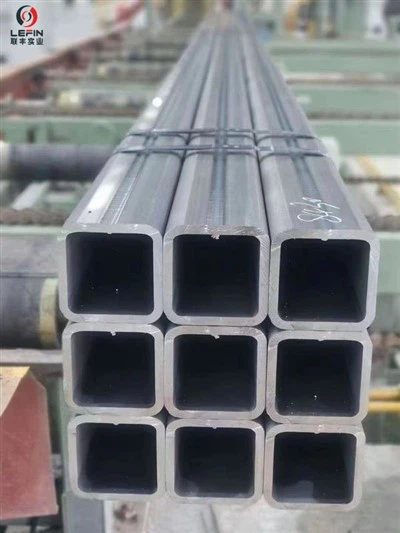
What is MS Pipe?
Mild Steel Pipe (MS Pipe) is manufactured using low carbon steel (less than 0.25%). Due to the low carbon content, the steel pipe does not harden and is easy to work with. Since mild steel pipe is made of low carbon steel, it can be easily welded and formed into pipes and tubes of various shapes and sizes. These pipes are mainly used in industries and engineering applications where corrosive fluids are used. In addition, MS pipes are also used in drinking water supply, i.e., pipes, fire protection, and HVAC (heating, ventilation, and air conditioning). Mild steel does not corrode because its surface is coated with paint, varnish, and other metals, which makes it durable and can work in very harsh conditions. In addition, mild steel pipes can also withstand certain temperatures.
Both cold drawn and hot rolled bars are low carbon steel. Hard steel and mild steel are divided according to whether they have a yield point or not, because hard steel has no obvious yield point and plasticity compared to mild steel, and its control stress factor is lower than that of mild steel.
Manufacturing Process
MS pipes are produced through two primary methods:
- Electric Resistance Welding (ERW) Process: Steel strips are rolled into a cylindrical shape and welded longitudinally using electric resistance.
- Seamless Process: Solid steel billets are heated and pierced to form a hollow tube without welding, offering higher strength.

Key Features and Properties
Material Composition: Low carbon content (0.15–0.25%), manganese, and trace elements.
Durability: Moderate strength with good impact resistance.
Corrosion Resistance: Requires coatings (galvanization, painting) to prevent rust.
Weldability And Formability: Easily welded, bent, or machined.
Surface Finish: Smooth or black-coated (for temporary rust protection).
Advantages
- Good Machinability:
Mild carbon steel is very suitable for processing into parts of various complex shapes due to its low carbon content, soft structure, easy cutting, stamping, bending and welding.
- Good Weldability:
Low carbon steel is not prone to cracks or deformation during welding, and is suitable for a variety of welding processes such as arc welding, gas welding, and resistance welding.
- High Tensile Strength:
Low carbon steel materials have good ductility and plasticity, and can withstand a certain degree of tensile, bending, and impact loads without breaking.
- Cost-Effective:
Low carbon steel has a relatively low manufacturing cost, easy raw materials, and simple processing, so it is widely used in industrial manufacturing, such as in construction, automobiles, home appliances, and other fields.
- Easy Fabrication:
In the cold rolling or cold drawing process, low carbon steel shows good processing stability and can be made into a variety of product forms such as plates, wires, and pipes.
- Good Magnetic Properties:
Low carbon steel has excellent magnetic permeability, so it is widely used as the core material of electromagnetic equipment such as motors, transformers, and relays.
- Recyclable:
Environmentally friendly due to recyclability.
Common Applications
Construction: Scaffolding, roofing, fencing, and structural frameworks.
Plumbing And Water Supply: Non-potable water transport (galvanized MS pipes are used for drinking water).
Automotive: Exhaust systems, chassis components.
Agriculture: Irrigation systems, greenhouse structures.
Oil And Gas: Low-pressure fluid transportation.
Furniture And Decoration: Racks, gates, and aesthetic designs.

other informations about MS Pipe
| Property | Specification / Range | Basis / Standard |
| Material Grade | IS 1239 (Part 1), IS 3589, ASTM A53 Grade A/B | ASTM A53 (US), IS 1239 (India), BS 1387 (UK) |
| Sizes | Range from ½ inch to 24 inches in diameter | Thickness varies as per schedule (e.g., SCH 40, SCH 80) |
| Pipe Type | ERW (Electric Resistance Welded), Galvanized (GI), Seamless | Based on Manufacturing Method |
| End Type | Plain End, Beveled End, Threaded (with socket/cap) | Customer Requirement |
Conclusion
MS pipes are a fundamental material in engineering and construction due to their affordability, adaptability, and strength. While they lack innate corrosion resistance, proper treatment (e.g., galvanization) significantly extends their lifespan, making them indispensable in industries worldwide.