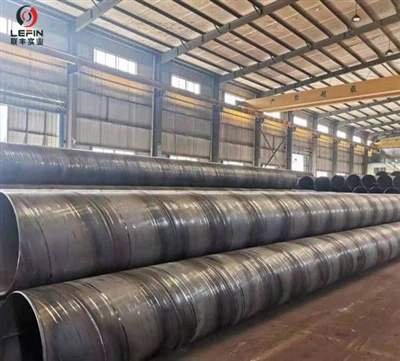
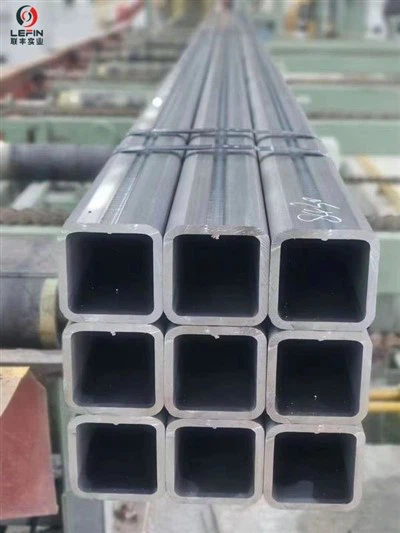
Tube end treatment of steel pipe:
1. Polishing treatment:
- The inner and outer surface grinding system of the pipe end can polish the inner and outer surface of the pipe end at a certain distance, remove the corrosion of the pipe surface and make it appear metallic, so that the finished product personnel can detect the surface defects of the pipe end more clearly and avoid the missed inspection of the pipe end.
2. Non-plastic deformation processing:
- Non-plastic deformation of the welded pipe end to make it meet the requirements of the clean pipe end specified in the product standard. Including tube end cutting, deburring, flat end face, upside down mouth, etc.
3. Pre-treatment:
According to ISO 6761-1981, pretreatment of pipe ends and fittings for steel pipe welding is a necessary step to ensure the quality of the welding and the integrity of the pipe ends.
These end treatments ensure that the steel pipe meets quality and appearance requirements before leaving the factory, reducing the risk of missed inspections and improving the overall quality of the product.
What are the non-plastic deformation processes?
1. Forging:
- Forging is a processing method that produces compression deformation by hammering the workpiece with the forging hammer of the forging press. There are two kinds of free forging and die forging.
2. Rolling:
- Rolling is a processing method that compresses and deforms the rolled parts between two or more rotating rolls, reducing the cross-sectional area and changing the shape, while increasing the longitudinal length.
3 Squeeze:
- Extrusion is a processing method that makes the blank loaded into the extrusion cylinder, under the thrust of the extrusion shaft at the back end of the extrusion cylinder, the metal flows out of the die hole at the front end of the extrusion cylinder, and the product with the same shape and size as the extrusion die hole is obtained.
4. Pull:
- Drawing is a processing method that relies on the pliers of the drawing machine to hold the metal blank through the drawing die hole and pull it out from the die hole to obtain the product with the same shape and size as the die hole.
5. Deep drawing:
- Deep drawing is also called stamping, relying on the punch to push the metal sheet into the concave die to produce drawing deformation, and obtain a variety of cup parts, barrel parts and shell processing method.
6. Bend:
- Bending is a processing method that bends and deforms the sheet material or straightens the sheet material or pipe or bar under the action of bending moment.
7. Cut:
- Shearing is a common processing method in which the blank is cut under the action of shearing force, so that the sheet is blanked, and the sheet material and profile are cut.
These non-plastic deformation machining methods have important applications in the field of metal processing, enabling changes in the shape and size of the workpiece while maintaining the integrity of the material.