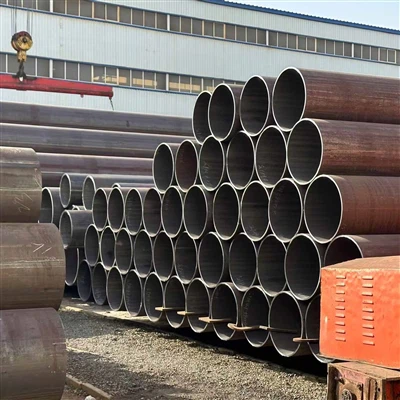
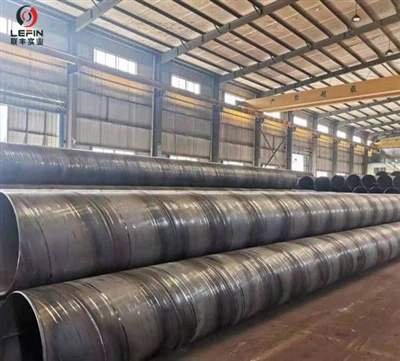
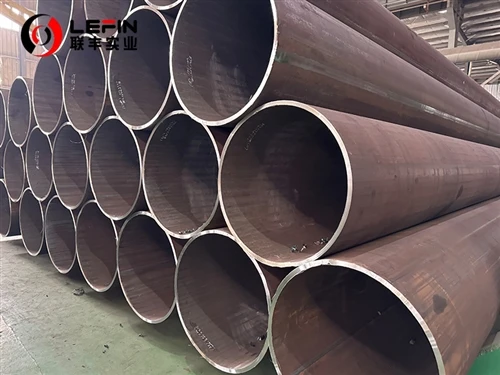
The S355 series steel grades under the EN 10225 standard are a collection of low alloy high-strength structural steels known for their excellent weldability and structural integrity, particularly suited for fixed offshore structures.

S355 Series Steel Grades Overview
The S355 series includes various grades, each with specific characteristics to meet different engineering challenges:
S355G2+N: This grade is known for its normalized delivery condition, which enhances its mechanical properties through grain refinement. It is often used in structures requiring high toughness at ambient temperatures.
S355G3+N: Similar to S355G2+N, this grade also undergoes normalization. It offers improved toughness and is used in applications where increased strength is required.
S355G5+M: Characterized by thermomechanical rolling, this grade provides a balance of strength and ductility, making it suitable for complex structural components.
S355G6+M: Another thermomechanically rolled grade, S355G6+M offers enhanced strength and is often specified for heavy-duty structures where high load-bearing capacity is essential.
S355G7+N: This grade is designed for extreme low-temperature conditions, with excellent impact resistance down to -40°C, making it ideal for Arctic and sub-Arctic offshore applications.
S355G8+N: With its normalized delivery condition, this grade exhibits high toughness, suitable for structures that require resistance to brittle fracture in low-temperature environments.
S355G9+N: This grade is known for its superior toughness and is often used in critical offshore structures where the risk of fracture is a concern.
S355G10+N: Offering even greater toughness than S355G9+N, this grade is used in the most demanding offshore applications where the highest levels of strength and ductility are required.
Delivery Conditions
- S355G2+N, S355G3+N: These grades are normalized, which means they undergo a heat treatment process to improve their mechanical properties and toughness.
- S355G5+M, S355G6+M: These grades are thermomechanically rolled (TMCP), which provides a balance of strength and ductility through controlled cooling during the rolling process.
- S355G7+N, S355G8+N, S355G9+N, S355G10+N: These grades are also normalized, with increased focus on low-temperature toughness, making them suitable for Arctic and sub-Arctic conditions where materials are exposed to extremely low temperatures.
Mechanical Properties
- Yield Strength: All grades have a minimum yield strength of 355 MPa
- Tensile Strength: Generally ranges from 470-630 MPa.
- Elongation: ≥14% to ≥42%, depending on the grade and thickness.
- Impact Energy:
S355G7+N: Requires a Charpy V-notch impact test at -40°C, with a minimum energy absorption of 50 Joules, indicating its suitability for low-temperature conditions.
Other grades like S355G2+N and S355G5+M have different impact test requirements, typically at higher temperatures, reflecting their use in less extreme environments.
Chemical Composition
- Carbon (C): The carbon content generally decreases from S355G2+N to S355G10+N, with S355G10+N having one of the lowest carbon limits, which can contribute to better weldability.
- Phosphorus (P) and Sulfur (S): These elements are generally limited to ≤0.035% and ≤0.030% respectively in S355G2+N, but the limits are stricter in S355G7+N and subsequent grades, with S355G10+N having an even lower limit for phosphorus at ≤0.015%.
- Chromium (Cr), Molybdenum (Mo), and Nickel (Ni): Trace elements like chromium, molybdenum, and nickel are present in varying amounts, with some grades having slightly higher limits, which can affect hardenability and strength.
- Nitrogen (N): Nitrogen content is controlled in normalized grades (+N), with S355G7+N, S355G8+N, S355G9+N, and S355G10+N having a maximum limit of ≤0.015%, which can enhance strength.
- Aluminum (Al): Aluminum is present in all grades to some extent, typically with a minimum content of 0.015%, which helps to form a protective oxide layer and improves corrosion resistance.
- Niobium (Nb), Titanium (Ti), and Vanadium (V): These micro-alloy elements are used in small quantities to control grain size and improve strength without compromising toughness. Their limits vary slightly between grades.
The chemical composition differences among the S355 series grades are subtle but significant for their intended applications. Lower carbon and higher trace element contents in certain grades can result in improved strength and toughness, which are critical for offshore structures and other demanding environments.
Applications
- S355G2+N, S355G3+N: Used in general structural applications where high strength and ambient temperature toughness are required.
- S355G5+M, S355G6+M: Used in heavy-duty applications where a combination of strength and formability is needed.
- S355G7+N, S355G8+N, S355G9+N, S355G10+N: Specifically designed for offshore structures and marine engineering where high strength and low-temperature toughness are essential.
Weldability and Corrosion Resistance
All S355 grades are designed with excellent weldability and good corrosion resistance, which are critical for offshore applications.
The main differences among these grades are their delivery conditions (normalized or thermomechanically rolled), their impact energy requirements at different temperatures, and their chemical compositions. Normalized grades (+N) have improved toughness due to the normalization process, while thermomechanically rolled grades (+M) offer a balance of strength and ductility. The specific choice of grade depends on the application's requirements for strength, toughness, and service temperature.