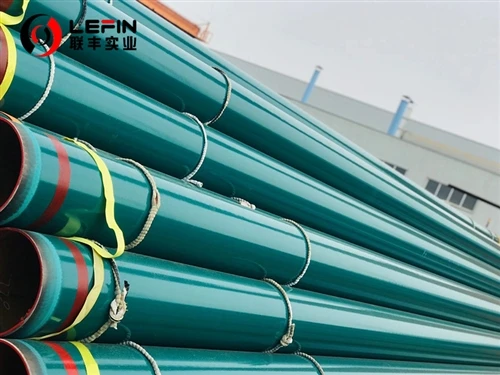
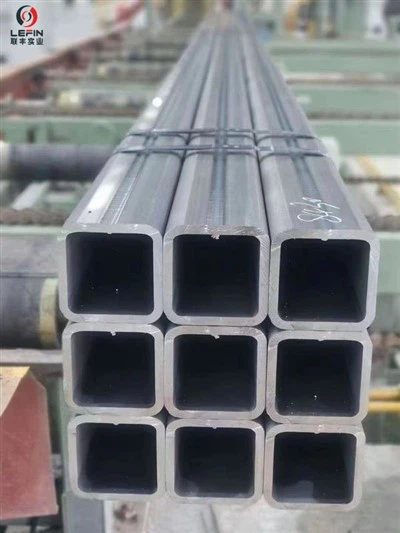
The EN10225 S460 series includes grades such as S460G1+QT and S460G3+M, which are specifically developed for the construction of fixed offshore structures like oil rigs and service platforms. These steels are known for their high yield and tensile strength, providing robustness and reliability in critical applications.

Chemical Composition
| Chemical Composition,% | ||
| S460G1+QT | S460G3+M | |
| Carbon (C) | Up to 0.14% | Up to 0.14% |
| Silicon (Si) | 0.15% to 0.55% | Up to 0.55% |
| Manganese (Mn) | Up to 1.65% | Up to 1.7% |
| Phosphorus (P) | Up to 0.02% | Up to 0.025% |
| Sulfur (S) | Up to 0.01% | Up to 0.015% |
| Chromium (Cr) | Up to 0.25% | Up to 0.25% |
| Molybdenum (Mo) | Up to 0.25% | Up to 0.08% |
| Nickel (Ni) | Not specified | Up to 0.7% |
| Niobium+Vanadium (Nb+V) | Not specified | Up to 0.12% |
| Niobium+Vanadium+Titanium (Nb+V+Ti) | Up to 0.11% | Up to 0.13% |
- Manganese (Mn): Manganese is an important alloying element that increases the strength and hardness of steel. The higher Mn content in S460G3+M contributes to enhanced strength, but it can also affect the steel's weldability and formability to some extent.
- Phosphorus (P) and Sulfur (S): Phosphorus and sulfur are considered impurities in steel as they can reduce its ductility and toughness. The stricter limits in S460G1+QT suggest a potentially better impact resistance and weldability compared to S460G3+M.
- Nickel (Ni): Nickel is added to steel to improve its corrosion resistance, particularly in aggressive environments. It also increases the strength and toughness of the steel, making S460G3+M suitable for applications requiring high strength and resistance to corrosion.
- Niobium+Vanadium (Nb+V): Niobium, also known as columbium, is a strong carbide-forming element that refines the grain structure of steel, resulting in improved toughness and formability. Vanadium is a microalloying element that forms fine, evenly distributed carbides, which help to strengthen the steel without making it brittle.The higher content in S460G3+M can lead to better weldability and formability,and to improved hardenability and wear resistance.
Mechanical Properties

S460G1+QT
- Yield Strength (Rp0.2): ≥323 MPa
- Tensile Strength (Rm): ≥558 MPa
- Impact Energy (KV/Ku): 23 J
- Elongation (%): 32%
- Reduction in Cross-section on Fracture (%): 34%
- Brinell Hardness (HBW): 234

S460G3+M
- Yield Strength (Rp0.2): ≥534 MPa
- Tensile Strength (Rm): ≥546 MPa
- Impact Energy: 12 J
- Elongation (%): 13%
- Reduction in Cross-section on Fracture (%): 42%
- Brinell Hardness (HBW): 324
- Yield Strength: S460G3+M has a higher minimum yield strength compared to S460G1+QT, especially for thinner sections. This means S460G3+M can withstand higher loads before permanent deformation occurs, which is critical for structures that are subjected to heavy loads or stresses.
- Tensile Strength: S460G1+QT has a slightly higher tensile strength, indicating it can withstand greater forces before breaking. This property is important for applications where the risk of rupture is a concern.
- Impact Energy: S460G1+QT has a higher impact energy value, suggesting better toughness and resistance to shock or sudden load changes. This is particularly important in offshore structures and other environments where structures may be subjected to dynamic loads.
- Elongation: S460G1+QT exhibits greater elongation before fracture, indicating a higher degree of ductility. This property is beneficial for absorbing energy in the event of a structural failure, thus providing a margin of safety against catastrophic failure.
- Hardness: S460G3+M has a higher Brinell hardness value, which suggests a harder material that might offer better wear resistance but could be less ductile compared to S460G1+QT.
- Thermal and Electrical Properties: The specific electrical resistivity and thermal conductivity values provided for S460G1+QT indicate how the steel will conduct heat and electricity, which are important considerations for applications involving heat transfer or electrical components.
Significance of Differences:
These differences in mechanical properties mean that S460G1+QT and S460G3+M are suited to different applications within the construction and engineering sectors. S460G1+QT, with its higher toughness and ductility, might be preferred for applications requiring resistance to impact and dynamic loads, while S460G3+M, with its higher yield strength, might be chosen for applications where high load-bearing capacity is required.

Physical Properties
- Modulus of Elasticity: S460G1+QT has a higher modulus at 287 GPa, indicating greater stiffness compared to S460G3+M.
- Thermal Conductivity: Both grades have similar thermal conductivity around 33.3 W/m·°C, showing comparable heat transfer abilities.
- Specific Thermal Capacity: S460G1+QT has a higher specific heat capacity at 232 J/kg·°C, meaning it can absorb more heat.
- Electrical Resistivity: S460G3+M has lower resistivity, suggesting it conducts electricity better than S460G1+QT.
- Density: Both grades are assumed to have a similar density around 7850 kg/m³, affecting their weight and strength-to-weight ratio.
Significance of Differences:
- Stiffness and Heat Absorption: S460G1+QT is more suitable for applications requiring high stiffness and heat absorption.
- Electrical Conductivity: S460G3+M is preferable in applications where lower electrical resistance is needed.
These differences guide the selection of steel grades for specific engineering applications based on the required physical properties.
application
S460G1+QT
- Used in offshore platforms and marine structures where high strength and impact resistance are crucial.
- Quenched and tempered for superior toughness and load-bearing capacity.
S460G3+M
- Suited for fixed offshore structures requiring good weldability and formability.
- Thermomechanically rolled for a balance of strength and ductility, with improved high-temperature performance.

The choice between S460G1+QT and S460G3+M depends on the specific requirements for strength, toughness, and weldability in the intended application.
What do the +QT and +M designations mean in the two steel grades?
- +QT (Quenched and Tempered):
- Quenching: This is a heat treatment process where the steel is heated to a high temperature and then rapidly cooled in water or oil. This process increases the steel's hardness and strength by creating a martensitic microstructure.
- Tempering: After quenching, the steel is tempered by heating it to a lower temperature and then cooling it slowly. This reduces the brittleness that can result from quenching and helps to optimize the balance between strength and toughness.
- +M (Thermomechanical Rolled):
- Thermomechanical Rolling (TMCP): This is a controlled rolling process where the steel is heated and then rolled while still hot. The temperature and deformation during rolling are carefully controlled to achieve the desired mechanical properties. This process can produce steel with a fine-grained structure, which enhances the material's toughness and weldability.
In summary, the "+QT" indicates that the steel has been through a quenching and tempering process, which results in high strength and toughness, while the "+M" indicates that the steel has been thermomechanically rolled, which provides a balance of strength, ductility, and weldability. These processes are critical for achieving the specific properties required for different engineering applications.