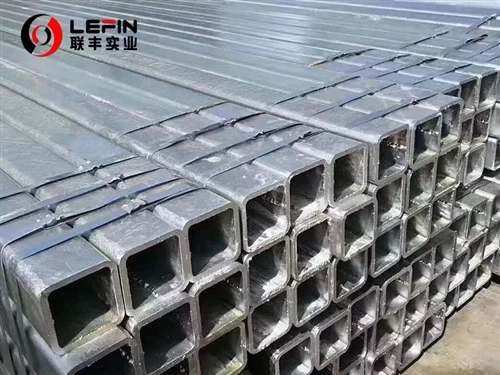
1. Performance Index Analysis of Square Tube - Plasticity
Plasticity refers to the ability of a metal material to produce plastic deformation (permanent deformation) under load without failure.
2. Performance Index Analysis of Square Tube - Hardness
Hardness is a measure of the softness and hardness of metal materials. The most commonly used method for measuring hardness in production is the indentation hardness method, which uses an indenter of a certain geometric shape to indent into the surface of the metal material to be tested under a certain load, and determines its hardness value according to the degree of indentation.
Commonly used methods include Brinell hardness (HB), Rockwell hardness (HRA, HRB, HRC) and Vickers hardness (HV).
3. Performance Index Analysis of Square Tubes - Fatigue
The strength, plasticity, and hardness discussed above are all indicators of the mechanical properties of metals under static load. In fact, many machine parts are operated under cyclic loading, under which conditions the part can develop fatigue.
4. Performance Index Analysis of Square Tube - Impact Toughness
The load acting on the machine at a high speed is called the impact load, and the ability of the metal to resist damage under the impact load is called the impact toughness.
5. Performance Index Analysis of Square Tube - Strength
Strength refers to the resistance of a metal material to failure (excessive plastic deformation or fracture) under static load. Since the action of the load is in the form of tension, compression, bending, shearing, etc., the strength is also divided into tensile strength, compressive strength, bending strength, shear strength, etc. There is often a certain relationship between various strengths, and tensile strength is generally used as the most basic strength indicator.