Introduction to ASTM Standards in Structural Steel Tubing

For professionals in the construction and manufacturing industries, understanding the specific standards governing structural steel tubing is crucial for making informed procurement decisions. The American Society for Testing and Materials (ASTM) establishes technical standards for materials and products that have become globally recognized benchmarks for quality and performance. Among these, ASTM A500 and ASTM A501 represent two fundamental specifications for carbon steel structural tubing used in countless construction projects and industrial applications worldwide.
These standards provide comprehensive guidelines covering chemical composition, mechanical properties, dimensional tolerances, testing requirements, and appropriate applications. For procurement managers, engineers, and project specifiers, knowing the distinction between these specifications ensures the selection of the most cost-effective and technically appropriate material for each unique application, ultimately impacting both the structural integrity and economic efficiency of their projects.
ASTM A500 Standard: Cold-Formed Welded and Seamless Carbon Steel Structural Tubing
1 Standard Specification and Grades
ASTM A500 covers cold-formed welded and seamless carbon steel structural tubing in rounds and shapes . This specification standardizes the requirements for tubing primarily used in structural applications where high strength-to-weight ratio and economic efficiency are paramount. The cold-forming process typically results in improved surface finish and dimensional accuracy compared to hot-formed alternatives.
The standard outlines several grades with varying strength characteristics:(Round Structural Tubing)
- Grade A: Minimum yield strength of 33,000 psi (230 MPa)
- Grade B: Minimum yield strength of 42,000 psi (290 MPa)
- Grade C: Minimum yield strength of 46,000 psi (315 MPa)
- Grade D: Minimum yield strength of 36,000 psi (250 MPa)
Each grade offers different mechanical properties tailored to specific loading conditions and design requirements, allowing engineers to optimize their designs based on stress calculations and service conditions.
2 Product Forms and Sizes
ASTM A500 structural tubing is available in three primary shapes:
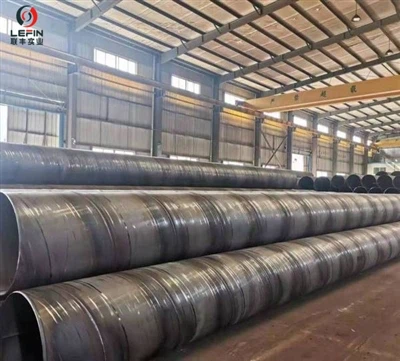
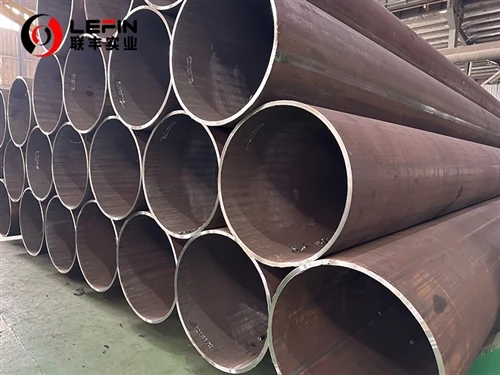
- Round Structural Tubing: Offered in a wide range of diameters and wall thicknesses
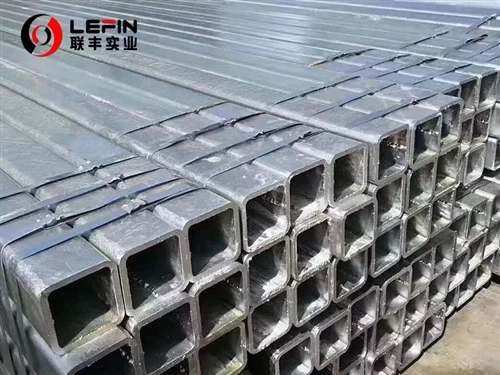
- Square Structural Tubing: With flat sides of equal dimensions
- Rectangular Structural Tubing: With varying side dimensions providing different aspect ratios
The standard specifies comprehensive dimensional tolerances for outside dimensions, wall thickness, straightness, and twist, ensuring predictable performance and simplified fabrication during construction.
3 Typical Applications and Use Cases
The excellent strength-to-weight ratio of ASTM A500 tubing makes it particularly suitable for:
- Building construction: Columns, beams, purlins, and truss members
- Architectural structures: Exposed structural elements where appearance matters
- Bridge components: Secondary members and railings
- Industrial structures: Support frames, platforms, and equipment guards
- Transmission towers: Structural members requiring high strength and light weight
The cold-forming process provides enhanced surface quality that is particularly advantageous for architecturally exposed applications where visual appeal is important alongside structural performance.

ASTM A501 Standard: Hot-Formed Welded and Seamless Carbon Steel Structural Tubing
1 Standard Specification and Grades
ASTM A501 covers hot-formed welded and seamless carbon steel structural tubing. This specification standardizes requirements for tubing formed at elevated temperatures, which affects both its microstructure and mechanical properties. The hot-forming process generally results in material properties that are more uniform through the thickness of the section, which can be advantageous for certain applications involving welding or severe forming operations.
The standard defines three grades with distinct strength characteristics:(Wall thickness,in.[mm]:>3[76] ≤4[100])
- Grade A: Minimum yield strength of 35,000 psi (240 MPa)
- Grade B: Minimum yield strength of 40,000 psi (280 MPa)
- Grade C: Minimum yield strength of 46,000 psi (315 MPa)
Note: The mechanical properties are for nominal wall thicknesses. It's important to consult the standard for specific requirements based on section type and size. Grade C offers the highest strength and is suitable for the most demanding structural applications. The standard also includes provisions for optional supplementary requirements that can be specified when additional testing or quality assurances are needed.
2 Product Forms and Sizes
ASTM A501 covers hot-formed structural tubing in various shapes:
- Square And Rectangular Structural Tubing: With flat sides ranging from 1 to 16 in. (25 to 405 mm), wall thickness 0.095 to 1.0 in.(2.5 to 25 mm)
- Round Structural Tubing: Designated diameters as 1 to 48 in.(25 to 1220 mm), wall thickness 0.095 to 4.0 in.(2.5 to 100 mm)
3 Typical Applications and Use Cases
The hot-forming process makes ASTM A501 tubing particularly suitable for:
- Heavy construction projects: Bridges and building frames requiring higher toughness
- Structural supports: Where welded connections benefit from consistent material properties
- Industrial plants: Equipment supports, conveyor structures, and heavy-duty racks
- Infrastructure projects: Heavily loaded compression members and truss components
The uniform material properties resulting from the hot-forming process make this specification particularly advantageous for applications involving heavy welding or applications where the material will be subjected to secondary forming operations.

Key Differences Between ASTM A500 and ASTM A501
Understanding the technical distinctions between these two specifications is essential for proper material selection and application.
1 Manufacturing Process: Cold-Formed vs. Hot-Formed
The most fundamental difference lies in the forming temperature during manufacturing:
- ASTM A500: Utilizes cold-forming processes where the steel is formed at ambient temperatures . This process typically results in improved surface finish, tighter dimensional tolerances, and some work hardening of the material.
- ASTM A501: Involves hot-forming processes where the steel is shaped at elevated temperatures . This process generally produces more uniform mechanical properties throughout the cross-section and typically results in normalized material properties that can be advantageous for welding and further fabrication.
2 Mechanical Properties and Performance
The different manufacturing processes yield distinct mechanical characteristics:
- Strength levels: ASTM A501 Grade B offers higher minimum yield strength (50,000 psi/345 MPa) compared to most A500 grades
- Ductility: Hot-formed A501 tubing typically exhibits more uniform elongation characteristics
- Weldability: A501's normalized microstructure generally offers superior weldability with less need for special procedures
- Surface condition: A500's cold-formed process typically provides better surface finish
3 Applications and Structural Considerations
The choice between standards significantly impacts structural application:
- A500 applications: Preferred for architecturally exposed structures, applications requiring tight dimensional tolerances, and general construction where economy and strength-to-weight ratio are primary concerns
- A501 applications: Often specified for heavily loaded structures, applications involving significant welding, and projects where material properties similar to hot-rolled structural shapes are desirable
How to Choose Between ASTM A500 and ASTM A501
Selecting the appropriate specification requires careful consideration of several project-specific factors:
- Evaluate welding requirements: For extensively welded structures, A501 may be preferable due to its uniform properties and enhanced weldability
- Material cost: A500 generally offers economic advantages for standard applications
- Fabrication costs: A501 may provide fabrication savings for projects requiring significant welding or secondary forming
- Availability: A500 is typically more readily available in standard sizes and shapes
Q&A
Q1: Can ASTM A500 and A501 materials be used interchangeably in structural applications?
A: While there may be some overlap in applications, these specifications are not directly interchangeable. The decision should be based on structural design requirements, fabrication methods, and project specifications. A501's hot-formed process provides different material characteristics that may be preferable for heavily welded structures or applications benefiting from more uniform through-thickness properties.
Q2: How does the cost comparison typically look between A500 and A501 tubing?
A: A500 generally offers cost advantages for standard applications due to more efficient production processes and wider availability. However, when considering total project costs, A501 may prove more economical for applications requiring extensive welding or where its enhanced properties allow for more efficient designs. The optimal choice requires evaluating both material costs and fabrication expenses.
Conclusion
Understanding the distinction between ASTM A500 and ASTM A501 structural tubing is essential for procurement specialists, engineers, and project managers in the construction industry. While both standards cover carbon steel structural tubing, their different manufacturing processes result in distinct characteristics that make each better suited for particular applications.
ASTM A500 cold-formed tubing typically offers advantages in economy, surface finish, and dimensional precision, making it ideal for general construction and architecturally exposed applications. ASTM A501 hot-formed tubing provides more uniform mechanical properties and potentially better weldability, making it suitable for heavily loaded structures and applications involving significant fabrication.
Our LEFIN STEEL offer both ASTM A500 and A501 tubings in full grade ranges and size schedules, supported by technical expertise to guide your selection.
Contact us today to discuss your specific requirements and receive tailored product recommendations.