I. Definition and Core Contents of Steel Pipe Thread Processing Technology
The processing technology of steel pipe threads refers to the process of machining a certain tooth pattern, pitch and taper into the end of the steel pipe through cutting or plastic deformation (to create threads). This enables the detachable connection of the steel pipe with other pipeline components (such as valves, pipe fittings, and equipment interfaces). The core of this technology lies in precisely controlling the geometric parameters of the threads (such as the tooth angle, pitch, mean diameter, and taper), ensuring the sealing, strength and reliability of the connection.
1. Main processing methods
- Cutting processing: The most commonly used method involves using a thread turning machine (electric or manual) to drive the die to rotate, which then cuts the end of the steel pipe to form threads. This method is suitable for most types of steel pipe materials (such as carbon steel, stainless steel, galvanized pipe).
- Plastic deformation: The end of the steel pipe is extruded using a threading machine or a rolling machine to cause the metal to flow plastically and form threads. This method is suitable for materials with good plasticity (such as low-carbon steel), featuring high efficiency and high thread strength. However, it requires relatively high equipment standards.
2. Key process parameters
- Thread profile: It is divided into 55° (British Whitworth thread, such as G and R series), 60° (American Unified thread, such as NPT series), and metric 60° (such as M series). Among them, pipe threads mostly adopt 55° or 60° profiles.
- Pitch and Number of Teeth: The pitch is the distance between corresponding points on the pitch diameter of two adjacent teeth. It is usually expressed as the number of teeth per inch (TPI) (for example, a 1/2" NPT thread has 11 teeth per inch, and the pitch is approximately 2.309mm).
- Cone ratio: Sealing pipe threads (such as NPT, R series) typically have a cone ratio of 1:16 (that is, the diameter changes by 1mm for every 16mm of length), and sealing is achieved through this cone ratio.
- Processing frequency: It is determined based on the pipe diameter. For small-diameter pipes (DN15-DN32), they are processed twice; for medium-diameter pipes (DN40-DN50), they are processed three times; for large-diameter pipes (DN70 and above), they are processed three to four times to ensure complete thread profiles and smooth surfaces.
3. Quality Inspection and Control
Thread gauge inspection: Use the go gauge (GO) and no-go gauge (NO GO) to measure the pitch diameter and pitch of the thread. The go gauge must be fully inserted, and the no-go gauge should not be inserted more than 2 turns.
- Surface quality: The threads should be free of broken wires, disordered wires, and burrs. The surface roughness should meet the requirements (e.g., Ra ≤ 3.2 μm).
- Cone angle and pitch diameter tolerance: The deviation of the cone angle of the sealing thread should be ≤ 0.05mm/m, and the pitch diameter tolerance should be controlled within an extremely narrow range (for example, the pitch diameter tolerance of grade 1 accuracy is 0.01mm).
II. The Significance of Steel Pipe Thread Processing Technology
The threaded connection of steel pipes is the most commonly used detachable connection method in the piping system. Its significance mainly lies in the following aspects:
1. Sealing reliability
By using the taper of the thread (such as the 1:16 taper of NPT) or sealing materials (such as sealing tape, hemp thread), it can effectively prevent medium leakage. It is suitable for the transportation of high-pressure, high-temperature and corrosive media (such as petroleum, natural gas, chemical raw materials).
2. Connection strength
The threaded connection transmits loads through the tooth engagement, featuring high tensile and torsional strength, and can meet the working pressure of the pipeline system (for example, oil casing can withstand tens of thousands of tons of tensile load).
3. Ease of Installation and Maintenance
Threaded connections do not require welding, and the installation process is fast, making it convenient for on-site construction. At the same time, the detachable feature facilitates the maintenance, replacement and renovation of pipelines, thereby reducing maintenance costs.
4. Wide Applicability
Suitable for various steel pipe materials (carbon steel, stainless steel, galvanized pipe), pipe diameters (DN15-DN100 and above), and working conditions (water, gas, oil, chemical media), it is a standard connection method in the fields of construction, machinery, petroleum, and chemical industry.
III. International Standards for Guiding the Processing of Steel Pipe Threads
The international standards for processing steel pipe threads are mainly formulated by organizations such as the International Organization for Standardization (ISO), the American Petroleum Institute (API), and the National Standardization Administration Committee of China (GB). The following are the core standards:
1. ISO standards (internationally recognized)
- ISO 7-1:1994 "Pipe Thread Sealing - Part 1: Dimensions, Tolerances and Markings": Specifies the dimensions, tolerances and markings for 55° sealing pipe threads, including the "column/cone fit" for cylindrical internal threads (Rp) and conical external threads (R1), and the "cone/cone fit" for conical internal threads (Rc) and conical external threads (R2).
- ISO 228-1:2000 "Non-Threaded Sealing Pipe Threads - Part 1: Dimensions, Tolerances and Markings": This standard specifies the dimensions, tolerances, and markings for 55° non-sealing pipe threads (G series), which are applicable to low-pressure, non-sealing applications (such as water and gas pipelines).
2. API Standards (Specific for the Oil Industry)
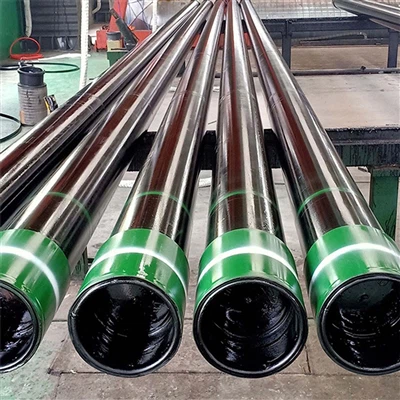
- API Spec 5B "Processing, Measurement and Inspection of Threads for Tubing, Pipe and Pipeline Steel": An authoritative standard in the petroleum industry, it stipulates the processing, measurement and inspection requirements for the threads of petroleum pipe materials (tubing, pipe, pipeline steel), including geometric parameters and tolerances for special threads such as round threads (STC) and offset trapezoidal threads (BTC).
- API RP 5A5/ISO 15463:2003 "On-Site Inspection of New Tubing Housings, Oil Cylinders and End-Connected Drill Pipes": It supplements the on-site inspection requirements of API 5B, ensuring the quality of the threads before their installation on-site.
3. GB standard (equivalent adopted in China)
- GB/T 7306.1-2000 "55° Sealing Pipe Threads - Part 1: Cylindrical Inner Threads and Conical Outer Threads": This standard adopts ISO 7-1:1994 equivalently, and specifies the dimensions, tolerances and markings of the "cylindrical/conical fit" 55° sealing pipe threads.
- GB/T 7306.2-2000 "55° Sealing Pipe Threads - Part 2: Conical Inner Threads and Conical Outer Threads": This standard adopts ISO 7-1:1999 equivalently, and specifies the 55° sealing pipe threads with "cone/cone fit".
- GB/T 12716-2011 "60° Conical Pipe Thread": Adopted ASME B1.20.2M:2006 as the basis for revision. It specifies the dimensions, tolerances and markings of 60° conical pipe threads (NPT series), and is applicable to American standard sealing pipe threads.
IV. Analysis of Differences among Major International Standards
The differences in thread processing techniques among various standard systems mainly lie in aspects such as the tooth profile angle, taper, mating method, and applicable scenarios. Here are the core differences:
1. Difference in tooth profile angles
- Imperial (ISO 7-1, GB/T 7306): Features a 55° thread angle, derived from the imperial Whitworth thread, suitable for regions such as Europe and Asia.
- Metric (API 5B, GB/T 12716): Features a 60° thread angle, derived from the metric standard thread, suitable for oil-producing regions such as North America and the Middle East.
2. Cone angle difference
- Imperial sealed pipe thread (ISO 7-1, GB/T 7306): The taper of the conical external thread (R1, R2) is 1:16 (the diameter changes by 1mm for every 16mm length), achieving sealing through the taper.
- Metric sealed pipe threads (API 5B, GB/T 12716): The taper of the conical pipe threads (NPT) is also 1:16, but the thread profile is steeper (60° vs 55°), and is suitable for higher pressure ratings (for example, the working pressure of oil casing can reach several thousand pounds per square inch).
3. Differences in Cooperation Methods
- Imperial sealing pipe threads: They are divided into "column/cone fit" (cylindrical internal thread Rp and conical external thread R1) and "cone/cone fit" (conical internal thread Rc and conical external thread R2). Among them, "column/cone fit" is the most commonly used sealing method.
- Metric sealed pipe thread: Only uses "cone/cone fit" (conical internal thread and conical external thread), achieving sealing through the thread's own taper, without the need for additional sealing materials (such as tape).
4. Differences in applicable scenarios
- ISO 7-1, GB/T 7306: Applicable to low-pressure, normal-temperature civil and industrial pipelines (such as water, gas, air conditioning pipelines), as well as some chemical pipelines.
- API 5B: Specifically designed for underground pipelines in the oil and gas industry (such as casings and tubing), these pipes are subjected to extremely high pressures (up to over 1000 bar), temperatures and corrosion (such as hydrogen sulfide and carbon dioxide). The strength and sealing performance of the threads in these pipes are much higher than those of ordinary pipes.
5. Differences in Standard Equivalence
- GB/T 7306.1-2000 is an equivalent adoption of ISO 7-1:1994 (the technical content is completely the same, with only editorial modifications), facilitating the entry of Chinese products into the international market.
- GB/T 12716-2011 and ASME B1.20.2M:2006: Adopted with modifications (retaining Chinese characteristics technologies, such as simple testing methods for small-scale domestic production), better adapted to the material characteristics of China (such as the plasticity of low-carbon steel).
Summary
The processing technology of steel pipe thread is the core technology for connecting pipeline systems. Its quality directly affects the sealing performance, strength and reliability of the system. International standards (such as ISO 7-1, API 5B, GB/T 7306) provide unified specifications for thread processing. The differences among various standards mainly lie in the thread profile angle, taper, matching method and applicable scenarios. In practical applications, the appropriate thread type and standard should be selected based on the working conditions (pressure, temperature, medium) to ensure the safety and economy of the connection.