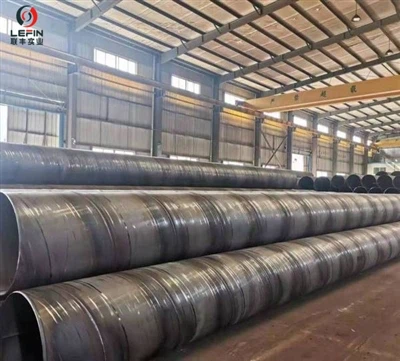
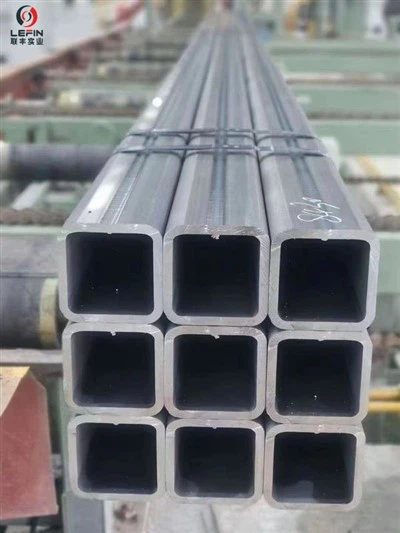
Submerged Arc Welding (SAW) is an extremely important automated arc welding process in the industrial field.
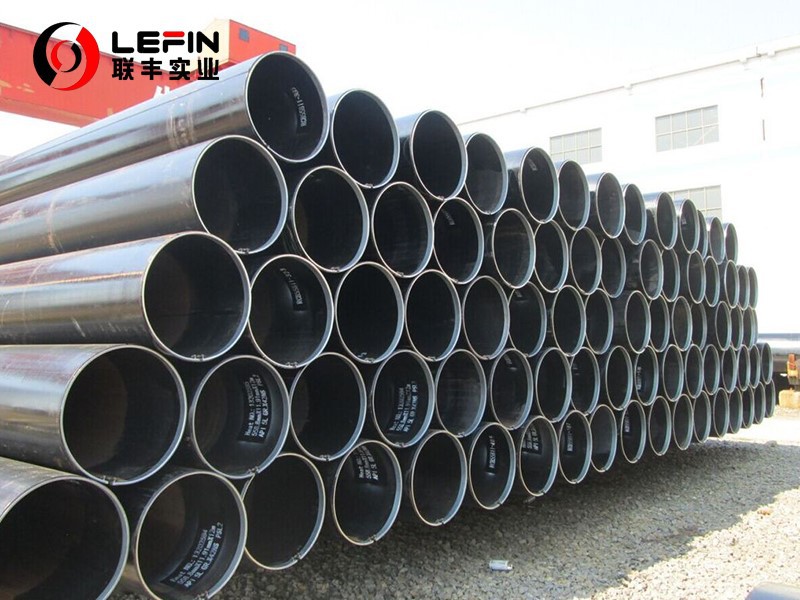
When it is applied to the manufacturing of steel pipes (which is commonly referred to as submerged arc welded pipes, including straight seam submerged arc welded pipes (LSAW) and spiral submerged arc welded pipes (SSAW)), it can provide excellent performance for the steel pipes.
Below is a detailed breakdown of the process principle of submerged arc welding, as well as its core advantages in the processing of steel pipes:
1. What is the submerged arc welding process?
As the name suggests, "submerged arc welding" is a welding method where the electric arc is "buried" under. Unlike manual electric welding where you can see the bright arc, submerged arc welding involves igniting the arc under a layer of granular flux.
√ The core working principle can be summarized as follows:
- Apply the flux: On the joint of the steel plates or steel pipes to be welded, the machine will first evenly spread a layer of 30-50mm thick granular flux over the area.
- Ignite the electric arc: Continuous bare welding wire is automatically fed into the flux layer and comes into contact with the base material (the workpiece), thereby igniting the electric arc.
- Form a protective cavity: The high temperature of the electric arc causes the surrounding flux to melt and even partially evaporate, forming a closed cavity beneath the flux layer. The electric arc burns stably in this completely isolated "black room" from the outside air.
- Melting and solidification: The heat of the electric arc instantly melts the welding wire, flux, and base material, forming a metal melt pool. The less dense slag will automatically float on the surface of the melt pool, further isolating the air. As the welding equipment moves steadily forward, the liquid metal at the rear begins to cool and solidify, forming a dense weld seam. The liquid slag on the surface also cools into a hard slag shell (this layer of slag can be knocked off to form the final weld seam).
II. What are the advantages of using submerged arc welding process for processing steel pipes?
The steel pipes processed by the submerged arc welding method (such as medium and large-diameter thick-walled pipes used in fields like oil and gas transportation, marine engineering, and construction piling, etc.) have overwhelming advantages in terms of quality and functionality compared to other welding methods (such as high-frequency resistance welding ERW, etc.):
1. The weld quality is extremely high and the pressure-bearing capacity is strong.
- Perfect isolation protection: Due to the double-layer protection of the flux and slag for the arc and the molten pool, nitrogen and oxygen in the air cannot penetrate at all, thereby reducing impurities and pores in the weld metal.
- Excellent mechanical properties: The weld metal has high purity, and its toughness, plasticity, and resistance to low-temperature impact are all outstanding. At the same time, the penetration depth of submerged arc welding is extremely large, and even 20mm thick steel plates can be single-sided welded through in one go. This ensures that the steel pipe is less likely to crack when subjected to extremely high pressure and harsh environments (such as under the sea, in high-altitude cold regions).
2. High production efficiency, suitable for large-scale mass production
- High current and high melting rate: Submerged arc welding can use extremely large currents (even 5-10 times that of manual welding), and since the welding wire is continuously and automatically fed in, there is no pause for changing the electrode. Its melting rate and deposition efficiency are extremely high.
- High welding speed: On an automated production line, the speed of submerged arc welding can reach 60-150 meters per hour, significantly shortening the production cycle for a single steel pipe and making it highly suitable for large-scale procurement needs in infrastructure projects.
3. Capable of manufacturing "large-diameter, thick-walled" giant steel pipes
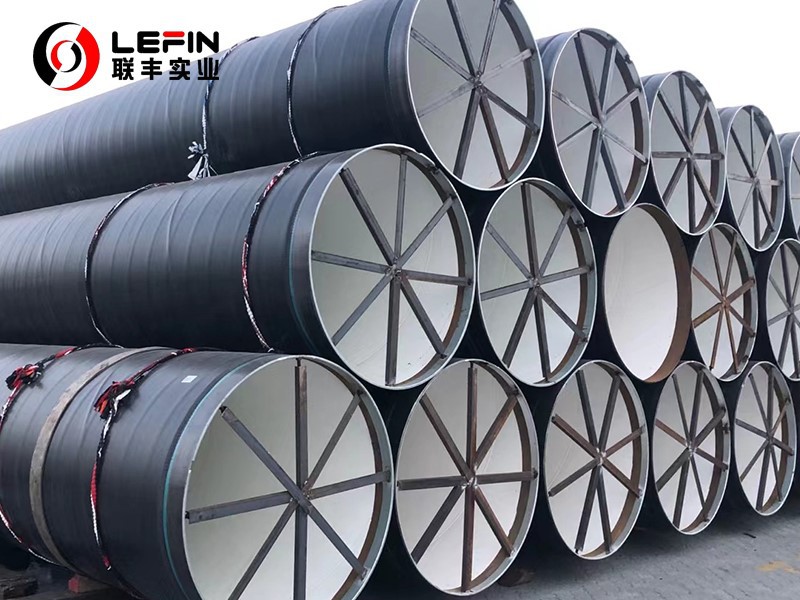
- High-frequency resistance welding (ERW) is limited by the width of the raw materials when producing large-diameter steel pipes, while submerged arc welding with spiral configuration (SSAW) can use relatively narrow steel strip coils to produce pipes with extremely large diameters through a spiral winding process.
- The longitudinal seam submerged arc welding (LSAW) method typically uses a whole thick plate (formed by the JCOE or UOE process), combined with deep-melting deep-submerged arc welding, to easily produce heavy steel pipes with a wall thickness of over 40mm or even 50mm and a diameter of several meters. This is something that other methods cannot match.
4. High dimensional accuracy and low residual stress
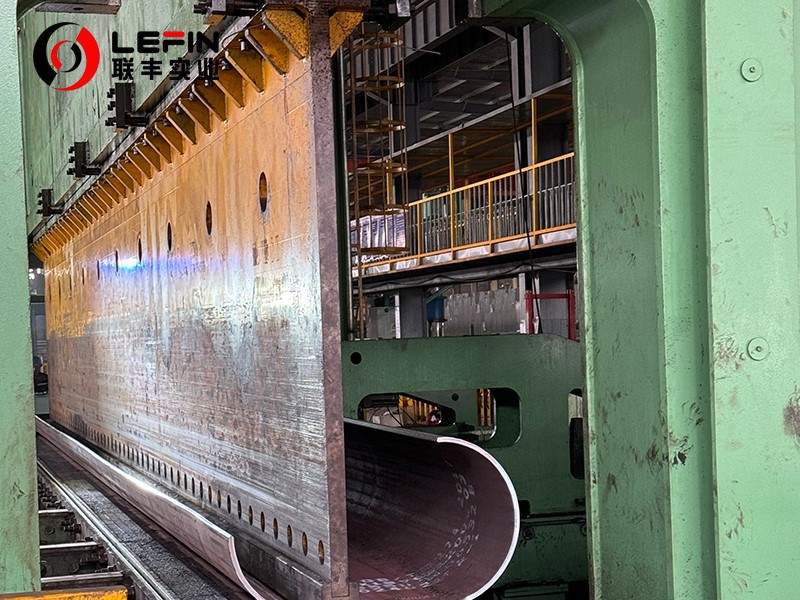
- In the production process of modern longitudinal submerged arc welded pipes, an additional full-length mechanical expansion (Expanding) step is usually added. This not only eliminates the residual stress generated during the welding process, but also significantly improves the roundness and straightness of the steel pipe, making its geometric dimensions extremely precise and facilitating the installation and connection process.
5. Improve working conditions and make them more environmentally friendly
- Traditional manual welding is not only tiring but also exposes workers to glaring arc light and harmful smoke. In contrast, the entire welding process of submerged arc welding is automatically completed by a mechanical trolley. Welders only need to operate the control panel in the control room. The arc is firmly "buried" under the flux, resulting in almost no arc light radiation or spatter, and very little smoke emission. This greatly protects workers' eyesight and respiratory system, meeting the standards of modern green factories.
In summary:
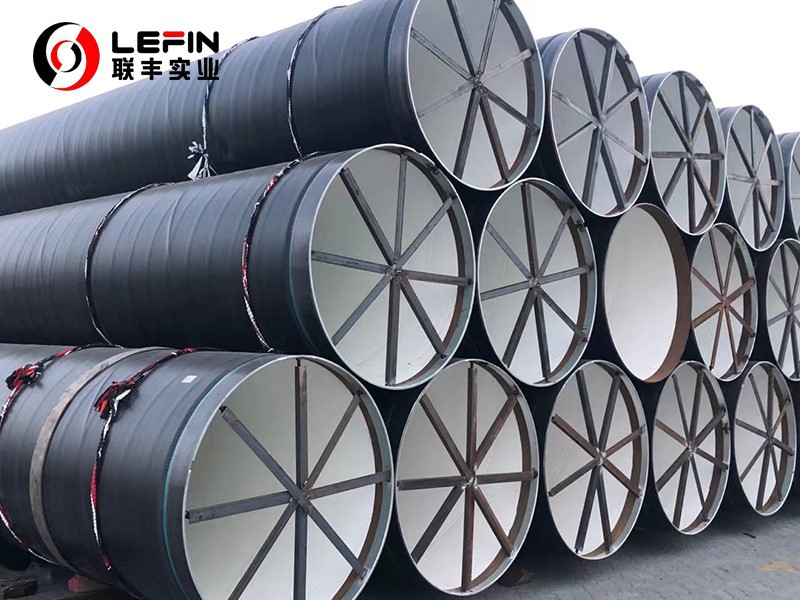
The submerged arc welding process achieves a perfect balance of excellent welding quality, remarkable production efficiency, and robust adaptability to harsh conditions through its ingenious design of "welding under a protective slag layer". This is why it remains a crucial process for manufacturing major energy transmission pipelines and large structural pipes in our country today.