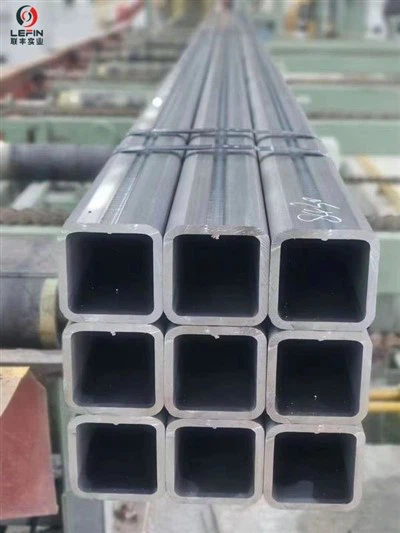
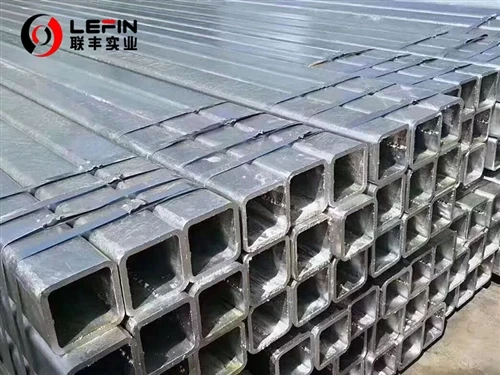
Basic Information
Full Name
ERW stands for Electric Resistance Welding.
Dimensions
Outer Diameter: Range from 1/2 inch (12.7 mm) to 24 inches (610 mm) For ERW round tubes, the outer diameter ranges from 20mm to 660mm.
Wall Thickness: Ranges from 2mm to 20mm.
Length: Ranges from 6 meters to 12 meters. However, custom lengths can also be provided according to specific requirements.
End Treatment
Plain, Beveled, Threaded, Grooved, Shouldered
Surface Treatment
Bare, Hot-Dipped Galvanizing, Painting, 3PE (Three-Layer Polyethylene Coating),FBE (Fusion-Bonded Epoxy Coating)
Applications
Fluid Transportation, Structural Uses, Energy Facilities, Heat Exchangers and Cooling Systems
Common Standards and Steel Grades
API 5L: GR.B, X46, X52, X56, X60, X65, and X70
ASTM A53: Grade A/B
ASTM A500: GR.A, GR.B, GR.C
EN10217: P195, P235, P265 and other grades.
EN 10219: S235JRH, S355J0H, S275J0H, S355J2H, S275J2H, S355K2H.
JIS G3444: STK290, STK400, STK500
JIS G3466: STKR400, STKR490
JIS G3101: SS330, SS400, SS490, SS540
AS/NZS 1163: C250, C350, C350L0
Advantages
- High Strength: The weld seam is formed by the melting of the base metal, resulting in high mechanical strength.
- Cost-Effectiveness: The production process is highly efficient and relatively low-cost, making ERW pipes an economical choice.
- High Production Efficiency: The process is highly automated, allowing for fast production speeds.
- Small Dimensional Error: The pipes are manufactured with high precision, meeting strict specifications.
Manufacturing Process
Raw Material Preparation: Suitable steel coils are selected and cleaned.
Forming: The steel coils are gradually bent into a tube shape by rollers.
Welding: High-frequency current is used to heat the edges of the steel strip, which are then pressed together by pressure rollers to form a weld.
Deburring: The protruding parts of the weld seam are removed to ensure smooth inner and outer surfaces.
Heat Treatment: The structure of the weld and the mechanical properties of the pipe are improved.
Cooling and Sizing: The pipe is cooled and cut into specified lengths.
Inspection: Non-destructive testing and mechanical property testing are conducted to ensure quality.
Surface Treatment and Packaging: The pipes are treated with paint, galvanizing, 3PE, or FBE to enhance corrosion resistance and then packaged for transportation.