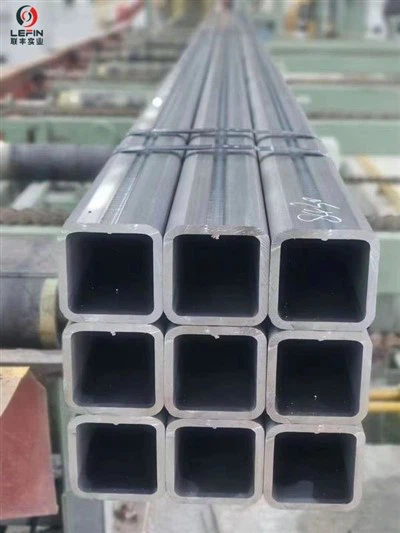
What are the differences between Hot formed steel pipe and Cold formed steel pipe
Hot formed steel pipes are made by heating steel and then forming it into a shape while it is still hot. This process results in a stronger and more durable pipe because the heat makes the steel more pliable and easier to manipulate. Hot forming also helps to reduce the likelihood of cracking or other forms of damage during manufacturing.
Cold formed steel pipes, on the other hand, are made by bending and forming steel while it is at room temperature. Unlike hot forming, which allows for more flexibility, cold forming requires more force and pressure to properly shape the steel. However, this method is more cost-effective than hot forming and allows for more complex shapes to be created. LEFIN STEEL manufactures both hot formed steel pipe and cold formed steel pipes.
Processing process:
Hot Formed Steel Pipes:
1. Raw Material Selection
The first step in the processing of hot formed steel pipes is selecting the appropriate raw material. The material used should have the necessary chemical composition, mechanical properties, and adequate weldability.
2. Heating
Hot forming requires heating the steel to high temperatures, around 1200-1300°C, to make it pliable. This process is essential to make the steel reach the required deformation temperature for the forming processes.
3. Forming
In forming, the heated steel is shaped to the desired size and shape using various methods such as rolling, forging, or extrusion. This process improves the mechanical and physical properties of the steel, making it stronger, more durable and resistant to corrosion.
4. Cooling
After forming, the steel is allowed to cool naturally or through controlled cooling methods. This cooling process relieves the internal stresses that could lead to deformation or cracking.
5. Finishing
The final step in the processing of hot formed steel pipe is finishing, which involves straightening, cutting, and inspection of the product. This ensures that the pipes meet the required standards in terms of dimensions, mechanical properties, and quality control.
Cold Formed Steel Pipes:
1. Material Selection - The first step is to select the raw material for the production of cold formed steel pipes. The steel used in this process is typically low carbon steel, which is highly ductile and easily formed into different shapes.
2. Cutting and Forming - The next step is to cut the steel into the desired length and shape using advanced cutting tools and machinery. The steel is then formed into the required shape using cold rolling or cold drawing techniques.
3. Heat Treatment - To enhance the strength and durability of the cold formed steel pipe, it is subjected to a heat treatment process where it is heated to a specific temperature and then cooled down slowly under controlled conditions.
4. Surface Finishing - After the heat treatment process, the surface of the cold formed steel pipe is finished to improve its corrosion resistance. This can be done by applying various coatings such as galvanizing or painting.
5. Inspection and Quality Control - Finally, the cold formed steel pipes are inspected and tested thoroughly to ensure that they meet the desired quality standards. This includes testing for strength, hardness, and corrosion resistance.
Advantages:
Hot Formed Steel Pipes:
1. High Strength: Hot formed steel pipes are known for their superior strength and durability. This is because they are formed at temperatures above the recrystallization temperature of steel, which results in the development of a stronger and more homogeneous material with fewer imperfections.
2. Impact resistance: Hot-formed steel pipes are highly resistant to impact and bending stress, which makes them ideal for use in applications where the pipes are subjected to high levels of stress.
3. Uniform Wall Thickness: Hot-formed steel pipes have a more consistent wall thickness compared to cold-formed pipes. This means that the hot-formed pipes can withstand higher pressure and load-bearing capabilities.
4. Large Diameters: Hot-formed steel pipes can be made in larger diameters than cold-formed steel pipes. This makes them ideal for use in large structural applications such as bridges, buildings, and stadiums.
5. Low Maintenance: Hot-formed steel pipes require less maintenance compared to cold-formed steel pipes due to their superior strength and durability.

Cold Formed Steel Pipes:
1. Lower Cost: Cold-formed steel pipes are less expensive to produce than hot-formed steel pipes. This is because they are formed at ambient temperatures, which reduces the cost of energy required for production.
2. Better Resistance to Corrosion: Cold-formed steel pipes have better resistance to corrosion than hot-formed steel pipes. This is because they are coated with a layer of zinc or other corrosion-resistant material during the production process.
3. Versatility: Cold-formed steel pipes can be used in a wide range of applications such as electrical conduits, fencing, and support columns. This is due to the flexibility in production, which allows for the creation of complex shapes and designs.

Application:
Hot formed steel pipe and cold formed steel pipe are both widely used in industries and construction sites. The main difference between the two is their manufacturing process.
Hot formed steel pipes are made by heating the steel and then forming it into a pipe shape. This process allows for a more uniform thickness throughout the pipe and a smooth surface finish. These pipes are generally stronger and more durable than cold formed steel pipes, making them ideal for high-pressure applications such as steam transportation, oil and gas pipelines, and construction.
Cold formed steel pipes are made by shaping the steel into a tube using a series of rollers without heating the steel. This process results in a thinner wall thickness and a slightly rougher surface finish. Cold formed steel pipes are suitable for low-pressure applications such as water supply and drainage systems, as well as structural use in buildings and bridges.
How to recognize hot formed steel pipe and cold formed steel pipe:
Steel pipes are an essential part of today's industrialized world. Pipes have various applications in different industries, such as construction, transport of fluids, and gas distribution. Steel pipes come in different types and shapes, depending on their manufacturing process. Two common manufacturing processes for steel pipes are hot forming and cold forming.
1. Hot-formed steel pipes:
As the name suggests, hot-formed steel pipes are produced with the help of high temperature, which changes the steel properties and shape. Hot-formed steel pipes are known for their strength and higher resistance to deformation. These pipes are often used in applications that require high strength, such as oil and gas, construction, and infrastructure.
Hot-formed steel pipes are easy to recognize due to their smooth surface finish and their uniform thickness throughout. These pipes have a unique grain structure that is different from cold-formed pipes. Hot-formed steel has a glossy appearance, which gives it a distinct look.
2. Cold-formed steel pipes
On the other hand, cold-formed steel pipes are produced at room temperature, using a process known as cold rolling. Unlike hot-forming, the process of cold-forming does not require high temperatures. Cold-formed pipes are known for their precision, tight tolerances, and uniformity.
Cold-formed steel pipes are easy to recognize as they have a slightly more matte and unfinished appearance than hot-formed pipes. Also, cold-formed pipes have a uniform wall thickness across the pipe's length. Cold-formed steel pipes are preferred for applications that require accurate and precise measurements, such as in the automotive and construction industries.
In summary, both hot formed steel pipes and cold formed steel pipes have their own unique advantages. The decision to use one over the other depends on the specific requirements of the project. Regardless of which method is chosen, steel pipes remain a reliable and long-lasting choice for a variety of applications.