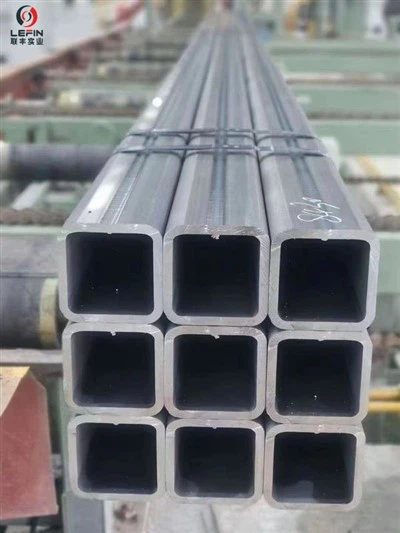
What are the differences between EN10210 and EN10219
EN10210 and EN10219 are both European standards for hollow sections used in structural applications.
1. EN10210: hot finished hollow sections EN10219: cold formed hollow sections
2.Hot finished Hollow Section and Cold finished Hollow Section:
Hot finished hollow sections are produced using a process in which the steel is heated to a high temperature and then formed into the desired shape. This process results in a product with a smoother surface and tighter tolerances.
Cold formed hollow sections are produced by cold forming the steel sheet or strip into the desired shape, without any additional heating.
3. The dimensional range and tolerances:
EN10210 specifies larger sizes and tighter tolerances than EN10219. This is because the hot finished hollow sections are produced with a more precise manufacturing process compared to the cold formed hollow sections.
In addition, the chemical composition of the steel and the mechanical properties are also different between the two standards. The chemical composition of EN10210 is more restricted, and it must meet higher requirements for certain elements such as carbon, sulfur, and phosphorus. The mechanical properties such as yield strength, tensile strength, and elongation are also specified differently for each standard.
In summary, both EN10210 and EN10219 are European standards for hollow sections used in structural applications, but they differ in terms of the manufacturing process, dimensional range and tolerances, chemical composition, and mechanical properties. It is important to choose the appropriate standard based on the specific requirements of the application.