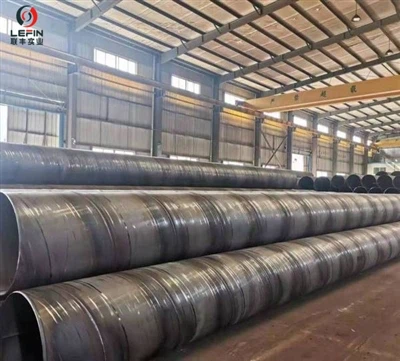
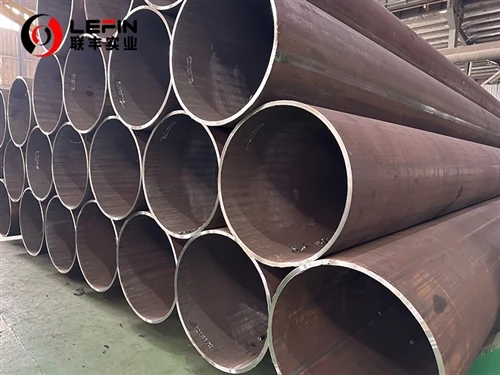
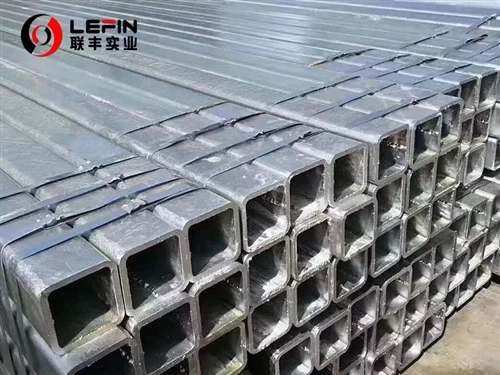
ASTM A500 specifies four primary steel grades for hollow sections: A, B, C, and D. Each grade is designed to meet different structural requirements due to variations in their chemical composition, mechanical properties, and applications. Here's a detailed yet concise description of each grade and their differences.
Chemical Composition
| Chemical Composition(%) differences between ASTM A500 GR.A, GR.B, GR.C ,GR.D | ||||
| GR.A | GR.B | GR.C | GR.D | |
| Carbon (C) | for heat analysis≤0.26% | for heat analysis≤0.26% | for heat analysis≤0.23% | for heat analysis≤0.26% |
| for product analysis ≤0.30% | for product analysis ≤0.30% | for product analysis ≤0.27% | for product analysis ≤0.30% | |
| Manganese (Mn) | for heat analysis≤1.35% | for heat analysis≤1.35% | for heat analysis≤1.35% | for heat analysis≤1.35% |
| for product analysis ≤1.40% | for product analysis ≤1.40% | for product analysis ≤1.40% | for product analysis ≤1.40% | |
| Phosphorus (P) | for heat analysis≤0.035% | for heat analysis≤0.035% | for heat analysis≤0.035% | for heat analysis≤0.035% |
| for product analysis ≤0.045% | for product analysis ≤0.045% | for product analysis ≤0.045% | for product analysis ≤0.045% | |
| Sulfur (S) | for heat analysis≤0.035% | for heat analysis≤0.035% | for heat analysis≤0.035% | for heat analysis≤0.035% |
| for product analysis ≤0.045% | for product analysis ≤0.045% | for product analysis ≤0.045% | for product analysis ≤0.045% | |
| Copper (Cu) | for heat analysis≥0.20% | for heat analysis≥0.20% | for heat analysis≥0.20% | for heat analysis≥0.20% |
| for product analysis ≥0.18% | for product analysis ≥0.18% | for product analysis ≥0.18% | for product analysis ≥0.18% | |
The primary chemical element difference among ASTM A500 GR.A, GR.B, GR.C, and GR.D lies in the carbon content.These differences in chemical composition directly affect the mechanical properties and application fields of the steel.
- GR.C having the lowest carbon content,which can contribute to better welding properties due to reduced risk of cracking during the welding process.
- Other elements such as manganese, phosphorus, and sulfur are consistent across all grades.
- Copper content is also consistent when specified as copper steel across all grades.
Mechanical Properties(Round Structural Tubing)
Tensile Strength
- Grade A: 45,000 psi (310 MPa)
- Grade B: 58,000 psi (400 MPa)
- Grade C: 62,000 psi (425 MPa)
- Grade D: 58,000 psi (400 MPa)
Yield Strength
- Grade A: 33,000 psi (230 MPa)
- Grade B: 42,000 psi (290 MPa)
- Grade C: 46,000 psi (315 MPa)
- Grade D: 36,000 psi (250 MPa)
Elongation (2")
- Grade A: 25%
- Grade B: 23%
- Grade C: 21%
- Grade D: 23%
Mechanical Properties(Shaped Structural Tubing)
Tensile Strength
- Grade A: 45,000 psi (310 MPa)
- Grade B: 58,000 psi (400 MPa)
- Grade C: 62,000 psi (425 MPa)
- Grade D: 58,000 psi (400 MPa)
Yield Strength
- Grade A: 39,000 psi (270 MPa)
- Grade B: 46,000 psi (315 MPa)
- Grade C: 50,000 psi (345 MPa)
- Grade D: 36,000 psi (250 MPa)
Elongation (2")
- Grade A: 25%
- Grade B: 23%
- Grade C: 21%
- Grade D: 23%
- GR.A has the lowest tensile and yield strengths but the highest elongation, suggesting better ductility but less strength compared to the other grades.
- GR.B and GR.D have similar tensile strengths and elongation but differ in yield strength, with GR.B offering higher strength than GR.D.
- GR.C has the highest yield strength but the lowest elongation, indicating a trade-off between strength and ductility.
In summary, the mechanical property differences between ASTM A500 GR.A, GR.B, GR.C, and GR.D are primarily in their yield strength and elongation. GR.C has the highest yield strength but the lowest elongation, indicating a trade-off between strength and ductility. GR.A has the lowest tensile and yield strengths but the highest elongation, suggesting better ductility but less strength compared to the other grades. GR.B and GR.D have similar tensile strengths but differ in yield strength and elongation, with GR.B offering higher strength and ductility than GR.D. These variations in mechanical properties allow for the selection of the appropriate grade based on the specific requirements of the structural application.
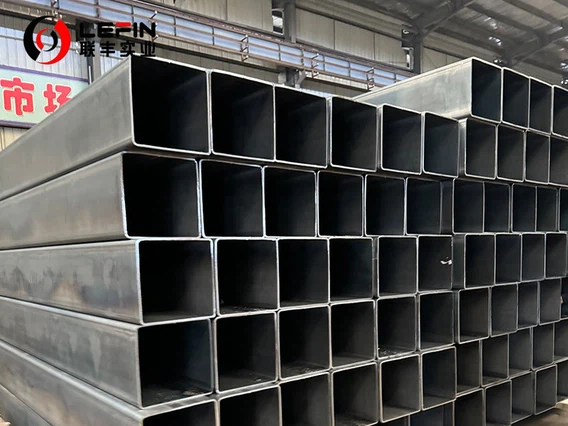
Applications
ASTM A500 hollow sections are selected based on the specific requirements of the structural application. Grade A is used for general purposes with lower strength needs, Grade B for moderate-strength applications, Grade C for high-strength demands, and Grade D for the most demanding structural applications requiring the utmost in strength and reliability. These grades ensure that ASTM A500 hollow sections can meet a wide range of engineering and construction needs, from simple structures to complex, heavy-duty projects .
Grade D requires heat treatment at a temperature of at least 1100°F (590°C) for more than one hour per inch of thickness . This heat treatment process enhances the steel's mechanical properties, particularly its yield strength, making it suitable for applications where high strength and durability are required after exposure to high temperatures or heavy loads. The heat treatment also helps to reduce residual stresses from the manufacturing process, which can improve the steel's overall performance and resistance to fatigue .
Grade A
Grade A, with its lower yield and tensile strength, is well-suited for general structural purposes where moderate strength is adequate. It is frequently used in non-critical structural components that do not require high strength but need to maintain structural integrity, such as in building frames and light infrastructure projects .
Grade B
Grade B is commonly used in many building projects because it balances formability and strength effectively. With a minimum tensile strength of 58,000 psi, this grade provides reliable performance for a variety of structural uses, including building frames and bridge construction .
Grade C
Offering higher strength than Grades A and B, Grade C is ideal when more load-bearing capacity is needed. It is used in heavy-duty applications such as industrial equipment, heavy machinery frames, and storage racks, where its high yield strength of 50,000 psi is beneficial
Grade D
As the strongest grade in the A500 standard. Grade D, while not having the highest tensile strength, benefits from a mandatory heat treatment process that enhances its strength and makes it suitable for demanding applications like critical load-bearing components in construction and industrial equipment .
In conclusion, the selection of ASTM A500 hollow section grades is tailored to the specific demands of various structural applications. Grade A caters to general purposes with lower strength needs, Grade B addresses moderate-strength applications, Grade C is chosen for high-strength requirements, and Grade D is employed for the most demanding structural applications. This range of grades ensures that ASTM A500 hollow sections can accommodate a vast array of engineering and construction needs, from simple structures to complex, heavy-duty projects.