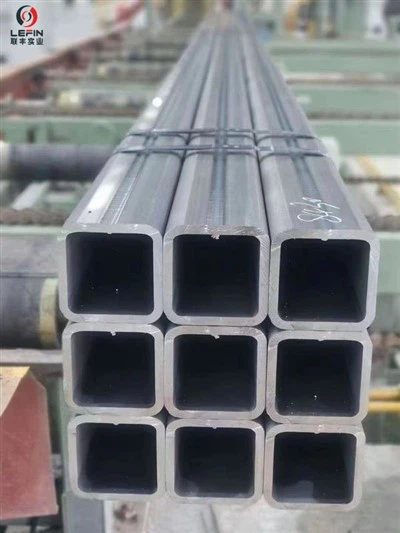
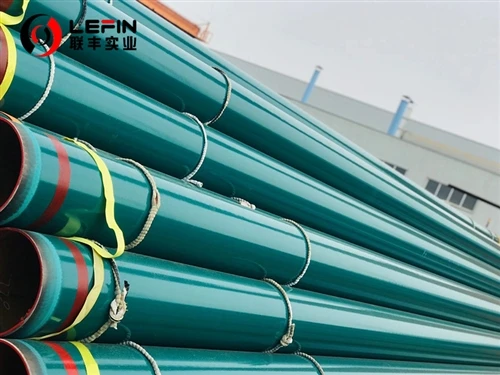
The common surface treatment methods of steel pipes mainly include the following categories, and different methods are suitable for different anti-corrosion needs and use environments:
the basic surface treatment method
1. Wash
The use of solvents or emulsions to remove grease, dust and other organic matter on the surface of the steel pipe, but can not remove rust and oxidation, usually as a pre-treatment step.
2. Remove rust using tools
By grinding the surface with hand or power tools such as wire brushes and grinding wheels, loose rust and welding slag can be removed. The rust removal of hand tools reaches Sa2 level, and the power tools reach Sa3 level, but the effect on stubborn oxidation is limited.
3. Pickling
Use chemical or electrolytic methods (commonly used hydrochloric acid, sulfuric acid, etc.) to dissolve oxide and rust, suitable for secondary treatment after sandblasting. However, it may pollute the environment, and the anchor line is shallow.
4. Spray (throw) jet rust removal
By spraying abrasive materials such as steel sand and steel pellets through high-speed rotating blades, the rust is completely removed and uniform roughness is formed to enhance the adhesion of the coating. Shot peening for the inner wall and shot peening for the outer wall are ideal for anticorrosive engineering.
enhance anti-corrosion/functional treatment
1. Hot-dip galvanizing
Galvanized on the surface of the steel pipe to form a protective layer, significantly improve corrosion resistance, especially suitable for outdoor or Marine environment, life of up to decades.
2. Spray anti-corrosion coating
Use paint, powder and other materials to cover the surface, both anti-corrosion and aesthetic effect. Cold spraying technology also improves wear resistance and is suitable for harsh environments.
3. Phosphating treatment
A phosphate film is formed to enhance corrosion resistance and coating adhesion, often used as a base coating.
4. Plating
Electrochemical deposition of metal layers (such as nickel and chromium) to improve corrosion resistance, wear resistance and appearance gloss.
5. Passivation treatment
Chromate or nitric acid passivation solution is used to form nanoscale oxide film, which significantly improves corrosion resistance, and is often used in high-end products such as seamless steel pipes.
6. Anodic oxidation (electrochemical oxidation)
It is mainly applied to alloy steel pipes to generate a dense oxide film to improve hardness, wear resistance and corrosion resistance, and can be customized surface colors.
Selection suggestion
• General anti-corrosion requirements: spray (throw) jet rust + spray coating.
• High corrosive environment: hot dip galvanizing or passivation treatment + multilayer coating.
• Wear/aesthetic requirements: electroplating or anodizing.
• Pipeline inner wall treatment: priority shot peening for rust removal or pickling passivation.