Mechanical treatment
1. Spray (throw) jet rust removal
• Principle: abrasive materials such as steel sand and steel pellets are sprayed to the surface of the steel pipe through high-speed rotating blades, and the rust, oxide and dirt are removed by centrifugal force, while uniform roughness is formed to enhance the adhesion of the anti-corrosion layer.
• Application:
• Shot blasting (sand) is mainly used for the inner surface treatment, and shot blasting (sand) is used for the outer surface.
• Suitable for mass production, it is the ideal method for pipeline corrosion protection.
2. Remove rust using tools
• Method: Polish the surface with a wire brush or power tool to remove loose rust and oxide.
• Grade: Hand tools up to Sa2, power tools up to Sa3, but limited effect on stubborn oxide layer.
chemical treatment
1. Pickling
• Function: Removal of oxide, rust and old coating by hydrochloric acid, sulfuric acid and other chemical solutions, often used for reprocessing after sandblasting or alone.
• Disadvantages: May cause environmental pollution, and the anchor pattern is shallow.
2. Passivation
• Principle: After pickling, free iron is removed from the surface by chemical treatment and a dense oxide film (approximately 0.0000001 in thickness) is formed to enhance corrosion resistance.
• Method: Commonly used immersion method or spray method, need to strictly control the treatment time to avoid excessive corrosion or residue.
3. Phosphating
• Process: After pickling, use zinc phosphating solution to form phosphating film on the surface of steel pipe to improve coating adhesion and short-term anti-corrosion effect.
• Applicability: Suitable for complex pipe types, but the waste liquid treatment cost is high.
coating and coating treatment
1. Plastic/paint
• Process: Spray epoxy resin, polyethylene and other materials after surface treatment to form anti-corrosion insulation layer.
• Requirements: The coating should be uniform without bubbles, the thickness should meet the standard (such as 0.2-0.5mm), and the adhesion should pass the grid test.
2. Galvanized treatment
• Categories:
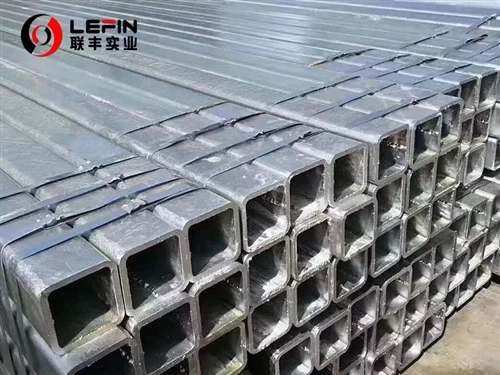
• Hot dip galvanizing: thick coating, strong corrosion resistance, suitable for water transmission, building structural pipes, etc.
Electrogalvanizing: low cost but thin coating, mostly used for short-term protection needs.
auxiliary treatment and special technology
1. Cleaning and degreasing
• Purpose: To remove grease, dust and other pollutants, commonly used solvents or alkaline solutions, as a pre-treatment step.
2. Bevel and pipe end treatment
• Outlet requirements: the steel pipe ports should be chamfered, trimmed and equipped with protective caps to prevent transportation damage.
3. Example of comprehensive processing flow
• Typical process of export steel pipe:
Sand blasting, rust removal, pickling, passivation, phosphating, drying, plastering/galvanizing, tube end packaging.
Key criteria and considerations
1. Anti-corrosion grade: Export products are usually required to reach Sa2.5 level (thorough rust removal) or higher.
2. Environmental requirements: The pickling waste liquid needs to be neutralized to avoid pollution and comply with EU REACH and other regulations.
3. Testing items: including coating adhesion, thickness, salt spray test and weld non-destructive testing.
The above treatment methods need to be flexibly combined according to the purpose of the steel pipe (such as oil and gas transmission, building structure) and target market standards. For example, the Middle East prefers galvanized steel pipes, while the European and American markets pay more attention to the environmental protection of plastic coating.