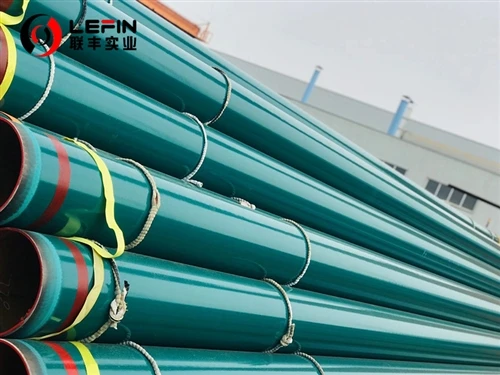
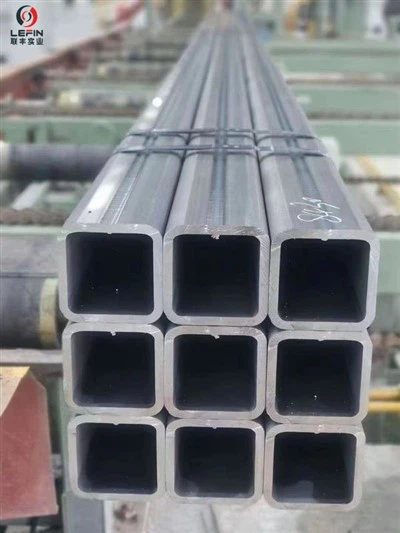
Basic Informaiton
Scaffolding pipe is a material used to build scaffolding, usually made of pipes such as steel or bamboo.
- Materials And Specifications:
Scaffolding pipe is usually made of steel pipe, there are generally two specifications: outer diameter 48mm, wall thickness 3.5mm; Outer diameter 51mm, wall thickness 3mm.According to its location and function, the scaffold pipe can be divided into vertical rod, horizontal rod, sweeping rod, etc.
- Material Standard:
The scaffold steel pipe should be used in the current national standard "straight welding steel pipe" GB/T13793 or "Welding steel pipe for low pressure fluid transport" GB/T3091 of the Q235 ordinary steel pipe. The steel quality of the steel pipe should comply with the current national standard "Carbon structural steel" GB/T700 Q235 grade steel.
- Usage:
Scaffolding pipe is mainly used for construction operations, providing construction personnel with up and down operation or external safety net enclosure and high-altitude installation of components.
- Selection And Quality Requirements:
The selected steel pipe generally requires a smooth surface, no cracks, no bending, not easy to rust, in line with the relevant national material standards.
- Installation And Usage:
The erection of scaffolding pipes should meet the needs of workers, but also to meet the stable and durable characteristics of scaffolding, so strong and hard steel pipe is the best choice.
Our Products
| STANDARD | SIZE(mm) | THICKNESS(mm) | STEEL GRADE | MARKING |
| EN 39 | 48.3 | 3.2 | S235GT | Paint Marking, Embossing Marking |
| BS 1139 | ||||
| MS 1462 | 48.3 | 4 | ||
| EN 10219 | ||||
| JIS G3466 | 48.6 | 2.4 | STK400/STK500 |
Scaffolding Tube Specification:
Scaffold Tube are 48.3 mm Outer Diameter in 4.0 mm and 3.2 mm wall thickness in various lengths.The Scaffold Tubes are available in Black and Galvanized steel finish.
And we supply just that:
LEFIN Industrial Group is the leading scaffold tube suppliers in Tianjin,China.We supply galvanized steel pipes to businesses in the construction and oil gas industry.
Our scaffold tubes are of top-most quality, meaning:
- They possess a higher carrying capacity.
- They are steady and durable.
- These tubes are easy to assemble and disassemble,
- They are guaranteed to sustain all weathers.
- Embossing marking 1 line or 2 lines are both OK for us.

How to evaluate the stability and bearing capacity of scaffolding pipes?
Evaluating the stability and bearing capacity of scaffolding pipes involves many aspects, including structural design, material properties, and connector quality. Here are some key steps and criteria:
- Limit State Of Carrying Capacity:
The limit state of the bearing capacity of the scaffold includes the overall stable bearing capacity of the structure, the stable bearing capacity of the component, the section strength of the component, the connection strength, the bearing capacity of the supporting part of the scaffold and the connection strength.
- Foundation And Support Requirements:
The foundation is the basic condition for the stable bearing of the scaffold. Site water can easily lead to softening and sinking of foundation soil, which affects the safety of frame. When the scaffold is supported on or attached to the engineering structure, it should not cause damage to the engineering structure, so the strength and deformation of the structure should be checked.
- Construction Requirements:
The scaffolding body must have a complete structural system, so that the scaffolding body forms a spatially stable structure, and ensure that the scaffolding can be safely and stably carried. The erection method, structural shape and connection mode of each part of the frame must be complete, accurate and reasonable.
- Fastener Quality:
The surface of the fastener should not have sand holes, pores, shrinkage, slag inclusion and other casting defects, and there should be no oxide skin on the fastener. The test items of mechanical properties of fasteners mainly include anti-sliding property, anti-destructive property, torsional stiffness, tensile property, etc.
- Wall Parts And Scissors Support:
The connecting wall is a key factor to ensure the overall stability of the scaffold, and the vertical spacing should not exceed 3.6m. The scissor brace can strengthen the overall rigidity and spatial function of the scaffold structure, and connect the longitudinal plane of the whole structure into a geometrically invariant system to ensure the stability of the frame.
- Fastening Bolt Torque:
The torque of fastener bolts is closely related to the stiffness of scaffold joints. Within a certain torque range (40 ~ 60Nm), the greater the torque, the greater the stiffness of scaffold joints, and the corresponding load carrying capacity is improved.

the main points of maintenance and inspection of scaffolding steel pipes
The maintenance and inspection points of steel pipe scaffolding include the following aspects:
1. Check Regularly:
- Monthly inspection by personnel organized by the company's safety section, weekly inspection by the project team and managers attended by the project manager.
2. Fastener Inspection:
- Fastener is a key component of fastener steel pipe scaffold, and its integrity and connection fastness need to be checked. Ensure that the fastener is not broken, deformed or rusted, and check that the connection is tight. If a faulty fastener is found, it should be replaced or repaired in time.
3. Steel Pipe Inspection:
- Steel pipe is the main support structure of fastening-type steel pipe scaffolding, and the quality and connection mode of steel pipe need to be checked. Check the steel pipe for obvious damage or deformation, and ensure that there are no cracks or loosening in the joint.
4. Check The Bottom Of The Pole:
- The sole of the pole is the support point of fastener steel pipe scaffolding, and the firmness and stability of the sole of the pole need to be checked. Ensure that the bottom of the pole foot is not damaged, deformed or corroded, and check whether the connection is correct and whether there is loosening.
5. Horizontal Rod And Inclined Rod Inspection:
- Horizontal and inclined poles are the supporting parts of fastener steel pipe scaffolding, and their connection methods and installation positions need to be checked. Ensure that the connection between the horizontal rod and the vertical rod is firm and reliable, and check that the position of the horizontal rod is smooth and level. There is no loosening or crack at the joint of the inclined rod, and check whether the Angle of the inclined rod meets the requirements.
6. Maintenance:
- Observe the vertical deviation of the whole or part of the steel pipe scaffold, especially observe whether the two sides of the four corners and the opening and breaking points of the steel pipe scaffold are skewed and sunk. If any abnormities are found, personnel should be immediately organized to reinforce them.
7. Safety Check:
- The scaffold must be accepted by professionals before it can be put into use. Before construction, the scaffolding must be comprehensively inspected to ensure safety and reliability.
8. Anti-rust Treatment:
- All steel pipe pins should be treated with rust removal and rust prevention once every 1-2 years.
Through these maintenance and inspection points, the safety and stability of steel pipe scaffolding can be ensured.