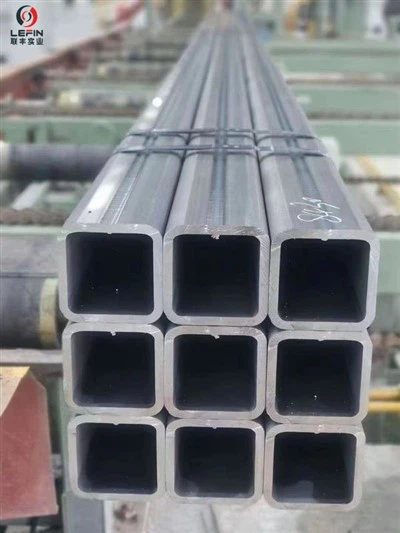
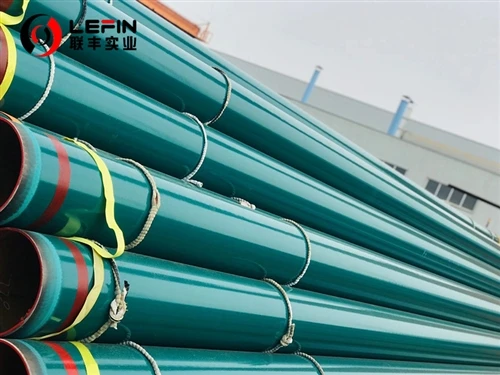
MILD STEEL PIPE (Mild Steel pipe) is a pipe made of mild steel as raw material, mainly used in structural support, fluid transportation and other scenarios. The following are detailed descriptions from the aspects of material characteristics, production process, application fields and advantages and disadvantages:
1. Material definition and composition
The raw material of MILD STEEL PIPE is Mild Steel, and its core characteristics include:
- Chemical composition: carbon content 0.15%~0.30%, manganese (Mn) content ≤0.75%, belongs to the category of low carbon steel. The content of other elements (such as Cr, Ni, etc.) is very low or no addition, so it does not have the corrosion resistance of stainless steel.
- Mechanical properties: tensile strength of about 400-600 N/mm², yield strength of 205-240 MPa, with high ductility (elongation ≥40%), easy to cold bending, stamping and other processing.
2. Production process
The manufacturing process of MILD STEEL PIPE is mainly divided into two categories:
- Welding molding: The cold-rolled or hot-rolled steel plate is crimped and welded into a tube, which has low cost and is suitable for low-pressure scenarios (such as building frames and ordinary water pipes).
- Seamless forming: hot perforation or cold drawing technology, no weld defects, suitable for high pressure or precision mechanical parts (such as hydraulic system pipes).
- Surface treatment: Because the mild steel is easy to rust, it is often necessary to galvanize, paint or cover the protective layer to enhance the resistance to environmental corrosion.
3. Core performance characteristics
- High weldability and processability: the low-carbon characteristics of mild steel make it difficult to crack when welding, suitable for large-scale welding structures (such as building trusses, pipeline networks).
- Economy: The cost of raw materials is significantly lower than that of stainless steel or high-strength steel (for example, the cost of high-strength steel is about 2-3 times that of soft steel).
- Magnetic: Mild steel is ferromagnetic and suitable for electromagnetic equipment or scenarios requiring magnetic adsorption (such as motor housing).
- Limitations: Poor corrosion resistance, easy to rust after long-term exposure to moisture or acid and alkali environment, need to rely on protective coatings or regular maintenance.
4. Main application areas
MILD STEEL PIPE, with its cost-effective and easy processing, is widely used in the following scenarios:
- Construction works: building frames, scaffolding, drainage pipes, etc., rely on their lightweight and high ductility.
- Mechanical manufacturing: hydraulic system pipelines, agricultural machinery components, need to withstand low and medium pressure and do not need high corrosion resistance.
- Energy transportation: gas, water and other low-pressure fluid transportation, galvanized soft steel pipe can extend the service life.
- Automotive industry: exhaust pipe (need anti-rust treatment), chassis structural parts, using its good formability.
5. Comparison with other steel pipes (stainless steel pipes and high-strength steel pipes)
- MILD STEEL PIPE has low corrosion resistance and requires surface treatment if it is to be lifted. Stainless steel pipes have high corrosion resistance due to the chromium protective layer. The high strength steel pipe depends on the alloy composition, and its corrosion resistance is moderate.
- In terms of strength, high-strength steel pipes perform best, with tensile strength ≥2000 N/mm². For stainless steel pipes, if you want to increase strength, heat treatment can be strengthened. The tensile strength of MILD STEEL PIPE is about 600 N/mm²
- Compared with the other two types of STEEL PIPE, MILD STEEL PIPE has the lowest cost.
- MILD STEEL PIPE is suitable for general construction as well as low pressure fluid transport. Stainless steel tubes are suitable for corrosive environments and scenarios with high hygiene requirements. High-strength steel tubes are used in high-load, lightweight designs.