The difference between SCAFFOLDING PIPE (scaffold special steel pipe) and ordinary pipe is mainly reflected in the material, structure, standard specifications and use, the following is the specific analysis:
Material and manufacturing standards
1. Material requirements
SCAFFOLDING pipes are typically made of high-strength carbon steel (e.g. Q235B) with a chemical composition that meets the strict restrictions of the European standard EN 39 (e.g., carbon content ≥0.17%) to ensure tensile strength (≥340MPa) and yield strength (≥235MPa).
Ordinary pipes (such as seamless steel pipes for conveying fluids) may use ordinary carbon steel or alloy steel, and the material strength requirements are lower, such as the tensile strength of low-pressure boiler tubes (GB 3087 standard) only ≥410MPa.
2. Surface treatment
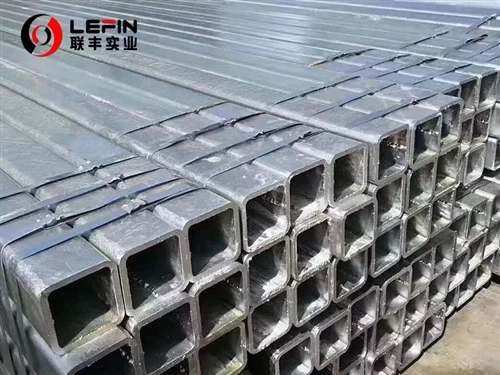
The scaffold pipe should be hot-dipped galvanized, and the zinc layer thickness is ≥85μm to enhance corrosion resistance and adapt to open air or humid environment. Ordinary pipes used in non-corrosive environments (such as indoor water pipes) may only be treated with anti-rust paint or no special coating is required.
structural design and specifications
1. Size standardization
The outer diameter of the SCAFFOLDING PIPE is 48.3mm (in line with EN 39 standard), the wall thickness is mostly 3.2mm or 4mm, and the length is usually 6 meters. Ordinary pipes have a wider range of sizes, such as fluid delivery pipes classified by nominal diameter (DN), from half an inch to several feet.
2. Connection mode
Scaffold pipes are compatible with standard fasteners (such as BS 1139 fasteners) and have a fast connection design (such as disc or portal construction) to ensure construction efficiency and stability. Common pipe connection depends on welding, flange or thread, which requires higher construction complexity.
mechanical properties and safety requirements
1. Carrying capacity
The elongation of the scaffold pipe should be ≥22% to withstand the dynamic load and impact force during construction; Ordinary pipes (such as seamless steel pipes for conveying fluids) pay more attention to the internal pressure capacity and have lower requirements for plastic deformation.
2. Safety specifications
Scaffolding pipes must meet OSHA and other safety standards, such as the need to install foot boards to prevent falling objects, and hydraulic tests to verify compressive performance. The safety requirements of ordinary pipes (such as industrial hoses) are mostly focused on pressure or corrosion resistance rather than structural stability.
Application scenarios and functions
1. Use difference
SCAFFOLDING PIPE is designed for building support systems (such as scaffolding, oil platform maintenance frames) that need to be adapted to work at high altitudes and changing environments. Ordinary pipes are widely used for fluid transportation (such as water pipes, oil and gas pipelines) or mechanical components (such as automobile exhaust pipes), with a single function.
2. Environmental adaptability
The scaffold pipe needs to withstand outdoor ultraviolet light, salt spray and other erosion, and the galvanized layer life is more than 10 years; Ordinary industrial hoses (such as PVC or rubber) may only be suitable for certain media (such as chemical delivery) and have a short life span.

Production and testing process
1. Quality control
The adhesion of galvanized layer should be verified by bending test and the pressure test should be carried out by simulating load. The detection of ordinary pipes (such as welded pipes) pays more attention to the integrity of the weld and the smoothness of the inner wall.
2. Processing technology
The scaffold pipe mostly adopts cold drawing or cold rolling process to ensure dimensional accuracy; Ordinary tubes (such as hot-rolled seamless tubes) may allow for greater tolerances and lower costs.
Sum up
SCAFFOLDING PIPE is a highly standardized structure that emphasizes safety, durability and fast assembly, while ordinary pipes pay more attention to functional adaptability and economy. The selection should be comprehensively evaluated according to the construction environment, load requirements and specification requirements