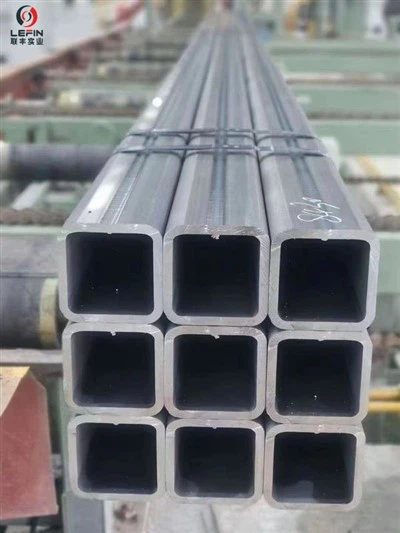
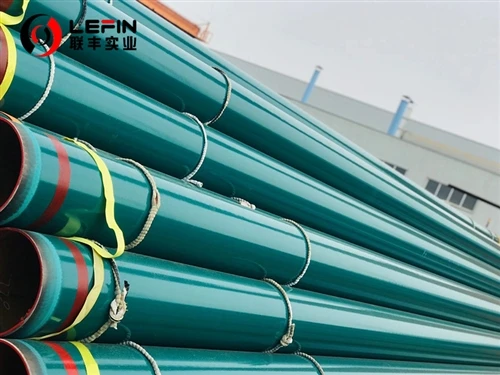
EN 10210 Hot Finished Hollow Sections are structural steel products that are widely used for various applications due to their strength, durability, and ease of processing.
- Standard:EN 10210
- Main Steel Grades:
S235JRH,S275J0H,S275J2H,S355J0H,S355J2H,
S355K2H,S420NH,S460NH
- OD:
20MM × 20MM - 1200MM × 1200MM(SHS)
20MM × 30MM - 1000MM × 1500MM(RHS)
- WT:1.5MM - 25MM
- Length:1M - 25M, commonly used: 5.8M, 6M, 12M

Commonly Steel Grades

S235JRH:
This is a non-alloy steel with a lower yield strength, suitable for general structural applications.

S275J0H:
This steel grade has a higher yield strength than S235, suitable for structures that require greater load-bearing capacity.

S275J2H:
Compared to S275J0H, S275J2H has better low-temperature impact performance, suitable for environments with lower temperatures.

S355J0H:
This is a commonly used high-strength steel grade with good strength and ductility, suitable for a variety of structural applications.
S355J2H:
This steel grade has excellent impact performance at low temperatures, suitable for cold environments or applications with higher impact performance requirements.
S355K2H:
This is a high-strength steel grade with a higher yield strength compared to S355J2H.
S420NH and S420NLH:
These are higher-grade high-strength steels, suitable for structures that require greater load-bearing capacity.
S460NH and S460NLH:
These steel grades provide even higher strength, suitable for special heavy-load structures with specific requirements.
These steel grades comply with the EN 10210 standard, which specifies the technical requirements for hot-finished structural hollow sections, including circular, square, and rectangular sections, whether welded or seamless. The choice of these steel grades depends on specific application needs, including the required strength, ductility, and environmental conditions.
Commonly Steel Grades
These steel grades comply with the EN 10210 standard, which specifies the technical requirements for hot-finished structural hollow sections, including circular, square, and rectangular sections, whether welded or seamless. The choice of these steel grades depends on specific application needs, including the required strength, ductility, and environmental conditions.
Production Process
Raw Material Preparation:The process begins with the selection of thermomechanical steels as the raw material, which improves the product features over hot-formed hollow sections made from hot-rolled or normalized steels .
Continuous Forming:The steel strip is continuously formed at room temperature by passing it through forming stands that progressively bend it into the desired shape, such as circular, square, or rectangular .
Welding:After the strip is formed into the desired shape, it enters the welding stand where the edges are joined together by a continuous longitudinal weld seam .
Sizing:The welded shape then passes through sizing stands to achieve the final shape and dimensional precision of the tube .
Heat Treatment:The tube is then heated in a furnace to relieve internal residual stresses that may have been introduced during the cold-forming process or to achieve equivalent metallurgical conditions to those obtained in hot-formed products .
Quality Control:Throughout the production process, various quality control checks are performed, including cast analysis, tensile tests, impact tests, and surface condition and dimension checks. For welded products, non-destructive testing (NDT) of the weld is also required .
Surface Treatment:The final step may include surface treatments such as blacking, vanish, 3PE, galvanizing, or fusion bond epoxy coating to enhance durability and longevity .
Advantages
- Homogeneity: EN 10210 sections are known for their uniform mechanical properties throughout the section, including the corners and weld line, which is not always the case with cold-formed sections .
- High Ductility: These sections exhibit superior ductility compared to cold-formed hollow sections, which is critical for applications under cyclic load or fatigue resistance .
- Resistance to Fracture: EN 10210 hot-finished sections have a virtually absence of residual stress, enhancing their resistance to fracture and making them suitable for arduous conditions
- Buckling Strength: EN 10210 sections offer improved resistance to buckling compared to cold-formed sections, with up to 35% greater buckling strength
- Dimensional Stability: These sections are stable and not prone to distortion during cutting, welding, or other fabrication procedures, unlike cold-formed sections which have high levels of residual stress and are more likely to distort
- Fire Resistance: EN 10210 sections have consistent and reliable performance in the event of a fire, unlike cold-formed sections which may suffer from sudden losses in yield strength on heating
- Galvanisable: The controlled silicon content in EN 10210 sections ensures good galvanisability, providing additional corrosion protection.
- Fully Killed Steel: Made exclusively from normalized, fine grain steel, EN 10210 sections are fully stress-relieved with uniform mechanical properties and improved weldability
The Difference Between EN10210,EN10219

Heat Treatment:
- EN 10210: This standard covers hot-finished structural hollow sections, which may require heat treatment as part of their manufacturing process. This includes both welded and seamless sections that have undergone processes like normalization or thermomechanical rolling to achieve the desired mechanical properties .
- EN 10219: This standard is for cold-formed welded structural hollow sections and does not require subsequent heat treatment after fabrication. The process involves cold working, which affects the material's mechanical properties and dimensional accuracy
Chemical Composition Differences:
- EN10210: Which covers hot-finished welded steel pipes, has more stringent chemical composition requirements. This standard focuses on the strength and durability of steel, hence the stricter limits on elements such as sulfur and phosphorus, which can affect the steel's strength and weldability.
- EN10219: On the other hand, deals with cold-formed or unheated welded steel pipes for structural use. It has fewer chemical composition requirements compared to EN10210, emphasizing more on the machinability and weldability of the steel rather than its strength and durability.


Applications:
- EN10210: More commonly used in building structures that are subjected to large loads and require high strength support, such as in bridges, high-rise buildings, and heavy industrial applications .
- EN10219: Wider usage in general engineering and structures, including industrial, civil, and infrastructure sectors, where a balance of strength and economy is required.