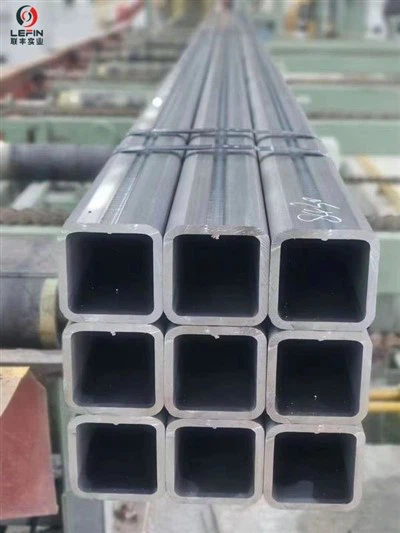
In the API 5L standard for line pipe steel, PSL1 (Product Specification Level 1) is significantly more common than PSL2 (Product Specification Level 2) in the oil and gas pipeline industry. The key reasons for this preference include broader applicability, cost efficiency, and standard industry practices.

General Applicability of PSL1
- PSL1 is designed for standard pipeline applications, covering most onshore and some offshore projects with moderate pressure and temperature conditions.
- It meets basic requirements for tensile strength, yield strength, and weldability, making it suitable for water, natural gas, crude oil, and refined product pipelines.
- PSL2, on the other hand, is used in more demanding environments, such as:
High-pressure gas transmission (e.g., offshore pipelines, high-grade steel like X80/X100).
Low-temperature service (e.g., Arctic pipelines requiring Charpy V-notch impact testing at sub-zero temperatures).
Sour service (H₂S-rich environments requiring hydrogen-induced cracking resistance).
Since most pipelines operate under standard conditions, PSL1 covers ~70-80% of global line pipe demand, while PSL2 is reserved for specialized cases (~20-30%).
Cost and Manufacturing Simplicity
PSL1 has fewer testing and chemical composition requirements, reducing production costs and lead time.
- No mandatory Charpy impact testing (unless specified by the purchaser).
- Wider tolerances for carbon equivalent (CE) and impurities.
PSL2 requires stricter controls, including:
- Enhanced chemical composition limits (e.g., lower sulfur/phosphorus for better weldability).
- Mandatory impact testing (for toughness verification).
- Additional non-destructive testing (NDT) for defect detection.
As a result, PSL2 pipes are 10-20% more expensive than PSL1, making them less economical for standard applications.

Industry Standards & Procurement Trends
Many national and international pipeline projects default to PSL1 unless explicitly required (e.g., by ISO 3183, DNV-ST-F101, or client specifications).
Examples of PSL1-dominated projects:
- Onshore gas distribution networks.
- Water injection pipelines.
- Low-to-medium pressure crude oil pipelines.
PSL2 is typically specified in:
- Offshore deepwater pipelines (high pressure + fatigue resistance).
- Arctic pipelines (low-temperature toughness).
- Sour gas fields (H₂S resistance per NACE MR0175).
Conclusion
PSL1 is the more commonly used specification due to its cost-effectiveness, wider applicability, and simpler manufacturing process. PSL2 is reserved for critical applications where enhanced mechanical properties, toughness, and corrosion resistance are mandatory.
Approximate Market Share:
- PSL1: ~70-80% of API 5L pipes.
- PSL2: ~20-30% (specialized applications).
This distinction ensures that pipeline operators can balance performance needs with economic efficiency, selecting PSL1 for standard use and PSL2 only when necessary.