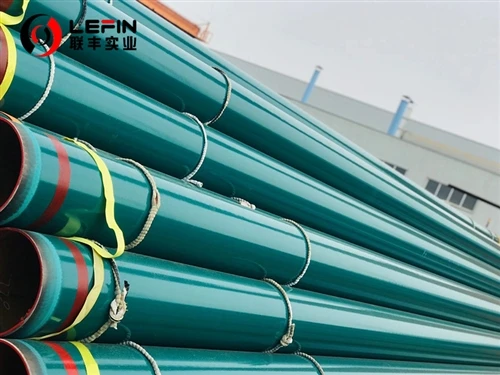
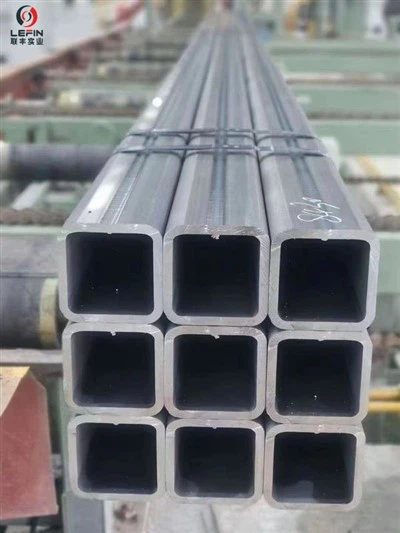
What Is SSAW
SSAW stands for Spiral Submerged Arc Welding, which is a method of pipe production where steel strip coils are fed through a spiral pipeline and welded on the inside and outside to create a robust structure.
Common Standards
- API 5L: Published by the American Petroleum Institute, this standard is mainly for oil and gas pipelines. It specifies the requirements for steel tubes used in the transportation of liquids and gases, including the size, chemical composition, and mechanical properties of the tubes.
- ASTM A53: Issued by the American Society for Materials and Testing, it is used to specify the requirements for welded, straight, and spiral welded steel pipes for high-temperature, high-pressure, and low-temperature applications.
- EN 10210: This is a European standard mainly for welded steel pipes used in pressure vessels and pipelines.
Production Process of SSAW
Uncoiling: The steel strip is uncoiled and then flattened in a machine to achieve the desired width and thickness.
Flattening: The strip is flattened to remove any curvature or unevenness, which is crucial for maintaining the quality of the final product.
Edge Milling: The edges of the strip are milled to prepare them for welding, ensuring a clean, smooth surface that enhances the quality of the weld.
Forming: The flat strip is gradually formed into a spiral shape using advanced machinery that ensures precision and consistency.
Welding: Once the strip is spirally shaped, it is welded from the inside and outside using submerged arc welding. This form of welding uses a flux-coated electrode, which when melted in the arc, forms a gas shield and slag. The gas shield protects the weld from atmospheric contamination, while the slag protects the weld pool.
Cutting: After the welding process, the pipe is cut to the desired length using high-speed cutting tools to ensure accuracy.
Visual Inspection: Each pipe undergoes a thorough visual inspection to check for any defects or inconsistencies.
Hydrostatic Testing: The final step involves conducting a hydrostatic test. This test checks the pipe's strength and leak resistance by filling it with water under high pressure.
Advantages of SSAW
High Structural Integrity:SSAW pipes have high structural strength, making them ideal for applications requiring robust performance under high pressure and heavy loads.
Versatile Dimensions:The spiral welding process allows for a diverse range of pipe diameters and wall thicknesses, catering to a variety of industrial needs.
Cost Efficiency:The continuous welding process used in SSAW pipe production is efficient and reduces material waste, resulting in cost-effective manufacturing.
Uniform Stress Distribution:The spiral seam design provides uniform weld seams, which evenly distribute stress and improve the pipe's overall integrity.
No Need for Gas Shielding:Unlike other welding processes, SSAW does not require an external shielding gas. The flux itself provides all the necessary protection for the weld pool, making it cost-effective and suitable for outdoor environments.
Applications of SSAW
Oil and Gas Pipelines:SSAW pipes are commonly used for transporting oil, gas, and other fluids over long distances due to their strength and durability.
Water Distribution Systems:They are ideal for water supply networks, sewage systems, and drainage projects.
Construction and Structural Use:SSAW pipes are used in building bridges, high-rise buildings, and other infrastructure projects that require large-diameter, high-strength pipes.
Foundation Piling:These pipes are utilized as piling pipes in construction to provide foundational support and stability.
Industrial Use:SSAW pipes find applications in various industrial sectors, including chemical processing, power plants, and mechanical engineering.
Offshore Engineering:Their corrosion resistance and ability to withstand harsh conditions make SSAW pipes suitable for offshore drilling and marine projects.
Agricultural Irrigation Systems:These pipes are employed in irrigation systems to ensure efficient water distribution in agricultural fields.
SSAW pipes boast notable strengths in structural robustness, adaptability, cost-effectiveness, and welding excellence. These attributes render them apt for a wide array of uses, especially within the realms of oil and gas, building infrastructure, and water conveyance.