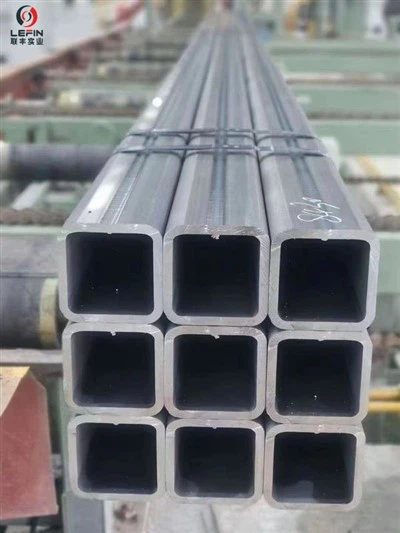
What are the differences between S355J2H,S355J0H and S355JRH
S355J2H, S355J0H, and S355JRH are all types of steel pipes that are commonly used in construction and engineering projects. While these three materials may appear similar, there are some differences between them.
Chemical element content:
1. S355J2H steel contains carbon, silicon, manganese, phosphorus, and sulfur elements in specific proportions.
Carbon content present in this material is between 0.22% to 0.55%,
Silicon content ranges between 0.5% to 1.6%,
Manganese content is 1.6%.
The sulfur and phosphorus content is kept at a low level to improve weldability.
2. S355J0H steel, on the other hand, also contains carbon, silicon, manganese, phosphorus, and sulfur elements but in slightly different proportions.
Carbon content is between 0.22% to 0.22%,
Silicon content is between 0.5% to 1.6%, and the manganese content is 1.6%.
The sulfur and phosphorus content is kept at a low level for improved welding.
3. S355JRH steel contains carbon, manganese, silicon, and phosphorus as essential elements.
Carbon content in this material ranges between 0.22% to 0.24%,
Manganese content is between 1.3% to 1.5%.
Silicon content ranges between 0.5% to 1.6%,
Phosphorus content is kept at a low level for improved welding.
Producing temperature differences:
1. S355J2H: Produced at minus 20 degrees Celsius, impact power requirement at 20℃ ≥ 27J. "2"means 20 degrees Celsius.
2. S355J0H: Produced at minus at the 0 degrees Celsius, impact power requirement at 0℃ ≥ 27J. "0"means 0 degrees Celsius.
3. S355JRH: Produced at minus at the normal temperature, impact power requirement at normal temperatur ≥ 27J. "R"means normal temperature.
Yield strength:
1. S355J2H is a high-quality steel pipe that has a minimum yield strength of 355 N/mm².
2. S355J0H is another type of steel pipe that has a minimum yield strength of 355 N/mm².
3. S355JRH is a higher-strength steel pipe that has a minimum yield strength of 355 N/mm².
Tensile strength:
1. S355J2H has a minimum tensile strength of 510 N/mm².
2. S355J0H has a minimum tensile strength of 510 N/mm².
3. S355JRH has a minimum tensile strength of 360 N/mm².

Advantages:
1. S355J2H: This grade of steel is known for its high strength and good weldability. It is often used in construction to provide support to heavy loads. S355J2H steel pipes are also corrosion-resistant, making them ideal for use in harsh environments.
2. S355J0H: S355J0H steel pipes are known for their high impact resistance, making them suitable for use in applications where high strength is required. They are also known for their good weldability and low carbon content, which makes them suitable for use in applications that require lightweight yet strong materials.
3. S355JRH: This grade of steel is known for its good ductility and high resistance to shock and vibration. It is often used in applications where high durability and toughness are required, such as in the construction of bridges and buildings.
Application:
1. S355J2H: This material is often used in structural applications and is known for its excellent toughness and weldability. S355J2H steel pipes are typically used in construction and engineering projects that require a high degree of strength and durability.
2. S355J0H: This material is used primarily in low-temperature applications and is known for its good impact resistance. S355J0H steel pipes are commonly used in applications where temperature fluctuations are minimal and high levels of impact resistance are required.
3. S355JRH: This material is typically used in applications where high strength is required, such as in the construction of bridges or large infrastructure projects. S355JRH steel pipes are known for their excellent mechanical properties and are often used in structural applications that require high levels of strength and durability.

Overall, S355J2H, S355J0H, and S355JRH are all high-quality steel pipes that are suitable for a range of construction and engineering applications. While these materials may differ slightly in their mechanical properties, they all offer excellent strength, toughness, and durability, making them ideal choices for a wide range of projects.