In the production of steel pipes, steel coils and steel plates, as raw materials, although both are essentially steel, have significant differences in form, processing methods and applicable scenarios. The following is a detailed comparison between the two:
---
1. Physical form and storage method
| Features | Steel Coil | Steel Plate |
| Form | Coiled (coiled strip-shaped steel) | Flat (single sheet or stacked) |
| Thickness range | Thinner (usually 0.5-20mm) | Thicker (usually 3- over 200mm) |
| Storage and Transportation | Requires winding equipment to save space but prevent deformation | Flat stacking takes up a lot of space but is easy to manage |
2. Processing technology and applicable types of steel pipes
| Processing method | Steel coil | Steel plate |
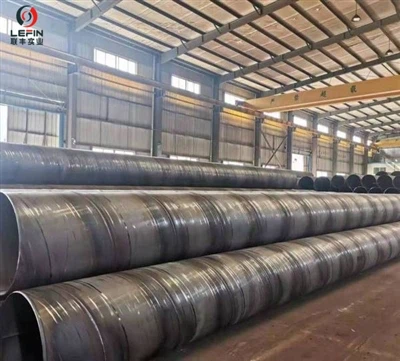
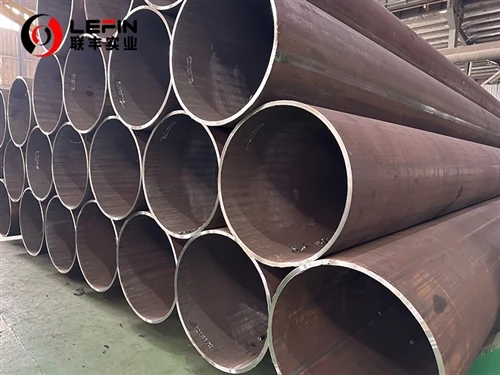
| Typical Processes | Continuous forming (such as high-frequency welded pipes, spiral welded pipes) | Post-cutting forming (such as straight seam welded pipes, thick-walled seamless pipes) |
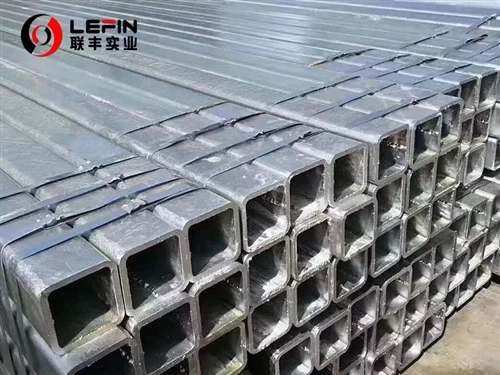
| Applicable steel pipes | Thin-walled welded pipes (water pipes, structural pipes, automotive exhaust pipes, etc.) | Thick-walled pipes, large-diameter pipes, and special-specification pipes (such as pipes for pressure vessels) |
| Production Efficiency | Continuous high-speed production, suitable for large-scale standardized products | Single piece or small batch production, high flexibility |
3. Material Properties and Pretreatment
- Steel coil:
- Most of them are hot-rolled or cold-rolled coils with smooth and uniform surfaces, suitable for continuous uncoiling processing.
- It needs to go through steps such as uncoiling and correction, and can be directly used for forming and welding.
- Common materials: low-carbon steel (SPHC, SPCC), galvanized steel coil (SGCC), stainless steel coil (such as 304).
- Steel plate:
- It has a wide thickness range and can be customized for cutting, suitable for special strength or size requirements.
- It needs to be cut into strips or slabs for further processing (such as coil forming or stamping).
- Common materials: Medium and heavy plates (Q235B, Q345R), stainless steel plates (316L), alloy steel plates (such as P91).
4. Cost and Economy
- Steel coil:
- It is suitable for large-scale production, with high raw material utilization rate (less scraps) and low unit cost.
- It is necessary to be equipped with uncoiling machines, leveling machines and other equipment, and the initial investment is relatively high.
- Steel plate:
- It is flexible in small-batch production, but there is more material waste (cutting loss).
- The equipment requirements are relatively low (such as shearing machines), making it suitable for customized needs.
Summary: Selection basis
1. Output requirements: For large quantities, steel coils are selected; for small batches or special specifications, steel plates are chosen.
2. Thickness requirements: Steel coils for thin-walled (<20mm) and steel plates for thick-walled (>20mm).
3. Process matching: Steel coils for high-frequency welding/spiral welding, steel plates for straight seam welding/forging.
4. Cost control: Steel coils are suitable for economies of scale, while steel plates are suitable for flexible customization.
Note: The materials of steel coils and steel plates can be exactly the same (such as both Q235B), and the differences mainly lie in the form and processing method. A comprehensive selection should be made based on the production target and equipment conditions.